
Blooming
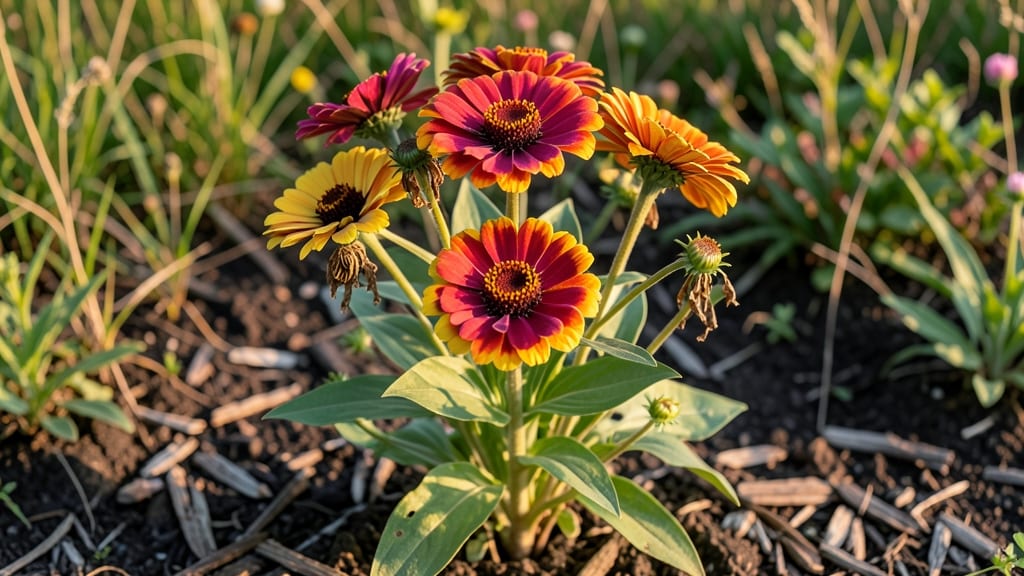
Zinnias do bloom more than once when grown as annuals, producing continuous flowers if you regularly remove spent blooms. Some reblooming varieties like 'Benary’s Giant' or 'Profusion' keep flowering until frost, while others may need occasional pruning to encourage new growth. Perennial zinnias in mild climates can also rebloom seasonally with proper maintenance.
Zinnias are famous for their ability to produce multiple blooms throughout the growing season, especially when treated as annuals. 🌸 The key to encouraging repeat flowering lies in deadheading—removing faded blooms prompts the plant to redirect energy toward new growth rather than seed production.
This simple practice can extend your blooming season by weeks, sometimes even until the first frost hits. The variety you choose makes a big difference too: some zinnias are naturally more prolific bloomers, while others focus their energy on single, dramatic flowers.
For gardeners in warmer climates, perennial zinnias offer an extra advantage—they can sometimes regrow from the same root system year after year, providing seasonal reblooms with minimal effort. The secret to success lies in understanding each variety's natural tendencies and providing consistent care throughout the growing season.
💡 In This Article
- Why Zinnias Rebloom: Science of Flower Regrowth
- Maximizing Zinnia Reblooms: Pruning and Care Tips
Why zinnias rebloom: science of flower regrowth
Zinnias rebloom through a natural plant growth mechanism called apical dominance, where the terminal bud (at the plant's tip) suppresses the growth of side buds.
When you remove faded blooms, you're essentially telling the plant to stop focusing energy on seed production and instead redirect it to dormant lateral buds along the stem.
These buds contain meristematic tissue—unspecialized cells that can differentiate into new flowers when stimulated. 🌱 This process works best in zinnias because their stem structure naturally supports multiple growth points, unlike some plants that only produce flowers at the tips.
The timing of deadheading matters too—removing spent blooms within 24-48 hours of wilting maximizes reblooming potential. Studies show that zinnias can produce new flowers from lateral buds in as little as 2-3 weeks under ideal conditions, though this varies by variety.
Light exposure plays a critical role: zinnias need at least 6-8 hours of direct sunlight daily to maintain strong apical dominance control. In lower light conditions, plants often shift energy toward vegetative growth rather than flowering, which is why you might see fewer reblooms in shaded areas.
Temperature also influences reblooming cycles. Most zinnias thrive in 70-85°F ranges, where metabolic processes run optimally. Below 60°F, growth slows dramatically, and above 90°F, the plants may conserve energy by reducing flower production.
This is why late-season blooms often taper off as temperatures rise—it's not just about daylight but also the plant's physiological response to heat stress. 🌡️ The variety you choose makes a huge difference: 'Profusion' zinnias, for example, have been bred to maintain continuous blooming through these temperature fluctuations, while 'Crystal' varieties may produce just one dramatic bloom per stem.
Here's how the process works at the cellular level: When you deadhead, you remove the flower head containing the ovary, which would have developed into seeds. This removal reduces the plant's ethylene production—a hormone that signals aging and seed development.
With ethylene levels lowered, auxin (a growth hormone) can redistribute more evenly, stimulating those lateral buds to break dormancy. This hormonal shift explains why consistent deadheading yields better results than sporadic pruning.
Consider these key factors when comparing single-bloom vs. reblooming varieties:
- Single-bloom varieties: Focus energy on one large, showy flower per stem (e.g., 'State Fair' zinnias). These typically produce fewer but more dramatic blooms.
- Reblooming varieties: Have genetically weaker apical dominance, allowing more lateral buds to develop simultaneously (e.g., 'Benary's Giant' or 'Candy Cane').
- Light requirements: Rebloomers often need slightly more intense light (8+ hours/day) to maintain their prolific growth patterns.
- Water needs: During peak blooming, rebloomers may require 1-1.5 inches of water weekly to support continuous flower production.
The science behind reblooming explains why some gardeners see spectacular results while others struggle—it's not just about cutting flowers but understanding the plant's hormonal responses and environmental needs.
With the right variety and care, you can turn a single zinnia plant into a continuous blooming machine that lasts all season! 🌺