
Blooming
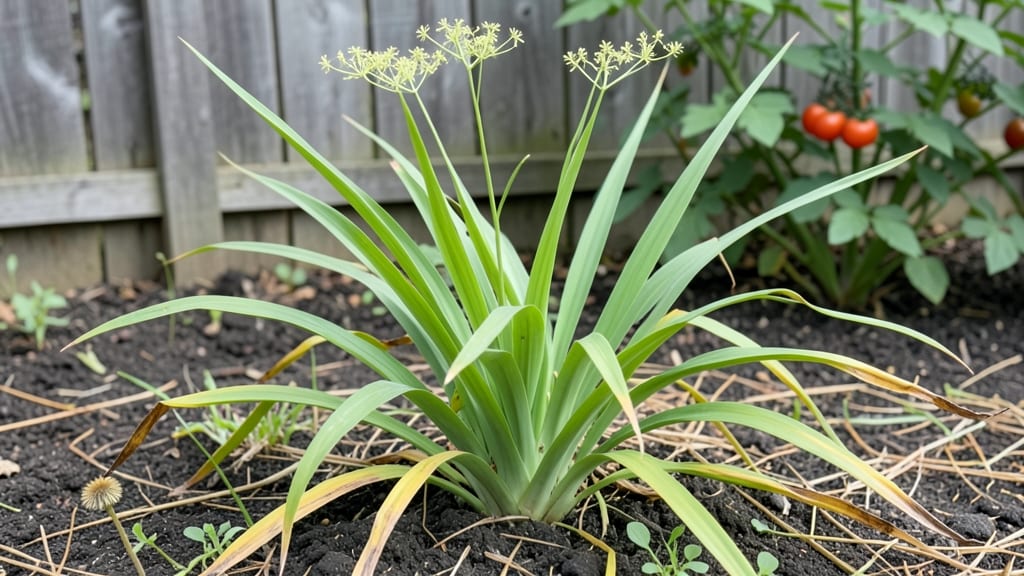
Lemongrass rarely blooms under typical home growing conditions because it focuses energy on producing edible stalks, not flowers. In ideal tropical climates, it may develop small white or purple flower spikes, but these are often cut back to encourage stalk growth. Blooming signals the plant’s end-of-cycle decline unless propagated from cuttings.
Most gardeners never see lemongrass flowers because the plant naturally prioritizes its edible stalks over reproductive growth. 🌱 The tropical conditions it thrives in—warmth, humidity, and long daylight—can trigger flowering, but even then, the delicate white or purple spikes are often pruned away to keep the plant focused on producing those prized stalks.
This energy trade-off explains why commercial varieties are typically selected for their robust stalk growth rather than ornamental blooms.
💡 In This Article
- Lemongrass Flowering Process and Lifecycle
- Encouraging Lemongrass Growth Without Flowers
Lemongrass flowering process and lifecycle
Lemongrass (Cymbopogon citratus) follows a unique botanical lifecycle where it prioritizes vegetative growth over reproductive stages. This herb allocates up to 80% of its energy toward developing its signature 3-foot-tall stalks during its first 12-18 months of growth.
The plant's meristematic tissue—located at the base of the stalks—produces new leaves and stems through a process called basal tillering, creating dense clumps that gardeners harvest for their citrusy aroma.
The flowering process only begins when the plant receives consistent 12-14 hours of daylight combined with temperatures above 75°F for at least 3 months.
Under these conditions, the plant transitions from vegetative to reproductive growth, elongating its stalks by 20-30% before producing a 6-12 inch tall inflorescence topped with tiny white or purple flowers.
These blooms appear in clusters along a single central stem, resembling a delicate feather duster—unlike the robust, leafy growth most gardeners cultivate.
What most growers don't realize is that each flowering stalk contains 100-200 tiny seeds packed into papery seed heads. However, these seeds rarely mature in home gardens because the plant's energy shifts dramatically after flowering, causing the stalks to become woody and less flavorful.
In tropical regions, farmers often harvest these seeds for essential oil production, but the process requires precise timing—seeds must be collected within 7-10 days of full bloom to maintain viability.
The plant's lifecycle then enters a critical decline phase. After flowering, lemongrass begins senescing—its leaves yellow and stalks harden—as the plant redirects resources toward seed production. This is why commercial growers aggressively prune flower spikes: removing them can extend the plant's productive life by 6-12 months while maintaining stalk tenderness.
The trade-off is clear—allow flowering, and you get seeds; prioritize stalks, and you get continuous harvests.
Interestingly, lemongrass exhibits photoperiodism, meaning its flowering is triggered by day length rather than age. In regions with shorter winter days (below 10 hours of sunlight), the plant may never flower at all, remaining in perpetual vegetative growth.
This explains why home gardeners in temperate climates rarely see blooms—even with perfect care, the lack of long daylight prevents the reproductive switch from flipping.
For those curious about the sensory experience, lemongrass flowers emit a sweet, honey-like fragrance that's noticeably different from the plant's usual citrusy scent. The flowers themselves are delicate and papery, contrasting sharply with the plant's typically firm, bamboo-like stalks.
While not commonly used in cooking, some Thai and Vietnamese chefs incorporate the young flower buds into stir-fries for their subtle floral notes.
Here's what's actually happening at the cellular level: The plant's apical meristem—its growth tip—transitions from producing leaves to forming flower buds through a process called floral induction. This requires specific hormone balances, particularly increased levels of florigen (a flowering hormone) and decreased auxin (which promotes vegetative growth).
The shift happens gradually over 4-6 weeks of ideal conditions, explaining why sudden climate changes can disrupt the process entirely.