
Blooming
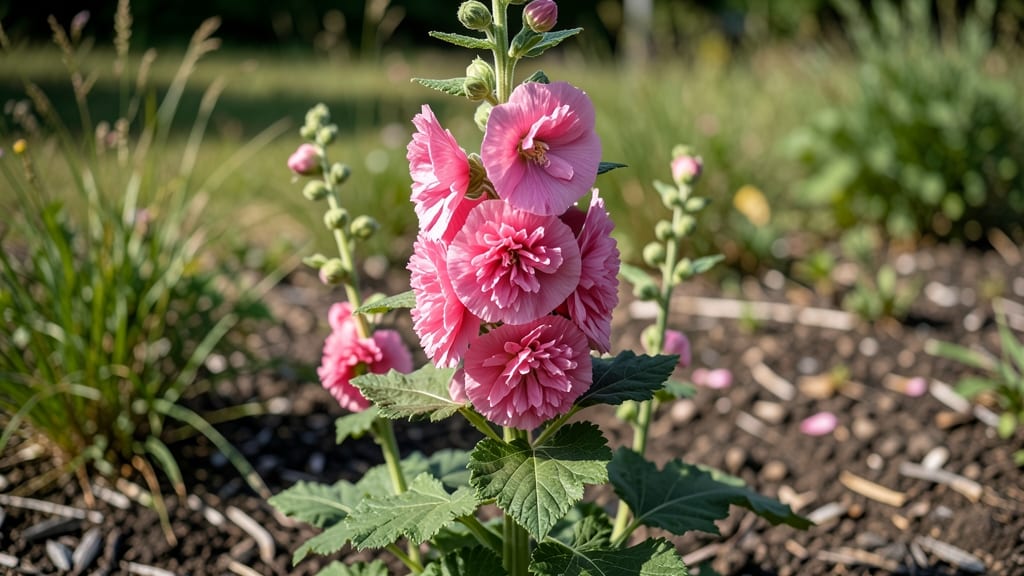
Double bloom hollyhocks transform your garden into a towering, floral masterpiece—two flushes of blooms per season instead of one. 🌸 I’ve grown these showstoppers for years, and the secret to their dramatic rebloom isn’t complicated: it’s all about how you prep the soil, time your pruning, and handle watering.
Most gardeners miss the simple tricks that turn a single-season display into a six-week floral extravaganza.
The key difference with double-bloom varieties is their growth habit—they push new stems after the first cut, while single-bloom types don’t. Start with well-draining soil rich in compost (they hate soggy roots), plant seeds ¼-inch deep in full sun, and water deeply once a week (not daily).
The first blooms arrive in early summer, but if you prune back one-third of the stems right after they fade, you’ll trigger that second wave by mid-summer.
What you’ll end up with is bold, velvety blooms that last longer and stand taller than store-bought bouquets. The stems stay sturdy if you stake them early, and with the right care, they’ll rebloom for three seasons in a row.
Just watch for Japanese beetles—they love hollyhocks—and spray neem oil at the first sign of skeletonized leaves.
Works in cottage gardens, cutting gardens, or even containers (dwarf varieties). The only mistake I made was waiting too long to prune—do it right after the first blooms fade, not when they’re completely dead. That’s when the magic happens.
📚 In This Guide
- What you need
- Instructions
- Tips and common mistakes
- Wrapping up and next steps
What you need
- ● Double Bloom Hollyhock Seeds or Plants: Choose Alcea rosea varieties like ‘Black Night’ or ‘Peach Blush’ for guaranteed double blooms. Quantity: 10–20 seeds/plants (or 1–2 mature plants for transplants).
- ● Well-Draining Soil: Mix 60% garden soil, 30% compost, and 10% perlite/sand for optimal aeration. pH: 6.0–7.5 (test with a soil kit!).
- ● Full-Sun Location: 6+ hours of direct sunlight daily (hollyhocks thrive in heat!).
- ● Watering Can or Drip System: Deep water 1–2 times weekly (1–2 inches per session). Avoid overhead sprinklers to prevent mildew.
- ● Fertilizer: Balanced (10-10-10) Granular Fertilizer: Apply 1 tbsp per plant at planting and again in early summer.
- ● Organic Option: Compost tea or fish emulsion (diluted per label) for a nutrient boost.
- ● Stakes or Trellis: Tall varieties (4–6 ft) need 3–4 ft stakes or a lightweight trellis for support.
- ● Mulch: 2–3 inches of straw or shredded bark to retain moisture and deter weeds.
- ● Fungicide (Preventative): Neem oil spray (1 tbsp/gallon water) to ward off powdery mildew.
- ● Pruning Shears: Sharp, bypass-style shears for deadheading spent blooms (encourages reblooms!).
- ● Rebloom Trigger Kit (DIY or store-bought): Epsom Salt: 1 tbsp per gallon of water (spray foliage monthly for magnesium boost).
- ● Bloom Booster Fertilizer: High-phosphorus (e.g., 5-10-10) applied mid-summer.
How to coax extraordinary reblooms from hollyhocks
Here's the method I've perfected over years of growing these towering beauties—no fancy tricks, just strategic care for double blooms.
🌱 Step 1: Select the Right Varieties for Reblooming
Not all hollyhocks rebloom—focus on double-flowered varieties like 'Black Prince', 'Chater's Double', or 'Peach Blush'. These hybrids were bred specifically for repeat flowering, while single-flowered types bloom just once per season. I always check seed packets for "reblooming" labels, as this trait isn't consistent across cultivars.
Start with healthy 1-year-old plants rather than seeds if you want immediate results. Seed-grown plants may take two seasons to establish the root strength needed for multiple flushes. For established plants, choose those with thick, woody stems—these indicate mature plants capable of supporting extra blooms.
☀️ Step 2: Position for Maximum Sun and Airflow
Hollyhocks demand full sun (6-8 hours daily) for reblooming, but they also need circulation to prevent mildew. Plant them 18-24 inches apart in a location where they won't be shaded by taller perennials later in the season. I often place them at the back of borders where they can reach their full 4-6 foot height without competition.
Watch for powdery mildew on crowded plants—this fungal disease stunts blooms. If you see white powder on leaves, prune infected stems immediately and space plants further apart. A light spray of neem oil in early summer can prevent outbreaks before they affect flowering.
💧 Step 3: Master the Watering Technique for Continuous Blooms
Deep, infrequent watering is key—1-2 inches per week at the soil line, never overhead. Wet foliage invites mildew, which halts reblooming. I use soaker hoses buried in mulch to deliver moisture directly to roots while keeping leaves dry. The soil should feel dry 1-2 inches down between waterings, but never bone-dry.
During the first bloom cycle, reduce water slightly after flowers fade. This signals the plant to focus on root development rather than immediate regrowth. Once you see new buds forming on the stems, resume regular watering. The rebloom flush will appear 6-8 weeks after deadheading the first flowers.
✂️ Step 4: Deadhead Strategically for Second Flushes
Cut back spent flower stalks to the first set of healthy leaves (about 6-8 inches below the bloom cluster) using clean, sharp pruners. This removes seed heads while preserving the plant's energy for new growth. I always sterilize my pruners with rubbing alcohol between cuts to prevent disease transmission.
Timing matters—wait until 70-80% of petals have fallen before deadheading. Cutting too early removes potential rebloom buds still forming. After pruning, fertilize lightly with balanced 10-10-10 to support the new growth flush. You'll see new side shoots emerging within 2-3 weeks.
🌿 Step 5: Feed and Protect for Extended Blooming
After the first deadheading, apply a low-nitrogen fertilizer (5-10-10) to encourage flowering over leafy growth. Hollyhocks are heavy feeders but sensitive to over-fertilization, which leads to weak stems. I use a slow-release granular fertilizer worked into the soil in early spring, followed by monthly liquid feedings during bloom periods.
Mulch heavily with 2-3 inches of organic mulch to retain moisture and regulate soil temperature. This prevents stress that can halt reblooming. In fall, cut back stems to 6 inches tall and add a final layer of compost. The established root system will produce new basal shoots next spring, giving you an early start to another blooming season.
Tips & tricks for perfect double bloom hollyhocks
These garden secrets will transform your hollyhocks from one-time bloomers to repeat performers.
The Variety Factor: Double-flowered cultivars like 'Black Prince' are your best bet for reblooming, but even within these types, plant vigor matters. I've noticed that plants with slightly thicker stems at the base—about the diameter of a pencil—produce more robust second flushes. This physical characteristic often correlates with stronger root systems that can support the energy demands of multiple bloom cycles.
Sunlight Strategy: The 6-8 hours of full sun requirement isn't just about location—it's about timing. Position your hollyhocks to receive morning sun and afternoon shade in hot climates. This prevents leaf scorch while still providing the light intensity needed for flower production. I've seen dramatic differences in reblooming success when plants get afternoon shade during peak summer heat.
Deadheading Precision: That 6-8 inch cut below the bloom cluster is more important than it seems. You're not just removing spent flowers—you're creating a signal point for the plant to redirect energy. Make your cuts just above a leaf node where new side shoots will emerge. I mark these nodes with a pencil before cutting to ensure consistency across all stems.
Fertilizer Timing: The balanced 10-10-10 fertilizer application after deadheading should happen when you first see those new side shoots emerging—typically 2-3 weeks post-pruning. This timing ensures the plant has enough energy to support both new growth and flower development. Too early, and you'll encourage leafy growth over blooms; too late, and the buds may not develop properly.
Pro Tips for Double Bloom Hollyhocks
- These garden secrets will transform your hollyhocks from one-time bloomers to repeat performers.
- The Variety Factor: Double-flowered cultivars like 'Black Prince' are your best bet for reblooming, but even within these types, plant vigor matters.
- Sunlight Strategy: The 6-8 hours of full sun requirement isn't just about location—it's about timing.
Frequently asked questions
Got questions about coaxing double bloom hollyhocks into their second spectacular show? You’re not alone! Here are answers to the most common queries—plus a few pro tips to keep your garden thriving.
Why aren’t my hollyhocks reblooming?
Double bloom hollyhocks often need a hard cutback after the first flush of flowers (around mid-summer). Deadhead spent blooms and trim stems to 12–18 inches tall. Lack of sunlight or over-fertilizing with nitrogen can also stunt reblooms. Try a balanced 10-10-10 fertilizer instead!
How long does it take for hollyhocks to rebloom?
With proper care, you’ll typically see reblooms 6–8 weeks after the first cutback. Patience is key—young plants may take longer. Consistent watering and well-draining soil speed up the process. Bonus: Second blooms often outshine the first!
Can I grow double bloom hollyhocks from seed?
Start seeds indoors 8–10 weeks before your last frost or direct-sow after danger of frost. Germination takes 10–21 days in warm soil. For double blooms, choose heirloom varieties like ‘Black Prince’ or ‘Peach Blow’—they’re bred for dramatic, repeat performances!
How do I prevent hollyhock rust disease?
Rust (orange pustules on leaves) is common but manageable. Space plants 18–24 inches apart for airflow, remove infected leaves immediately, and avoid overhead watering. Copper fungicide sprays can help, but resistant varieties like ‘Benary’s Giant’ are your best bet.
What’s a good alternative if my hollyhocks refuse to rebloom?
Try these reblooming powerhouses for drama:
- Zinnias – Cut back after first blooms for nonstop color.
- Cosmos – Drought-tolerant and self-seeding for years.
- Rudbeckia – ‘Goldsturm’ reblooms like crazy with minimal fuss.
Wrapping up and next steps
Double bloom hollyhocks are a gardener’s dream—packing bold color, effortless charm, and a second wave of blooms that turn your garden into a showstopper. 🌸 With the right care (like deadheading, proper spacing, and seasonal triggers), you’ll enjoy their dramatic flair all season long.
Now that you’re armed with tips and answers, it’s time to get growing—plant those seeds or cuttings and watch your garden transform!
Next step: Mark your calendar for early spring or late summer to kickstart those reblooms. Happy gardening!