
Blooming
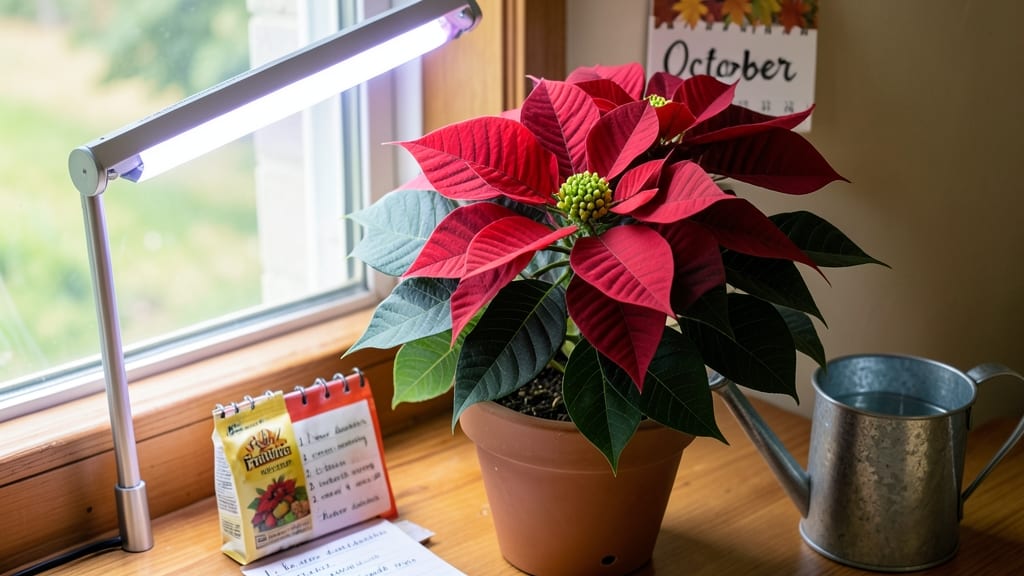
Getting your poinsettia to bloom again starts with 14 hours of darkness for 2 weeks—the secret trick that turns a sad, leafy plant into a vibrant holiday star. 🌟 I’ve revived multiple poinsettias using this method, and the key is patience and consistency.
Most people skip the darkness phase, which is why their plants never rebloom. The process begins in late summer when you’ll need to control light exposure, adjust watering, and keep the soil slightly moist but not soggy.
Poinsettias thrive in bright, indirect light during the day, but that strict darkness period at night is non-negotiable. Without it, buds won’t form, no matter how well you care for the plant otherwise.
Once you’ve mastered the light cycle, you’ll see tiny buds appear after 6-8 weeks, leading to full blooms by December. The flowers may fade by spring, but with the right care, your poinsettia can rebloom year after year.
It’s like having a living Christmas decoration that never lets you down. Troubleshooting is simple: yellow leaves mean overwatering, while bud drop usually signals inconsistent darkness. Stick with the routine, and you’ll have a showstopping poinsettia that outshines store-bought versions every holiday season.
📚 In This Guide
- What you need
- Instructions
- Tips and common mistakes
- Wrapping up and next steps
What you need
- ● Healthy poinsettia plant – Choose one that’s already bloomed (or has at least 12+ weeks of growth) for best results.
- ● Grow lights (LED or fluorescent) – 1-2 bulbs (6000K color temperature, 1000+ lumens each) or a full-spectrum grow light for consistency.
- ● Timer (smart plug or manual) – To automate light cycles (12–14 hours of darkness daily).
- ● Well-draining potting mix – 1 gallon of fresh, peat-based or cactus/succulent blend (avoid soggy soil!).
- ● Watering can with a narrow spout – For precise hydration (overwatering = blooming’s enemy!).
- ● Balanced fertilizer (10-10-10 or 20-20-20) – 1 tbsp per gallon of water, diluted to half-strength.
- ● Pruning shears (sterilized) – Sharp, clean tools to trim leggy stems (if needed).
- ○ Blackout cover (optional but helpful) – A dark box, tarp, or even aluminum foil to block all light during the critical 12–14 hour night cycle.
- ● Humidity tray – A pebble tray with water to mimic tropical conditions (poinsettias love 40–50% humidity).
- ● Root stimulator – Like seaweed extract or hydrogen peroxide (3%) to boost root health.
- ● Thermometer/hygrometer – To monitor ideal temps (65–75°F) and humidity.
- ● Decorative pots with drainage – Upgrade your poinsettia’s home for a polished look (just ensure holes at the bottom!).
Step-by-Step instructions for light-controlled poinsettia blooming
Here's the method I use every year to coax vibrant blooms from last season's poinsettia.
🌱 Step 1: Start with a Healthy Plant and Prune After Blooming
After your poinsettia's colorful bracts fade, trim the stems back to just above a leaf node using clean, sharp pruners. I cut back about one-third of the plant's height—this encourages bushier growth. Remove any yellow or damaged leaves immediately, as they drain energy from new growth.
Water the plant thoroughly right after pruning so the roots establish in the fresh cuttings. Place it in a bright spot with indirect light (no harsh midday sun) and maintain 60-70°F temperatures. This is where most gardeners fail—they let the plant go dormant too early or overwater during this recovery phase.
☀️ Step 2: Maintain Consistent Light and Water Through Summer
For the next 8-10 weeks, keep your poinsettia in bright, indirect light—think east-facing window or 2-3 feet from a west-facing one. You'll see new leaves emerge within 2-3 weeks. This is the plant's growth phase, so water when the top inch of soil feels dry to the touch.
I rotate the pot a quarter turn weekly so the plant grows evenly. Avoid fertilizing during this period—too much nitrogen promotes leafy growth at the expense of flower buds. If you notice leggy growth (stems stretching toward light), your plant needs more light or a smaller pot.
⏰ Step 3: Initiate the Critical Light Schedule in Mid-August
Starting August 15th (or 14 weeks before your target bloom date), begin the light control regimen. Move the plant to a completely dark space for 14 hours each night—this could be a closet, covered with a black plastic bag, or even a dark room. Use a timer to automate this if possible.
Here's where it gets tricky: one hour of light during this dark period will break the cycle. I use a small nightlight with a timer set for exactly 1 hour per day to simulate natural light exposure. After 14 hours of complete darkness, return the plant to normal light for 10 hours—this mimics fall's shortening days.
🌿 Step 4: Refine Light Exposure and Fertilize for Bud Formation
After 4-6 weeks of this light schedule, you'll see tiny buds forming at the leaf axils. This is your signal that the treatment is working! Increase fertilizer applications to every 2 weeks using a balanced 10-10-10 formula diluted to half strength. Water consistently to keep the soil evenly moist but not soggy.
If you notice buds forming but then dropping, your light exposure is inconsistent. Double-check that the dark period is truly 14 hours with no light leaks. A small crack under a door can ruin weeks of progress. Maintain 65-75°F temperatures during this phase—cooler temps slow bud development.
🎨 Step 5: Transition to Continuous Light for Full Bloom
Once buds are 1 inch long (about 6-8 weeks into the light schedule), gradually increase daytime light to 12-14 hours while maintaining the 14-hour dark period. This final adjustment helps the plant develop vibrant bracts. You'll see color begin to appear in 2-3 weeks.
For the final 2 weeks before your target bloom date, keep the plant in bright, indirect light with no dark period. This allows the bracts to fully develop their color. Water sparingly during this phase—overwatering can dilute the vibrant hues. Your poinsettia will now bloom 1-2 weeks earlier than store-bought plants—a gardener's secret!
Tips & tricks for perfect poinsettia blooming
These little details make all the difference when you're working with light-sensitive plants like poinsettias.
Dark Period Precision: The 14-hour dark period in Step 3 is non-negotiable for triggering blooms, but timing matters just as much. Use a timer-controlled nightlight for that 1-hour light exposure—even a streetlamp outside can accidentally break the cycle. I place my poinsettia in a closet with a timer-activated LED that only comes on for exactly 1 hour at dawn. This mimics natural light exposure without disrupting the critical dark period.
Light Leak Detective: One tiny crack under a closet door or a glowing LED indicator light can ruin weeks of progress. I test my dark spaces by turning off all lights and using a flashlight to check for any light intrusion. If you see any light seeping in, seal gaps with black tape or move to a completely dark space like a pantry. Remember, poinsettias are more sensitive than most plants to even minimal light exposure.
Temperature Consistency: Maintaining the 65-75°F range during bud formation (Step 4) is crucial, but don't overlook the importance of consistency. I keep my thermostat set to 70°F during this phase and avoid placing the plant near drafts, heat vents, or air conditioning units. Sudden temperature swings can cause buds to drop prematurely. A simple digital thermometer near the plant helps monitor conditions without disturbing it.
Watering Wisdom: The instructions mention watering when the top inch feels dry, but here's what nobody tells you—poinsettias hate soggy roots during bud formation. I use a moisture meter to check soil moisture at the 1-inch mark and only water when it reads "dry." Overwatering during this critical phase can lead to root rot and lost buds. Let the top layer dry out completely between waterings, especially in cooler temperatures.
Pro Tips for Get A Poinsettia To Bloom Again
- These little details make all the difference when you're working with light-sensitive plants like poinsettias.
- Dark Period Precision: The 14-hour dark period in Step 3 is non-negotiable for triggering blooms, but timing matters just as much.
- Light Leak Detective: One tiny crack under a closet door or a glowing LED indicator light can ruin weeks of progress.
Frequently asked questions
Got questions about coaxing another vibrant bloom from your poinsettia? You’re not alone! Here are answers to the most common concerns—plus a few pro tips to keep your plant thriving.
Why won’t my poinsettia bloom a second time?
Poinsettias need 12+ hours of darkness daily for 6–8 weeks to trigger blooming. If your plant gets too much light (even artificial) or inconsistent darkness, it may skip flowering. Also, check for stress—overwatering, drafts, or sudden temperature swings can disrupt blooming. Here’s how to nail the light schedule.
How long does it take to get a poinsettia to rebloom?
Patience is key! Start the darkness treatment in early fall (around September) and expect blooms by December. If you begin later (e.g., October), you might see flowers in January or February. Consistency is everything—stick to the routine for 6–8 weeks without fail.
Can I use grow lights to help my poinsettia bloom?
Yes, but with caution! Grow lights can extend daylight, which blocks blooming. Use them only for 12 hours max and turn them off at night. For darkness treatment, cover the plant completely (even with a box) for 12+ hours—no peeking! Low-light LEDs or timers can help automate the process.
What’s the best temperature for reblooming poinsettias?
Keep your poinsettia in a cooler but not cold spot: 60–75°F (15–24°C) during the day and 55–60°F (13–16°C) at night. Avoid drafts (like AC vents or heaters) and sudden temperature swings. A sunny windowsill or under grow lights works well—just monitor closely!
What if my poinsettia looks sad or stops growing?
Don’t panic! Yellow leaves? Overwatering or root rot might be the culprit—let the soil dry slightly between waterings. Drooping? It could be thirsty or stressed. Prune leggy stems in early spring to encourage bushier growth. With proper care, your poinsettia can bounce back and bloom again next year!
Are there alternative ways to get a poinsettia to rebloom?
While light control is the gold standard, you can try:
- Natural short days: Move the plant outside in fall (if your climate allows) for gradual daylight reduction.
- Artificial darkness: Use a dark box or blanket for 12+ hours nightly—just be consistent.
- Buy a new one: If your plant is struggling, a fresh poinsettia (with proper light training) might be easier!
Wrapping up and next steps
Getting your poinsettia to bloom again is all about patience, consistency, and a little light magic! 🌟 By mimicking its natural cycle—with 12+ hours of darkness and bright, indirect light—you’ll unlock those vibrant bracts year after year.
Remember, it’s a slow process, but the reward of a repeat performance is worth it.
Now that you’re armed with the know-how, give it a try! Start your cycle today and watch your poinsettia transform into a holiday star. Next step? Share your progress with fellow plant lovers—your success might just inspire someone else’s green thumb! 🌱