
Pruning
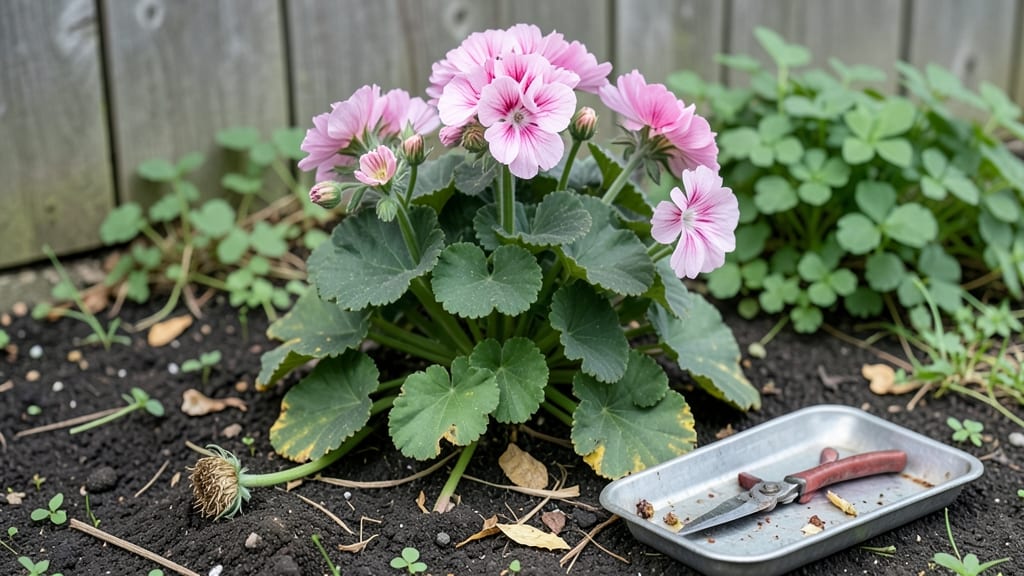
Pruning geraniums for more blooms isn't just about cutting back—it's about teaching your plants to focus their energy where you want it. 🌿 I learned the hard way that skipping this step means fewer flowers and more leggy stems, but the right cuts transform those same plants into nonstop blooming machines.
The secret lies in timing and technique. Prune right after the first frost in fall to shape the plant, then again in early spring before new growth starts.
You'll need sharp pruners and a clear goal: remove about a third of the plant, cutting just above leaf nodes where new growth can sprout. This isn't about making your geraniums smaller—it's about making them stronger.
Within weeks, you'll see fresh green shoots pushing out, and by summer, those same plants will be covered in blooms instead of bare stems. The difference is dramatic—my once-sparse geraniums now look like they're in a florist's display.
The key is consistency: repeat the process every year, and you'll have blooms from spring through fall.
Works for both container geraniums and those in garden beds, and the same principles apply whether you're dealing with zonal, ivy, or regal varieties. Let's get those shears ready—your geraniums are about to get a second chance at their best blooming season.
📚 In This Guide
- What you need
- Instructions
- Tips and common mistakes
- Wrapping up and next steps
What you need
- ● Sharp pruning shears – Bypass pruners (not anvil) for clean cuts (e.g., Felco F-2 or similar, $15–$30). Sterilize with rubbing alcohol before and after use!
- ● Garden gloves – Nitrile-coated (for grip and protection, e.g., $10–$20 for a pair).
- ● Disinfectant spray or rubbing alcohol (70% isopropyl) – 1 small bottle for tool sterilization.
- ● Pruning saw – Only if pruning thick, woody stems (e.g., $10–$20).
- ● Plant markers – Label stems if propagating cuttings (e.g., $5 for a pack).
- ● Rooting hormone – Powder or gel for cuttings (e.g., $8–$15).
- ● Small pots or trays – 4–6-inch pots if propagating (e.g., $3–$5 each).
- ● Compost or well-draining potting mix – For repotting cuttings (e.g., $5–$10 per bag).
- ● Spray bottle – For misting cuttings if propagating indoors.
- ● Choose a sunny day (morning is best) to prune—avoid wet leaves to prevent disease.
- ● Ensure your geraniums are healthy and actively growing (spring or early summer for best results).
- ● Have a clean workspace (e.g., a table covered with newspaper or a drop cloth).
Step-by-Step guide to pruning geraniums for more blooms
Here's how to keep your geraniums flowering like clockwork all season.
✂️ Step 1: Time Your First Pruning for Peak Growth
Wait until after the last frost when your geraniums have 4-6 inches of new growth—this usually happens in late spring when you see fresh leaves emerging. I always prune in the morning when plants are hydrated and temperatures are cool. This first cut encourages bushier growth and more flower stems.
Use clean, sharp pruning shears to make cuts just above a leaf node where new growth will emerge. Avoid cutting into woody stems—focus on the softer, green growth. You'll notice the plant looks leggy before pruning, but after, it'll fill out quickly with compact, sturdy stems.
✂️ Step 2: Cut Back by One-Third for Bushier Plants
Remove about one-third of the plant's height in the first pruning. This might sound drastic, but geraniums bounce back fast. Look for the lowest set of leaves on each stem and cut just above that point. This ensures you're not removing too much at once while still stimulating branching.
Discard any yellow or brown leaves you encounter—they're not contributing to new growth. If you're unsure where to cut, imagine the plant as a triangle: you're simply trimming the outer edges to encourage inward growth. After this cut, your geraniums will focus energy on producing thicker stems and more flower buds rather than just vertical growth.
✂️ Step 3: Deadhead Regularly to Encourage Continuous Blooming
Once flowers appear, deadhead spent blooms weekly by pinching off the entire flower stem down to the next set of leaves. This might seem tedious, but it's the secret to non-stop blooms. I like to do this in the early morning when flowers are still fresh, making it easier to spot which ones need removing.
Watch for flower stems that look wilted or have lost their petals—those are your targets. If you see seed pods forming, that's your cue to cut back immediately. Regular deadheading prevents the plant from wasting energy on seed production, redirecting it instead to new flowers and stronger growth. You'll notice a surge in fresh blooms within 7-10 days of consistent deadheading.
✂️ Step 4: Lightly Trim in Late Summer for Fall Renewal
Around mid-to-late summer, give your geraniums another light trim to prepare for fall blooming. This time, cut back by about 10-15%—just enough to remove any leggy growth or overcrowded stems. Focus on opening up the center of the plant to improve airflow, which reduces disease risk.
After this trim, your geraniums will often produce a second flush of flowers in early fall. If you're in a warm climate, this can extend blooming well into October or November. In cooler areas, this late-season pruning helps the plant store energy for next year's growth. Always prune after a light watering to reduce stress on the plant.
⏰ Step 5: Prepare for Winter Dormancy with Minimal Pruning
Before the first frost, give your geraniums a final light trim to remove any remaining dead or damaged growth. This isn't about heavy pruning—just tidying up. Cut back to about 2-3 inches from the base, focusing on any stems that look weak or diseased.
Geraniums are hardy perennials in many climates, so don't cut them back too aggressively. The remaining stems will protect the crown from cold snaps. In colder regions, you might need to dig up and overwinter your geraniums indoors. If you do, reduce watering significantly and place them in a cool, bright spot with minimal light until spring.
Tips & tricks for pruning geraniums like a pro
Between us, I've watched geraniums go from lush bloomers to sad, leggy shadows—until I learned these game-changing tricks.
Timing is Everything: That first pruning in Step 1 isn't just about cutting—it's about catching the plant at its growth peak. Look for those 4-6 inches of new growth after last frost, and always prune in the morning. I've seen geraniums that got pruned in the afternoon wilt overnight because the cuts couldn't recover from the heat stress. Also, never prune when the soil is soggy—wait until it's dry to prevent disease entry points.
The One-Third Rule Explained: When you're cutting back that one-third in Step 2, think of it as giving your plant a haircut that reveals its natural shape. I've made the mistake of cutting too much at once (thinking "more = better"), only to end up with weak stems. Focus on those lowest sets of leaves—those are your growth signals. Pro tip: If you're nervous about cutting too much, take a photo before you start. You'll be amazed how much fuller the plant looks after the trim.
Deadheading Decoded: That weekly deadheading in Step 3 isn't just about looks—it's about redirecting energy. Here's what I've learned: when you see those seed pods forming, that's your plant's way of saying "I'm done blooming for now." Cut back immediately to that next set of leaves, and you'll see new buds within 7-10 days. I keep a small pair of scissors in my gardening apron just for this—it makes the weekly chore feel less tedious.
Late Season Strategy: That 10-15% trim in mid-to-late summer isn't about drastic changes—it's about maintenance. Focus on opening up the center to improve airflow, which prevents those pesky fungal issues. After this trim, I always give my geraniums a light watering first (as the instructions say) because pruned plants are more vulnerable to stress. In my zone 7 garden, this late trim has given me flowers well into November—something I never expected from these supposedly "summer-only" plants.
Pro Tips for Prune Geraniums For More Blooms
- Between us, I've watched geraniums go from lush bloomers to sad, leggy shadows—until I learned these game-changing tricks.
- Timing is Everything: That first pruning in Step 1 isn't just about cutting—it's about catching the plant at its growth peak.
- The One-Third Rule Explained: When you're cutting back that one-third in Step 2, think of it as giving your plant a haircut that reveals its natural shape.
Frequently asked questions
Got questions about pruning your geraniums for a bloom bonanza? You’re not alone! Here are answers to the most common queries—straight from fellow gardeners and experts.
When’s the best time to prune geraniums for more blooms?
The ideal time to prune is after the first flush of blooms in spring or late summer (before the first frost). For year-round blooms, trim back leggy stems every 6–8 weeks to encourage new growth. If you’re pruning in fall, wait until after the first frost to avoid stressing the plant.
Can I prune geraniums too much?
What’s the risk?
Yes! Over-pruning can shock your geraniums and leave them vulnerable to pests or disease. Never cut back more than one-third of the plant at once. If you’re unsure, focus on removing dead or leggy growth first. Over-pruned plants may struggle to recover and bloom as vigorously. When in doubt, prune lightly and monitor growth.
How do I prune geraniums indoors to keep them blooming?
Indoor geraniums thrive on regular pruning and light. Place them in a bright, south-facing window and trim back stems by one-third every few months. Use clean, sharp scissors to snip just above a leaf node. Rotate the pot occasionally for even growth. Fertilize lightly every 4–6 weeks to support blooming.
What if my geraniums stop blooming after pruning?
If blooms disappear post-pruning, check these fixes:
- Lack of light? Move them to brighter spots.
- Over-fertilizing? Switch to a low-phosphorus bloom booster.
Root-bound? Repot if roots circle the pot.
Too much pruning? Reduce frequency and focus on shaping.
Most geraniums rebound within 4–6 weeks with proper care!Can I prune geraniums in winter?
What about frost?
Pruning in winter is optional but safe if your geraniums are hardy (like Pelargoniums in zones 10+). Avoid pruning before frost—wait until after the ground thaws. If your geraniums are tender, bring them indoors before temperatures drop below 30°F (–1°C). Even indoors, prune lightly to tidy up.
Wrapping up and next steps
Pruning your geraniums doesn’t have to be intimidating—it’s all about timing, technique, and a little patience. 🌸 With the right cuts, you’ll encourage lush foliage and a stunning display of blooms all season long.
Remember, consistency is key, so grab those shears and give your plants the TLC they deserve!
Ready to transform your garden? Start with one plant today—you’ll be amazed at the difference a few strategic snips can make! For even more tips, explore our geranium care guide to keep those flowers thriving year after year.