
Flowers
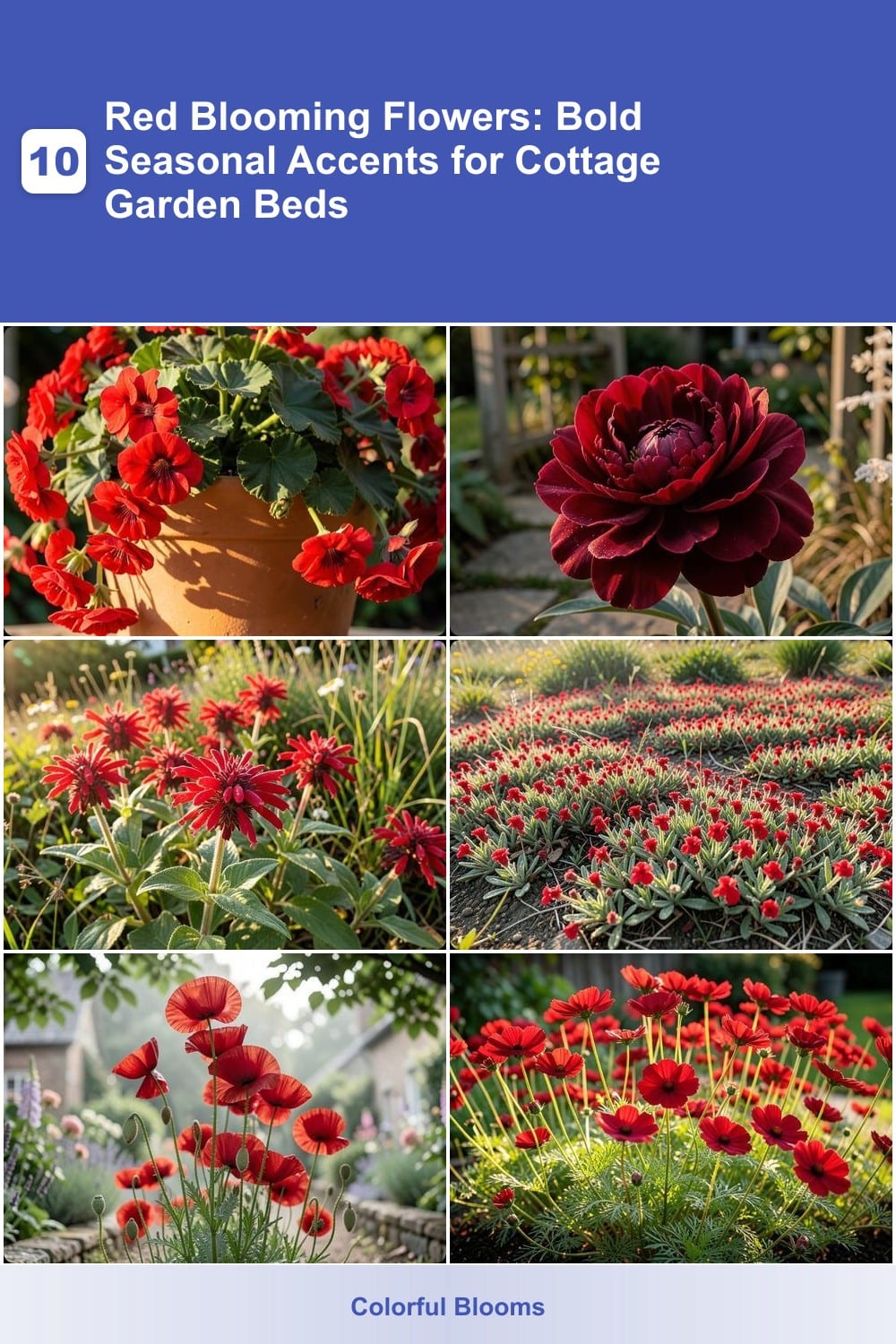
Transform your cottage garden into a vibrant red haven with these 10 striking red blooming flowers. Their bold hues attract pollinators, extend seasonal color, and create eye-catching focal points that elevate any garden bed design.
Classic Red Geraniums for Summer Containers
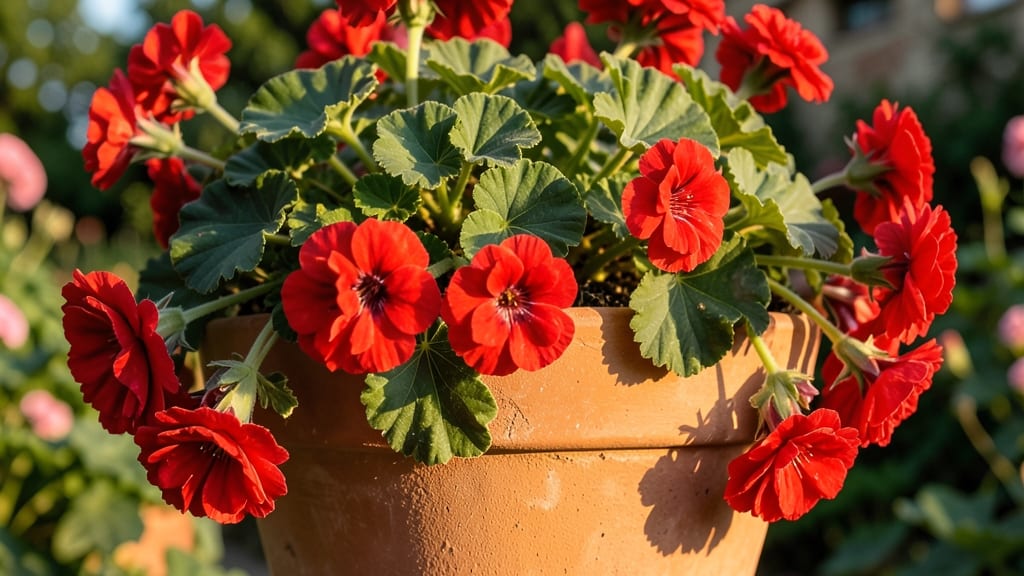
Looking for a heat-tolerant red bloomer that’s as easy to grow as it is stunning? Classic red geraniums are your answer—these sun-loving annuals thrive in containers, cascading over edges with vibrant blooms that last from early summer until frost.
Plant them in well-draining potting mix and place containers where they’ll get at least 6 hours of sun daily. Deadhead spent blooms regularly to encourage nonstop flowering, and fertilize lightly every 4-6 weeks. Their trailing habit makes them perfect for balconies, patios, or window boxes, adding instant color to small spaces.
Urban gardeners and beginners will love how forgiving these plants are—they tolerate drought, occasional neglect, and even light frosts. Just keep them watered during heatwaves, and you’ll enjoy long-lasting red blooms with minimal effort. 🌻
Deep Crimson Peonies for Elegant Garden Beds
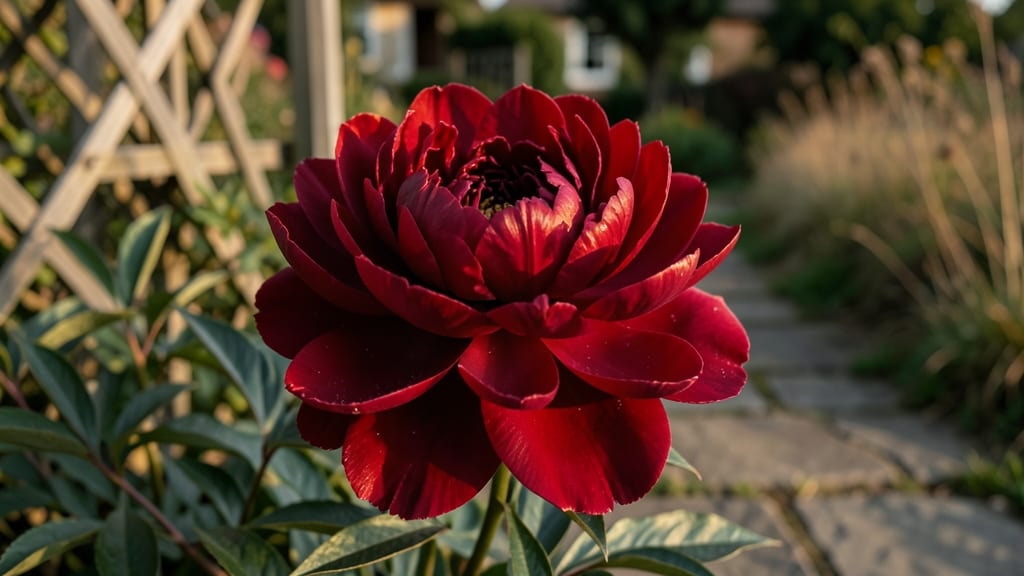
Want a garden centerpiece that commands attention and exudes old-world charm? Deep crimson peonies deliver massive, velvety blooms that turn heads—and weddings—alive with their intoxicating fragrance. Unlike annuals, these perennials reward patience with 5+ years of show-stopping displays, making them a long-term investment for formal cottage gardens.
Plant your deep crimson peonies in full sun to partial shade with well-draining soil, and stake their sturdy stems to prevent flopping as blooms reach 5-7 inches wide. The key to their longevity? Deadhead spent blooms in early summer to encourage a second flush of flowers, and mulch heavily in winter to protect their crowns. Their fragrant, layered petals make them ideal for cutting arrangements that last up to a week in a vase.
Perfect for gardeners who love timeless elegance, these peonies thrive in formal borders or as standalone specimens. Their low-maintenance nature after establishment makes them a dream for those who want luxurious blooms without the fuss. 🌷
Scarlet Beebalm for Hummingbird Attraction
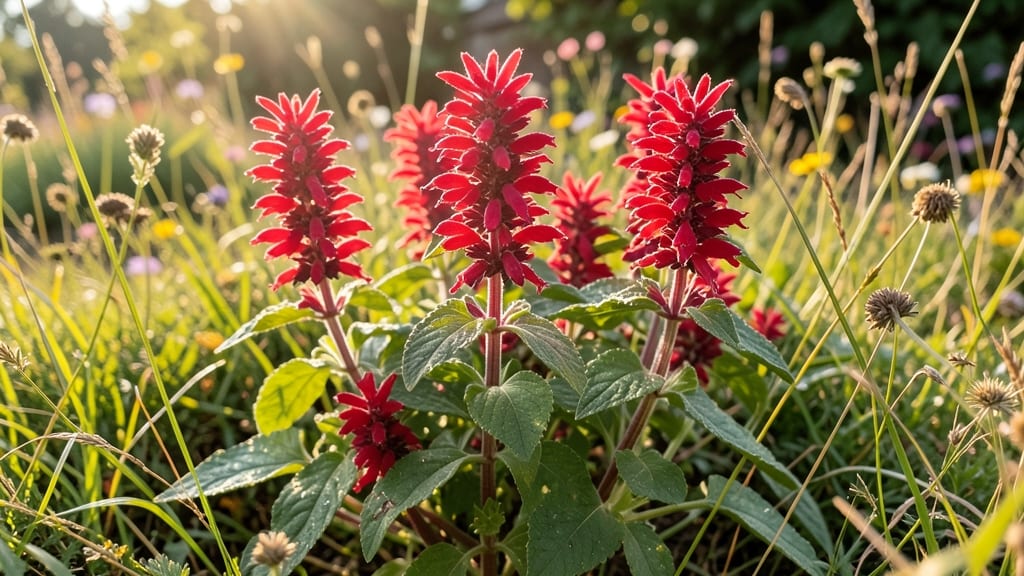
Turn your garden into a hummingbird hotspot with scarlet beebalm—a native perennial that produces tubular red blooms perfect for attracting pollinators. Unlike annuals, this hardy plant thrives in full sun and requires almost no maintenance once established, making it ideal for busy gardeners.
Plant scarlet beebalm in well-draining soil and water moderately—it tolerates drought once rooted. The tubular red flowers bloom from midsummer to fall, providing a long season of color while drawing hummingbirds and butterflies. Its aromatic foliage adds an extra sensory delight to your garden.
Perfect for cottage gardens, pollinator-friendly landscapes, or wildflower meadows, this low-maintenance plant ensures vibrant red blooms without the fuss. 🌟
Firecracker Pennyroyal for Pollinator Meadows
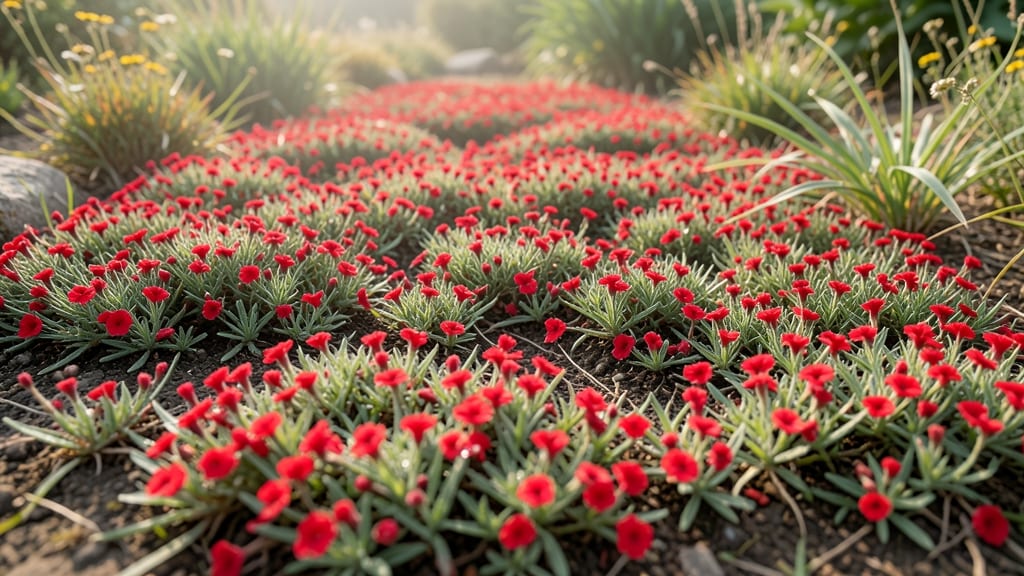
Want a low-maintenance red bloomer that thrives where others fail? Firecracker Pennyroyal delivers a carpet of tiny red flowers while demanding almost no care—perfect for pollinator meadows or neglected corners of your garden.
This drought-resistant perennial spreads aggressively to fill gaps between other plants, making it ideal for poor soil or rocky areas. Plant it in full sun to partial shade, and watch it form dense mounds that buzz with bees and butterflies all summer. Its minty fragrance adds a bonus sensory experience.
Landowners with wildflower meadows or gardeners seeking effortless ground cover will love how Firecracker Pennyroyal self-seeds and spreads, creating a natural, pollinator-friendly tapestry with minimal effort. 🌟
Velvet Red Poppies for Dramatic Height
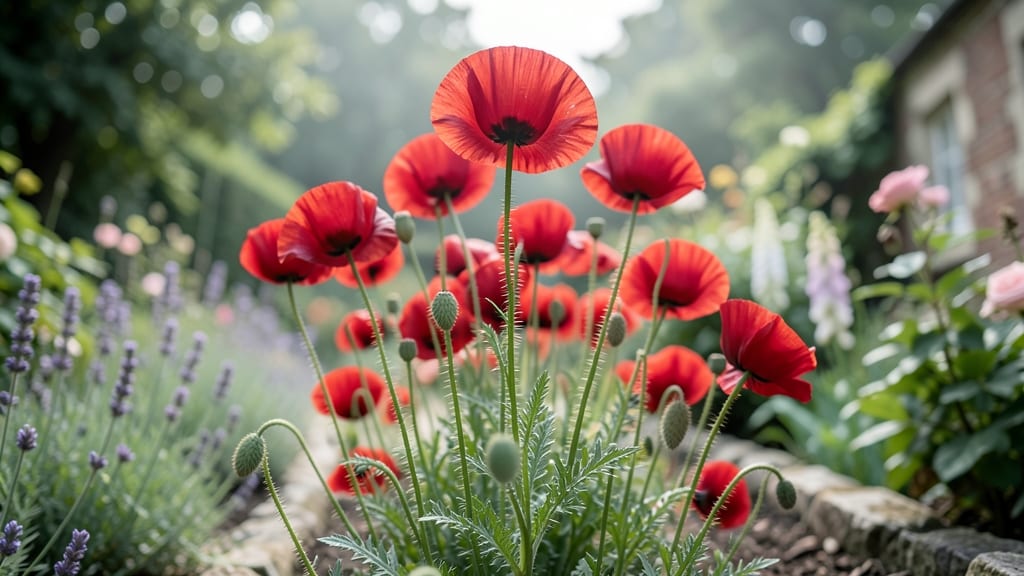
Need a dramatic vertical element that instantly elevates your cottage garden’s charm? Velvet red poppies bring ethereal height with their delicate, papery blooms that sway gracefully in the breeze. Unlike their short-lived annual cousins, these perennials (or biennials) self-seed prolifically, creating a naturalized drift of color that multiplies each year with minimal effort.
Plant seeds directly in well-drained soil in early spring or fall, spacing them 12-18 inches apart for their eventual 3-4 foot height. They thrive in full sun and tolerate poor soil, making them perfect for neglected corners or wildflower meadows. The secret to their longevity? Let the seed pods mature and dry on stems—this encourages self-seeding while adding rustic texture to winter gardens.
Gardeners who love low-maintenance elegance and organic, romantic cottage aesthetics will adore how these poppies contrast their deep green foliage with velvety red blooms. Pair them with lavender or silver foliage for a dreamy, high-impact display. ✨
Crimson Cosmos for Long-Stemmed Cut Flowers
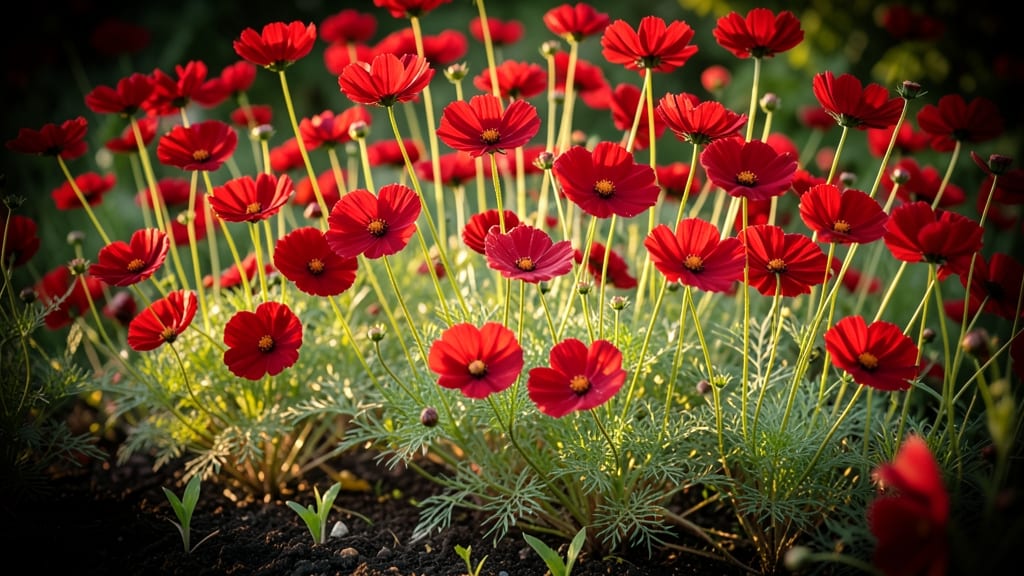
Tired of red blooms that fade fast? Crimson cosmos defy the trend with their long-lasting stems and nonstop flowering—ideal for bouquets that last weeks in a vase. Unlike fussy perennials, these fast-growing annuals sprout from seed in just 5-7 days and produce abundant red blooms until the first frost.
Sow seeds directly in poor soil (they thrive where others fail) and give them full sun to partial shade. Their deer-resistant foliage makes them perfect for rural gardens, and stems remain sturdy enough for cutting. For continuous blooms, deadhead spent flowers regularly—each plant produces 50+ stems per season, perfect for weekly floral arrangements.
Floral designers and cottage gardeners will love how crimson cosmos pair with white snapdragons or lavender for romantic bouquets. Their year-round availability as seeds means you can start fresh displays anytime. 🌻
Ruby-Throated Trumpet Vine for Climbing Walls
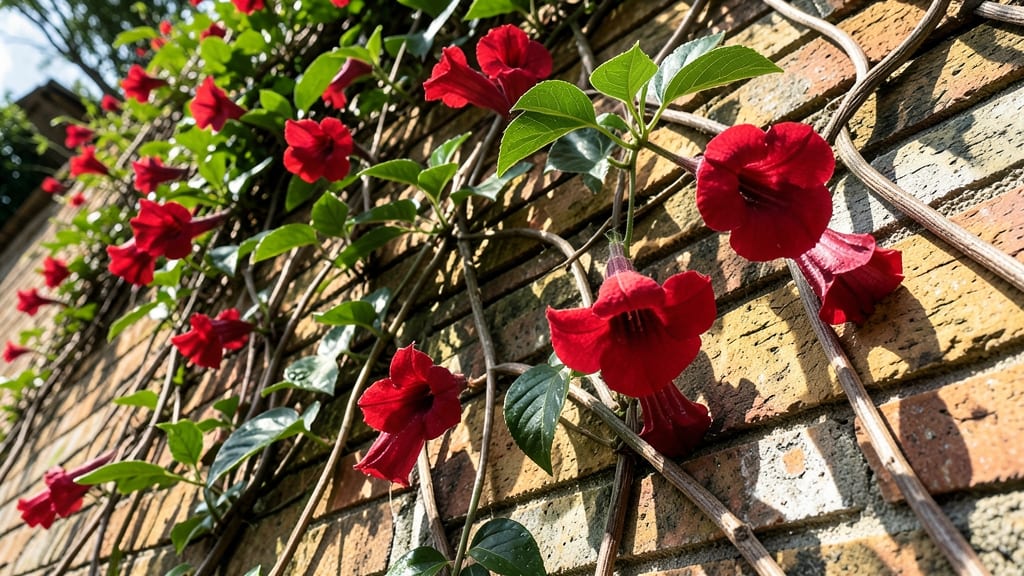
Want to transform a blank wall or fence into a living tapestry of red? The ruby-throated trumpet vine (Campsis radicans) delivers dramatic vertical drama with its trumpet-shaped red blooms—each 2-3 inches long—that climb aggressively on trellises, arbors, or even brick walls. Unlike fussy climbers, this native vine thrives in hot, dry conditions once established, making it perfect for sunny urban spaces or drought-prone gardens.
Plant your vine near a sturdy support structure in full sun to partial shade, and watch it twine upward at a rate of 10-15 feet per season. The key to its success? Water deeply during the first growing season to encourage strong root growth, then let it fend for itself—it’s remarkably drought-tolerant after year one. Prune back leggy growth in late winter to shape the vine and encourage bushier blooms, but avoid heavy pruning in early spring when buds form.
Gardeners with small spaces or limited ground area will love how this vine adds year-round vertical interest—its glossy green leaves provide summer shade, while its hummingbird magnet status ensures your garden stays lively from late spring through fall. Pair it with purple clematis or silver foliage for a striking color contrast. 🌟
Scarlet Sage for Drought-Tolerant Borders
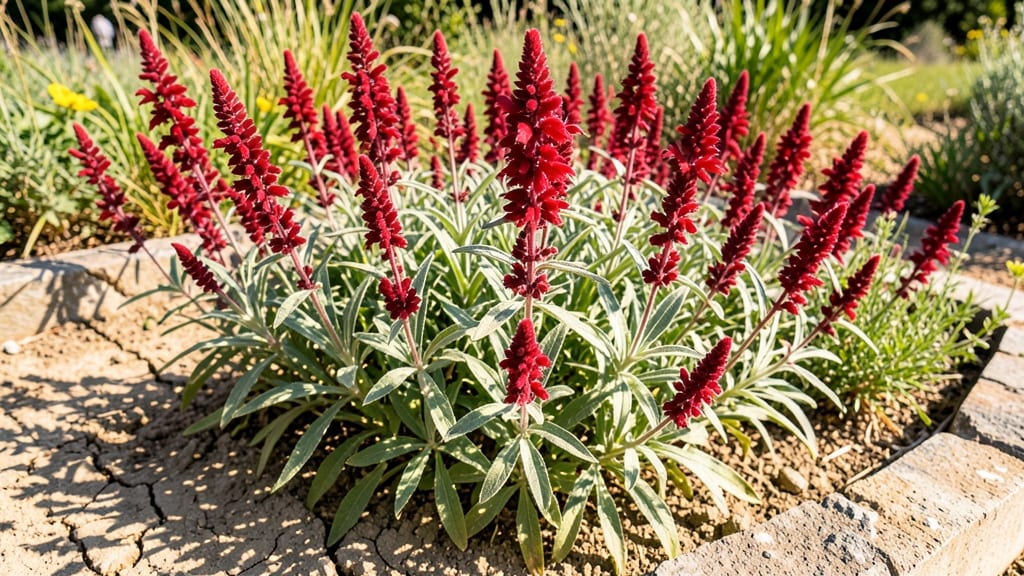
Struggling to keep your garden borders lush in dry spells? Scarlet sage (Salvia coccinea) delivers velvety red blooms that thrive in poor soil and full sun, making it the perfect drought-tolerant star for low-maintenance borders. Unlike fussy annuals, this fragrant perennial blooms repeatedly from spring to fall, creating striking vertical lines that draw the eye through your garden.
Plant scarlet sage in well-draining soil with 6+ hours of sun daily, and water sparingly once established—it’s nearly indestructible after its first year. The aromatic foliage adds a sensory bonus, while its 3-foot spikes of red flowers provide dramatic height without requiring staking. Deadhead spent blooms to encourage continuous flowering, but otherwise, this plant needs almost no attention.
Perfect for xeriscaping, pollinator gardens, or cottage borders, scarlet sage brings effortless elegance to dry or neglected areas. Its year-round hardiness in zones 8-11 makes it ideal for gardeners who want bold red color with zero fuss. 🌿
Blood-Red Begonias for Shady Spots
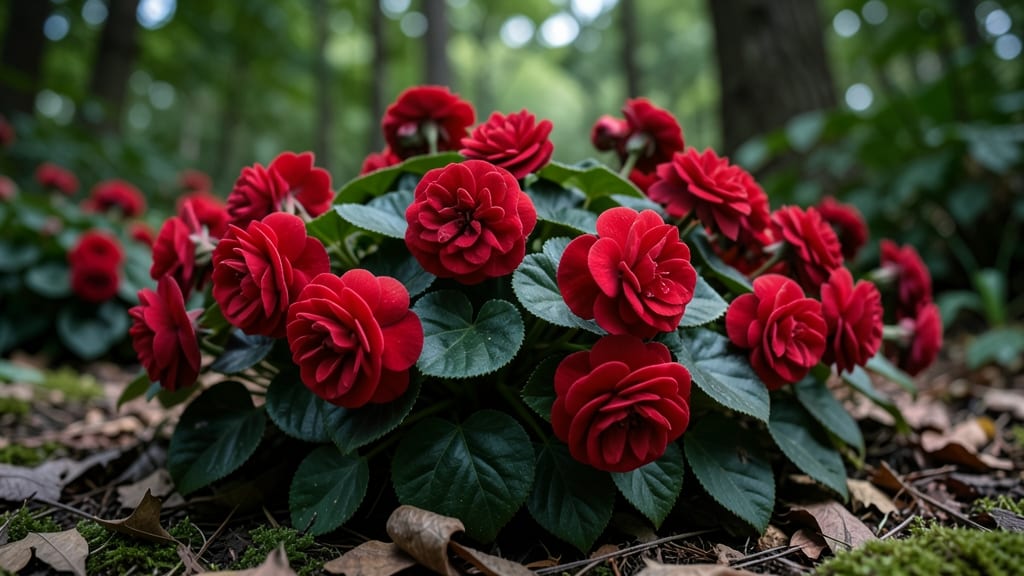
Struggling to find red blooming flowers that thrive in shady spots? Blood-red begonias are your answer—these shade-loving stars produce glossy, deep green foliage paired with clusters of vibrant red blooms that last all summer long. Unlike sun-loving red flowers, begonias flourish in woodland garden settings where dappled light filters through trees.
Plant blood-red begonias in well-draining, moist soil with morning sun and afternoon shade to prevent leaf scorch. Their waxy leaves help retain moisture, making them ideal for humid or dry-shade conditions. Pinch back leggy stems in early spring to encourage bushier growth, and fertilize lightly every 4-6 weeks for continuous blooms. These tender perennials (often grown as annuals in colder climates) add a jewel-toned pop to shady borders, containers, or understory plantings.
Perfect for gardeners with limited sun exposure, these begonias create a lush, tropical feel in cottage gardens, shade houses, or even as houseplants. Their year-round availability as bedding plants means you can easily refresh your shady spots with bold red color whenever you need it. 💚
Firewheel Plant for Season-Long Color
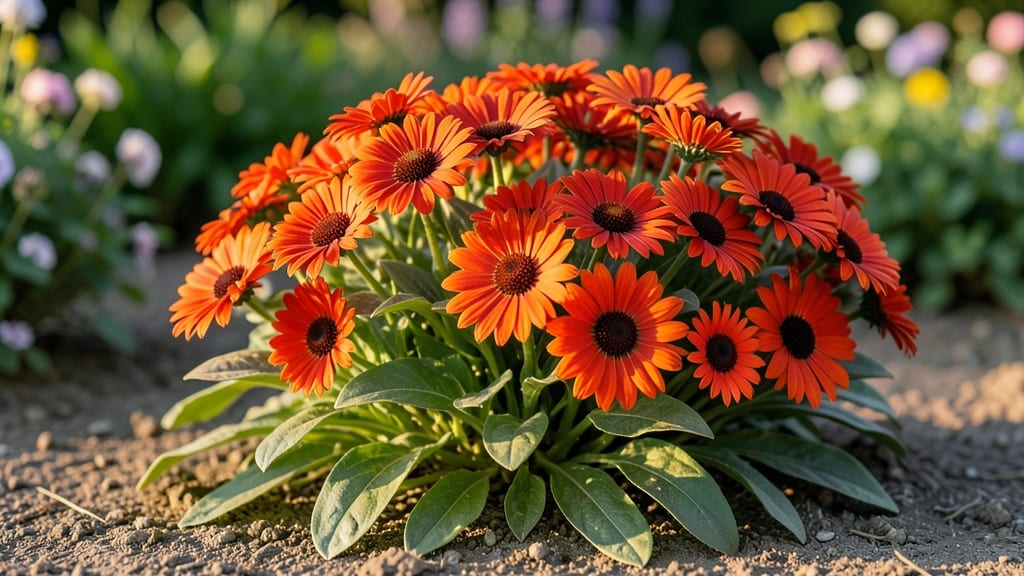
Want a compact powerhouse that delivers season-long red blooms without the fuss of tall perennials? The firewheel plant (Gaillardia pulchella) is your answer—a tender perennial that thrives in borders while producing bright red (or bicolor) daisy-like flowers from spring until frost.
This drought-tolerant beauty loves full sun and well-draining soil, making it perfect for hot, dry climates. Its silver-green foliage contrasts beautifully with the fiery blooms, creating a striking visual effect. Deadhead spent flowers to encourage more blooms, and watch pollinators flock to its nectar-rich petals.
Ideal for cottage gardeners who want low-maintenance color with minimal upkeep, firewheel plants pair wonderfully with lavender or purple salvia for a bold, cohesive look. 💚