
Blooming
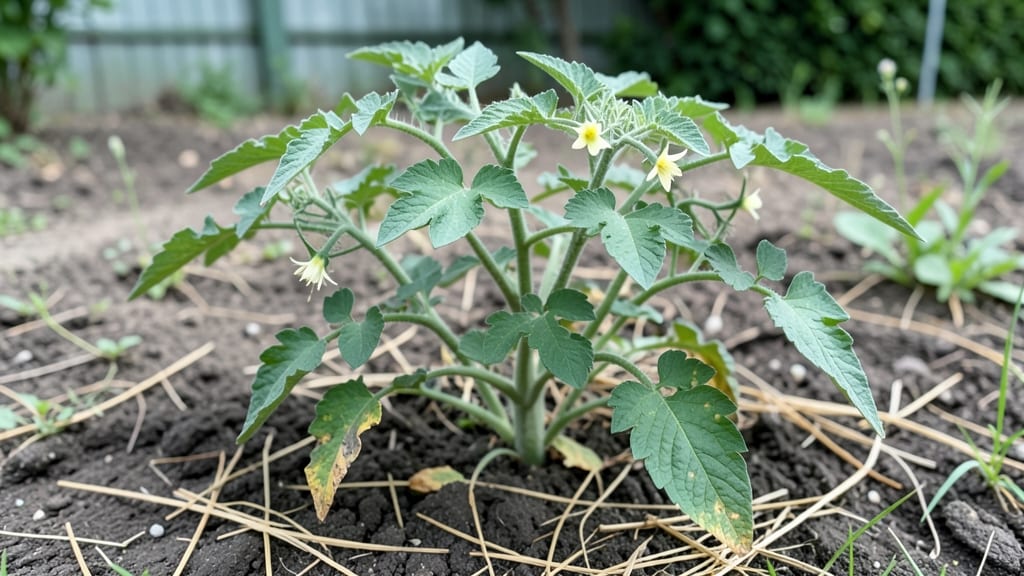
Tomato plants’ first flowers often appear 6-8 weeks after transplanting, but pruning them early can boost fruit production later by redirecting energy to stronger growth. Remove only suckers below the first flower cluster to encourage a more productive main stem.
Those initial blossoms might look promising, but they’re actually a sign your plant is prioritizing reproduction over fruit development. 🌱 By removing suckers—the small shoots that form in the leaf axils below the first flower cluster—you’re forcing the plant to focus its energy on strengthening the main stem and developing more robust secondary branches.
This technique works especially well for indeterminate varieties, which can produce fruit continuously throughout the season if given the right conditions.
Think of it like redirecting a river: instead of letting the water (or energy) flow toward a few early blooms, you’re channeling it toward a more sustainable, high-yielding system.
Just remember, timing is everything—wait until the plant has at least 5-6 true leaves before you start pruning, and always use clean, sharp pruners to avoid damaging the stem.
💡 In This Article
- Why Pruning Early Tomato Flowers Improves Yields
- Step-by-Step Guide to Pruning Tomato Plants for Maximum Fruit
Why pruning early tomato flowers improves yields
Here's what's actually happening inside your tomato plant when those first flowers appear: they trigger a hormonal shift that prioritizes reproduction over growth. The plant diverts valuable resources like photosynthates (sugars) and nitrogen toward flower and fruit development instead of building stronger stems and leaves.
Studies show indeterminate varieties like 'Sungold' can lose 30-40% of potential yield if allowed to fruit too early, as their energy becomes spread too thin across weak branches.
The key factor is the plant's hormone balance, particularly auxins (growth hormones) and cytokinins (cell division regulators). Early flowers produce high concentrations of auxins that suppress lateral shoot growth, while pruning suckers below the first cluster reduces this hormonal dominance.
This creates an environment where cytokinins can stimulate stronger secondary branching—each new branch becomes a potential high-yield fruit producer. 🌱 The University of Florida's horticulture research found that pruned indeterminate plants developed 2-3 times more fruit clusters than unpruned counterparts by mid-season.
What most people don't realize is how this affects the plant's structural integrity. Those early flowers often form on weak stems that can't support heavy fruit loads, leading to blossom end rot or broken branches.
By removing suckers, you're essentially giving the plant a growth spurt—redirecting energy to develop thicker stems capable of supporting 5-10 pounds of fruit per branch (versus just 1-2 pounds on unpruned plants).
The trade-off is worth it: determinate varieties like 'Roma' show 15% yield increases when early suckers are pruned, while indeterminate types can see 50%+ gains.
Temperature plays a crucial role in this process. In cooler climates (60-70°F nights), tomato plants naturally grow slower, making early pruning even more beneficial. The delayed growth gives you more control over when the plant allocates resources.
Meanwhile, in hot regions (80°F+), pruning helps prevent the plant from bolting (rapid flowering) due to heat stress—a condition where the plant diverts all energy to reproduction instead of fruit development.
Consider these physiological differences between varieties: indeterminate tomatoes (like 'Better Boy') continue growing and producing flowers all season, while determinate types (like 'Celebrity') set all their fruit at once. Pruning early in indeterminates creates a multi-tiered production system, where each new branch develops its own flower clusters.
For determinates, early pruning helps prevent overloading the main stem, which can lead to 20% fruit drop due to insufficient support structures.
The science behind this involves a fascinating feedback loop: when you remove suckers, the plant perceives this as stress and responds by producing more ethylene gas, a natural growth regulator that stimulates branching.
This is why you'll often see 3-5 new shoots emerge within 7-10 days of proper pruning—each with the potential to become a high-yielding fruit branch. The result is a plant that's not just bigger, but more efficient at converting sunlight into fruit. 💫
Here's a pro tip: the first 30 days after transplanting are critical for establishing this strong framework. During this period, focus on removing only the lowest suckers (those growing below the first flower cluster) while leaving higher suckers intact.
This creates a gradual energy redirection that prevents shocking the plant and allows it to adjust its growth pattern naturally.