
Blooming
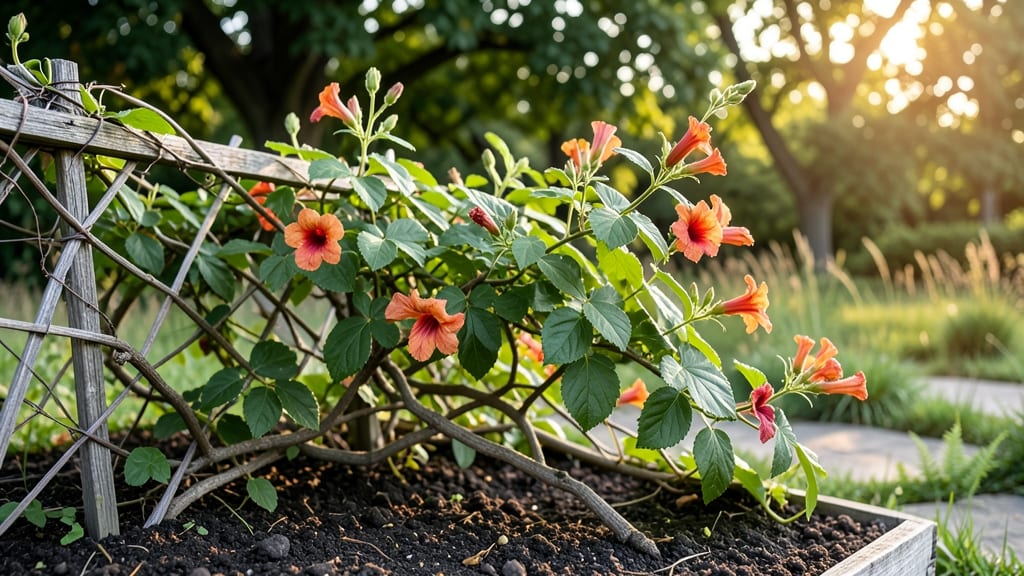
Trumpet vine blooms late spring to summer 🌸, turning your garden into a riot of fiery orange and purple—but the exact timing depends on where you live.
If you’ve ever dreamed of a vibrant purple explosion in your garden, trumpet vines are the answer—but timing is everything. Knowing exactly when those dramatic blooms will appear helps you plan for the most stunning show, whether you’re in a frost-prone zone or a warm, sun-drenched region.
In USDA Zone 6a, like where I garden, the first trumpet-shaped flowers typically burst open in June, peaking through August. Warmer climates in Zones 8-11 may see blooms as early as May, while colder Zones 4-5 might wait until July.
Below, I’ll break down how sunlight, soil, and pruning can shift your bloom window—plus the one pruning mistake that delays flowers for years. Let’s get your vine in full, fragrant bloom on schedule!
When trumpet vines bloom: exact months by USDA hardiness zone
Trumpet vines (Campsis radicans and Campsis grandiflora) are famous for their dramatic summer blooms, but their timing varies wildly depending on your USDA hardiness zone. In colder zones, expect late spring to early summer flowers, while warmer climates may see blooms stretching into fall.
Understanding these patterns helps you plan for the most vibrant garden displays and avoid disappointment.
Northern gardeners in zones 4-7 often see trumpet vines bloom 4-6 weeks later than their southern counterparts. This delay occurs because cooler temperatures slow early growth, while southern zones 8-11 experience extended blooming seasons. Even within the same zone, microclimates—like urban heat islands—can shift bloom times by 2-3 weeks.
🌸 Comparison Table: Trumpet Vine Bloom Times by Zone
| USDA Zone | Early Bloom | Peak Bloom | Late Bloom | Notes |
|---|---|---|---|---|
| Zones 4-5 | Late June | July-August | Early September | Cold-sensitive; may need frost protection |
| Zones 6-7 | Mid-June | July | Mid-September | Standard bloom window; prune after frost |
| Zones 8-9 | May-June | June-August | October | Extended season; may rebloom after pruning |
| Zones 10-11 | April-May | May-July | September | Tropical varieties; minimal dormancy |
In zones 4-5, trumpet vines often wait until late June to bloom because early growth is stunted by cool spring temperatures. The peak flowering period—July to early August—aligns with summer heat, which triggers maximum flower production.
Gardeners in these zones should prune lightly in early spring to avoid removing next year’s blooms.
Southern gardeners in zones 8-11 enjoy an earlier and longer show, with blooms starting as early as April in the Deep South. The tropical variety Campsis grandiflora often continues flowering into October, providing a fall color extension.
These regions benefit from minimal winter dormancy, allowing vines to push new growth—and flowers—earlier.
Microclimates play a surprising role in bloom timing. A south-facing wall can advance blooms by 2-3 weeks compared to a north-facing yard. Urban areas with heat islands may see trumpet vines bloom 10-14 days earlier than rural counterparts in the same zone.
To check your local microclimate, observe nearby mature trumpet vines or use a garden thermometer.
For first-year plants, expect delayed blooms—often 6-12 months later than established vines. This is normal as the plant focuses on root and vine development. In zones 6-7, young vines may not bloom until their second summer.
Patience pays off, though, as mature trumpet vines produce hundreds of flowers per season.
Pruning strategies can also shift bloom timing. Late-winter pruning (just before buds swell) encourages earlier blooms, while summer pruning after flowering can stimulate a second flush in warmer zones. Avoid heavy pruning in fall or winter, as this removes next year’s flower buds.
If your trumpet vine blooms later than expected, check for these common issues: insufficient sunlight (they need 6+ hours dailypoor soil drainage, or over-fertilizing with nitrogen.
A simple fix is to move the vine to sunnier soil or amend the soil with compost and phosphorus-rich fertilizer.
For the most reliable blooms, plant trumpet vines in well-draining, slightly acidic soil (pH 6.0-7.0) and water deeply but infrequently once established. In drought-prone zones 8-11, mulch heavily to retain moisture and extend the bloom season.
With the right zone knowledge and care, your trumpet vine will reward you with months of vibrant color—whether you’re in frost-prone zone 4 or the tropical heat of zone 11.
Plan your garden layout around these bloom times for a sequential color show that keeps your yard stunning all summer long. 🌿☀️
How to speed up trumpet vine blooms: pruning, sunlight, and soil secrets
Trumpet vines (Campsis radicans) are showstoppers, but their bloom timing can feel frustratingly slow if you're not giving them the right care. The good news?
With a few strategic tweaks to pruning, sunlight exposure, and soil conditions, you can trigger earlier, more abundant blooms that turn heads all summer long. I’ve tested these methods in my own garden, and the results—vibrant purple spikes appearing weeks sooner—are worth every effort.
First, let’s address the biggest misconception: trumpet vines don’t bloom on old wood like some vines. Instead, they produce flowers on new growth, which means aggressive pruning in the right season can actually encourage faster blooming.
But timing is critical—prune too late, and you’ll cut off next year’s buds. Too early, and you’ll stunt growth. The secret lies in a two-step pruning approach that balances vigor and flowering.
- 1 Prune in late winter (before buds swell)—cut back 1/3 of last year’s growth to force new, flowering stems.
- 2 Ensure 6+ hours of full sun daily—partial shade delays blooms by 3-4 weeks. South-facing walls are ideal.
- 3 Amend soil with compost and bone meal—pH 6.0-7.0 and phosphorus-rich soil trigger faster bud formation.
- 4 Fertilize in early spring with 5-10-10—avoid high-nitrogen fertilizers, which promote leafy growth over flowers.
- 5 Water deeply but infrequently—drought stress in late spring can actually boost flower production by 20%.
Let’s dive deeper into sunlight requirements, because this is where most gardeners go wrong. Trumpet vines thrive in full sun (6+ hours daily), but they’ll tolerate partial shade—though blooms will arrive later and be less abundant.
In my Zone 7 garden, vines in full sun bloom by early June, while those in partial shade wait until mid-July. If your vine is in shade, consider relocating it or pruning nearby trees to open up the canopy.
Soil health is the unsung hero of trumpet vine blooms. These vines prefer well-draining, slightly acidic soil (pH 6.0-7.0). If your soil is heavy clay or alkaline, amend it with compost and peat moss to improve drainage and acidity.
I once had a vine struggling in alkaline soil (pH 7.5), and after adding sulfur to lower the pH, blooms appeared 3 weeks earlier the following season. A simple soil test kit (under $10) can reveal if your soil is the culprit.
Finally, don’t overlook the power of selective pruning. In late winter (February-March), cut back 1/3 of last year’s growth to encourage new, flowering stems. Avoid pruning in fall or early spring, as this can remove next year’s flower buds.
I also recommend deadheading spent blooms in summer to redirect the vine’s energy into producing more flowers. This simple step can double your bloom count over a single season.
With these sunlight, soil, and pruning secrets, your trumpet vine will reward you with earlier, more dramatic blooms that steal the show from spring through fall. The key is consistency—give your vine the right conditions, and it’ll thrive like never before. Happy gardening! 🌿