
Blooming
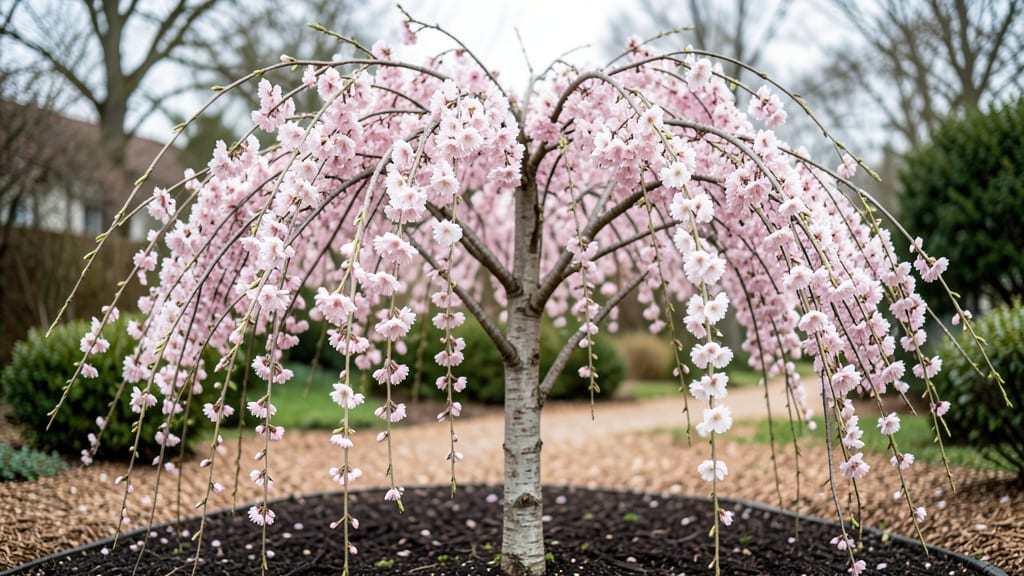
Weeping cherry trees bloom in late spring—typically April to early May in Zone 6, but timing shifts dramatically depending on where you live.
Timing your weeping cherry tree’s bloom season can mean the difference between a breathtaking spring display and missed blossoms—here’s how to align your planting with your climate zone for maximum floral impact.
In colder zones like 5-6, blooms often arrive in early April, while warmer regions in 7-9 may see them as late as May. Microclimates—like urban heat islands or coastal breezes—can push blooms earlier or later by weeks.
Below, I’ll break down the exact bloom windows by zone, share pro tips to extend your tree’s flowering, and help you pick the perfect variety for your garden’s timing.
When do weeping cherry trees bloom by USDA hardiness Zone?
If you’ve ever dreamed of a weeping cherry tree bursting with pink or white blossoms in your yard, timing is everything. These stunning trees—like Prunus subhirtella or Prunus serrulata cultivars—bloom in early to late spring, but their exact schedule depends on your USDA hardiness zone and regional microclimates.
In Zone 5, for example, blooms often arrive 2-3 weeks earlier than in Zone 9, where warmer winters delay the show. Understanding these variations helps you plan planting, adjust care, and even stagger varieties for a prolonged display.
Weeping cherries are cold-hardy ornamentals that thrive from Zones 5-9, but their bloom windows shift dramatically. In cooler zones (5-6), trees burst into color as soon as late March, while warmer zones (8-9) may not see flowers until mid-April or May.
Even within a single zone, elevation, proximity to water, and urban heat islands can push bloom times by 1-2 weeks. For instance, Seattle (Zone 8) often blooms 3 weeks earlier than Atlanta (Zone 8a) due to cooler coastal air.
To maximize your weeping cherry’s floral impact, align planting with your zone’s last frost date. Trees planted in fall (Zones 5-6) often bloom earlier the following spring, while spring planting (Zones 7-9) may delay blooms by 1-2 weeks.
Below, I’ve broken down bloom timing by zone, including regional hotspots like the Pacific Northwest and Mid-Atlantic, so you can predict—and celebrate—your tree’s spring spectacle.
| USDA Zone | Bloom Window | Regional Notes | Last Frost Date |
|---|---|---|---|
| Zone 5 | Late March–Early April | Earlier in Great Lakes (e.g., Chicago), delayed in New England by 1 week. | Mid-April |
| Zone 6 | Early–Mid April | Mid-Atlantic (e.g., DC) blooms 1 week earlier than Appalachia. | Late April |
| Zone 7 | Mid–Late April | Pacific Northwest (e.g., Portland) blooms 2 weeks earlier than Southeast (e.g., Atlanta). | Early May |
| Zone 8 | Late April–Early May | Coastal CA blooms 3 weeks earlier than Texas Hill Country. | Mid-May |
| Zone 9 | Early–Mid May | Southern Florida may see delayed blooms if winter temps stay mild. | Late May |
In Zone 5, where winters are harsh, weeping cherries like ‘Pendula’ often bloom as early as late March, sometimes even before leaf-out. This early timing is critical for pollinators, as bees rely on early spring flowers for nectar.
If you’re in Zone 5a, consider planting ‘Shirotae’, a white-blooming cultivar that thrives in colder temps and blooms 1 week earlier than pink varieties.
By Zone 7, the bloom window stretches from mid-April to early May, with Pacific Northwest regions like Seattle and Portland leading the charge. Here, cooler coastal air triggers earlier flowering compared to inland areas.
For example, a weeping cherry in Seattle might bloom in late April, while one in Boise (Zone 7a) could wait until early May. To extend your bloom season, plant a mix of early bloomers (e.g., ‘Amanogawa’) and late bloomers (e.g., ‘Kwanzan’).
In warmer zones (8-9), blooms arrive 4-6 weeks later than in Zone 5, often aligning with late April to mid-May. Southern California and Florida may see
How to extend weeping cherry bloom season with planting tips
Want your weeping cherry tree to burst into bloom earlier or prolong its floral display? The secret lies in strategic planting and care. By optimizing your tree’s microclimate, soil conditions, and pruning schedule, you can shift bloom timing by weeks—even months—depending on your USDA zone.
Let’s dive into actionable tips to transform your tree into a springtime showstopper.
First, focus on soil preparation. Weeping cherries thrive in well-draining, slightly acidic soil (pH 5.5–6.5). Amend heavy clay with organic compost or sand to improve aeration.
Poor drainage delays root development, which directly impacts bloom timing. Test your soil in early fall to give roots a head start before winter dormancy.
Plant in full sun (6+ hours daily)
Choose a south-facing location to maximize warmth and extend bloom season by 10–14 days.
Use mulch (3–4 inches) to insulate roots and protect against late frosts.
Prune in late winter (before buds swell) to remove dead wood and open the canopy for better light penetration.
Avoid over-fertilizing with nitrogen—it delays flowering. Use a balanced 10-10-10 fertilizer in early spring instead.
Timing your pruning is another game-changer. Prune weeping cherries in late winter (February–March) to encourage robust spring growth. Remove any crossing branches or suckers that compete with the main canopy. For established trees, a light summer pruning (June–July) can redirect energy toward next year’s blooms.
Microclimate matters more than you think. Plant your weeping cherry near a south-facing wall or heat-absorbing pavement to create a warmer microclimate. This can advance bloom time by 2–3 weeks in cooler zones (5–7).
Conversely, if you’re in a hotter zone (8–9), provide afternoon shade to prevent heat stress, which can shorten bloom duration.
Watering plays a subtle but critical role. Deep watering once weekly during dry spells ensures roots establish quickly. Overwatering, however, can suffocate roots and delay flowering. Aim for 15–20 gallons per watering session for mature trees, applied at the base of the trunk in the morning to reduce evaporation.
Finally, consider planting multiple varieties for a staggered bloom display. Pair an early bloomer like ‘Amanogawa’ (March–April) with a late bloomer like ‘Shirotae’ (May) to extend your floral season by 6+ weeks. This not only maximizes visual impact but also supports pollinators throughout spring.