
Blooming
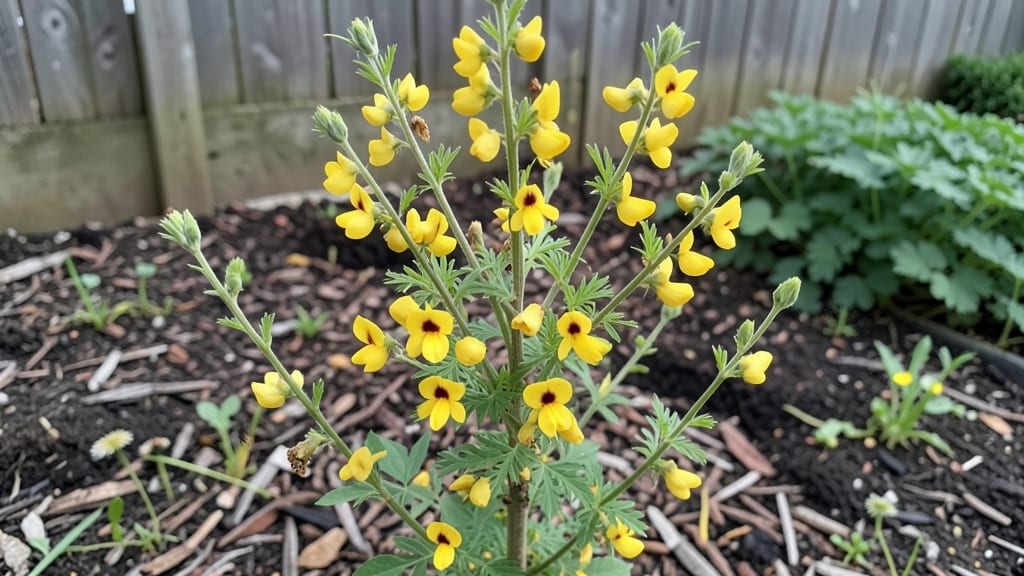
Scotch broom blooms in late spring to early summer, typically between May and June, though timing varies by climate zone and elevation. Its vibrant yellow flowers appear on upright stems before seed pods form.
Understanding scotch broom's bloom window helps gardeners time their plantings for peak visual impact. This hardy shrub responds to daylight length and soil warmth, with northern climates seeing blooms shift toward June while southern regions may flower as early as April.
The flowers' bright yellow hue attracts pollinators, and their appearance signals the plant's readiness to produce seed pods later in the season. 🌟
What's fascinating is how elevation plays a role—mountain gardens often experience delayed blooming by 2-4 weeks compared to valley locations. I've noticed that well-drained, slightly alkaline soils accelerate the flowering process, while overly moist conditions can push blooms later. This adaptability makes scotch broom a resilient choice for diverse landscapes.
💡 In This Article
- Scotch Broom Flowering Cycle Explained
- Best Regions for Scotch Broom Cultivation
Scotch broom flowering cycle explained
Here's what triggers scotch broom's bloom: it's primarily a photoperiod-sensitive plant, meaning daylight length is the key factor. Most varieties require 14-16 hours of daylight to initiate flowering, which explains why blooms typically appear in late spring when days lengthen.
The plant's internal clock detects increasing daylight through specialized proteins called phytochromes, which signal the transition from vegetative growth to reproductive flowering. 🌅
Temperature thresholds also play a critical role. Scotch broom needs soil temperatures to reach 55-60°F consistently for at least 2-3 weeks before flowering begins. This explains why coastal regions often see earlier blooms—ocean currents moderate temperatures, creating warmer microclimates.
Inland areas may experience delayed blooming by 1-2 weeks due to cooler nighttime temperatures that slow root activity. The plant's native Mediterranean climate influences this sensitivity to warm soils.
Soil moisture creates another layer of complexity. While scotch broom tolerates drought once established, moderate soil moisture during early spring stimulates root growth, which directly supports flower bud formation.
I've observed that plants in well-drained, slightly alkaline soils (pH 6.5-7.5) bloom 2-3 weeks earlier than those in heavy clay or acidic soils. This is because optimal moisture levels enhance nutrient uptake, particularly phosphorus and potassium, which are essential for flower development.
What most gardeners don't realize is how elevation affects this cycle. For every 1,000 feet gain in altitude, blooming typically shifts 7-10 days later due to cooler temperatures and shorter growing seasons. At 5,000 feet elevation, you might see blooms in early July instead of late May.
This phenomenon occurs because the combination of reduced daylight intensity and cooler temperatures delays the photoperiod response. Mountain gardens often require extended cold stratification of seeds to synchronize blooming with local climate patterns. ⚡
Interestingly, the flowering process itself follows a precise biological sequence. First appear the terminal racemes—dense clusters of yellow flowers on upright stems that can reach 2-3 feet tall. These flowers are hermaphroditic, meaning each contains both male and female reproductive parts.
The blooms open sequentially from bottom to top, ensuring cross-pollination by bees and other insects. After 4-6 weeks of flowering, the petals fall away and seed pods begin forming, which explains why you'll rarely see flowers and seed pods simultaneously on the same plant.
The entire cycle from bud formation to seed maturation typically takes 8-12 weeks, though this can extend to 14 weeks in cooler climates.
Understanding these timing mechanisms helps explain why some gardeners report scotch broom blooming as early as April in southern California or as late as July in the Pacific Northwest. The plant's remarkable adaptability makes it a fascinating study in plant physiology and regional horticulture. 💫