
Blooming
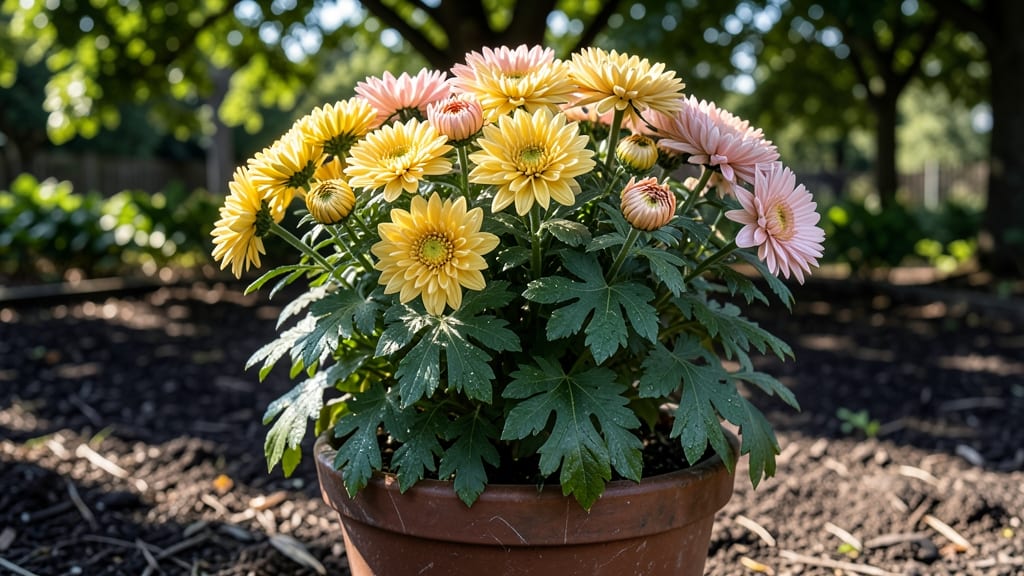
Will chrysanthemums bloom twice? Yes, if they're reblooming varieties (like 'Indica' or 'Korean' types) and you provide proper seasonal care—pruning, consistent watering, and balanced fertilization after the first flowers fade. Non-reblooming types only flower once per season.
Whether your chrysanthemums produce a second flush depends entirely on their genetics and your gardening approach. 🌸 Reblooming varieties are bred specifically to respond to seasonal triggers like shorter daylight hours, while single-bloom types focus all their energy on one spectacular show.
The key to encouraging repeat blooms lies in timing—prune back by one-third after the first flowers fade, and feed with a low-nitrogen fertilizer (like 5-10-10) every 4-6 weeks through late summer.
I've found that consistent moisture (never soggy soil) and afternoon shade in hot climates makes all the difference in extending the blooming season.
What many gardeners overlook is that even reblooming varieties need a cool period (below 60°F) to trigger their second bloom cycle. If summer stays too warm, they'll often skip the second round entirely.
The good news? With the right care, some varieties like 'Bonanza' or 'Mammoth' can keep producing flowers well into October or even November in cooler regions.
💡 In This Article
- Reblooming vs Non-Reblooming Chrysanthemum Types
- Seasonal Pruning and Fertilization for Repeat Blooms
Reblooming vs non-reblooming chrysanthemum types
Chrysanthemums are divided into two distinct groups based on their blooming habits: reblooming and non-reblooming. The difference lies in their genetic programming and how they respond to seasonal cues. Reblooming varieties, such as 'Indica' or 'Korean' types, are specifically bred to produce two flushes of flowers per season.
This ability stems from their sensitivity to photoperiodism—the plant's response to changing daylight hours.
When days shorten in late summer, these varieties trigger a second bloom cycle, typically producing smaller but abundant flowers. 🌿 Non-reblooming types, like 'Chinese' or 'Japanese' varieties, focus all their energy on a single, spectacular bloom in early fall, often producing larger, showier flowers that last for weeks.
The key botanical distinction is in their growth habit and energy allocation. Reblooming chrysanthemums develop multiple lateral buds along their stems, which can be encouraged to flower with proper care. Non-reblooming types, however, allocate most of their resources to a single terminal bud, resulting in one dramatic display.
For example, 'Bonanza' (a rebloomer) might produce 3-4 inches of blooms in two cycles, while 'Shasta' (a non-rebloomer) could have 6-inch flowers just once. The trade-off is in timing—rebloomers sacrifice early bloom size for quantity and longevity.
What most gardeners don't realize is that even within reblooming varieties, there's a hierarchy of performance. Early rebloomers (like 'Dynasity' series) start their second flush in August, while late rebloomers (such as 'Mammoth' types) may not begin until September.
This timing difference is crucial for planning your garden's seasonal display. The environmental trigger for reblooming is a combination of cooler temperatures (below 60°F) and shorter daylight (12 hours or less).
If summer stays too warm, these varieties may skip the second bloom entirely, which is why consistent afternoon shade can be a game-changer in hot climates.
Here's how to identify which type you have: Examine the flower structure. Reblooming varieties often have multiple flower heads per stem and smaller individual blooms (typically 2-3 inches in diameter). Non-rebloomers usually have one large flower per stem (often 4-6 inches) with more elaborate petal arrangements.
The leaf structure also differs—rebloomers tend to have narrower, more upright leaves, while non-rebloomers have broader, more horizontal foliage. This distinction helps you set realistic expectations for your garden's performance.
Consider this practical example: If you plant 'Bright Lights' (a non-rebloomer) in your fall garden, you'll get one stunning display in October, but it will fade quickly.
However, if you choose 'Pacific Giant' (a rebloomer), you might get two waves of blooms—first in early fall, then again in late fall—extending your garden's color palette by 4-6 weeks. The choice depends on whether you prioritize one spectacular show or a prolonged, moderate display.
Both have their merits, but rebloomers offer more flexibility for gardeners who want extended seasonal interest.
One advanced technique worth noting is the use of growth regulators. Some gardeners apply daminozide (a plant growth regulator) to reblooming varieties in early summer to delay the first bloom and encourage a more synchronized second flush.
This isn't necessary for most home gardeners, but it demonstrates how precisely these plants can be managed for optimal performance. The science behind this involves manipulating the plant's hormonal balance to extend its vegetative growth phase before triggering flowering.