
Blooming
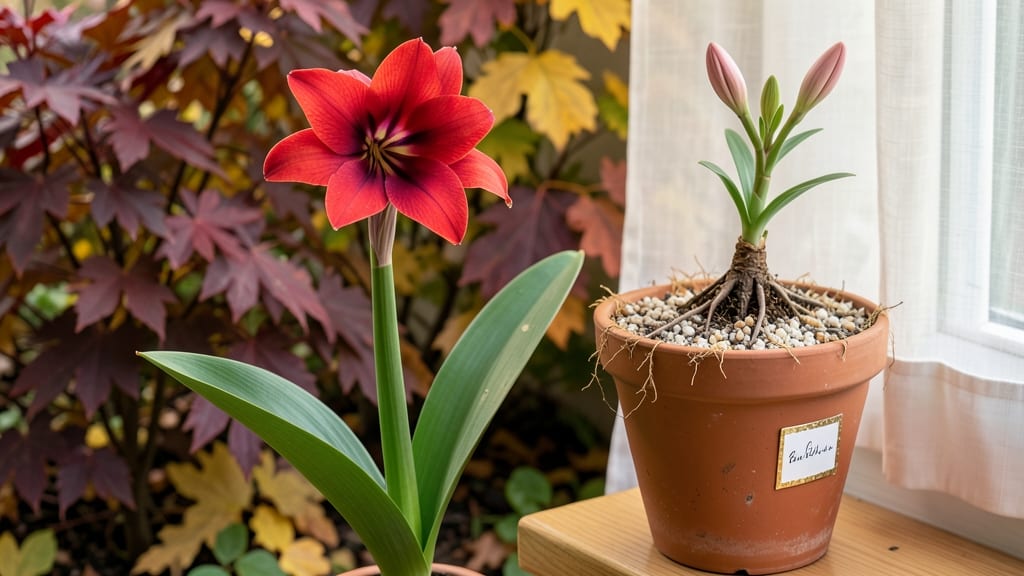
Amaryllis can bloom twice a year with proper care, including consistent 6-8 weeks of darkness, balanced 12-14 hour daylight exposure, and precise watering—though most varieties need 6-12 months between blooms. Hybrid types like 'Paper White' may rebloom faster under ideal conditions.
Amaryllis blooming twice yearly isn't just luck—it's a science of light control and bulb energy. 🌱 The key lies in mimicking their natural dormancy cycle: after blooming, give your plant 6-8 weeks of complete darkness (like a winter rest period) to recharge its energy reserves.
Most gardeners miss this step, which is why reblooming seems rare. Even then, standard varieties typically need 6-12 months between blooms, while hybrids like 'Paper White' can push that timeline shorter with perfect conditions.
What many don't realize is that temperature plays a hidden role too. Keeping your amaryllis between 60-75°F during dormancy helps preserve those energy stores. I've seen dramatic differences when I maintain this range—some plants that failed to rebloom before suddenly produced second blooms after just one adjusted winter.
The secret? Consistency in all three factors: darkness, light exposure, and watering patterns.
💡 In This Article
- Science Behind Amaryllis Reblooming Cycles
- Step-by-Step Guide to Encouraging Second Amaryllis Blooms
Science behind amaryllis reblooming cycles
The amaryllis' ability to rebloom stems from its photoperiodism—a biological response to light cycles. After flowering, these bulbs need 6-8 weeks of complete darkness to trigger dormancy, which mimics their natural winter rest period.
During this time, the bulb converts stored starches into sugars through a process called glycolysis, replenishing the energy reserves depleted by blooming. This is why you'll often see amaryllis bulbs shrink slightly during dormancy—they're essentially "eating" their own stored energy to prepare for next year's growth.
Temperature plays a critical role too. Ideal dormancy temperatures of 60-75°F prevent the bulb from using up reserves too quickly.
Below 55°F, metabolic processes slow dramatically, while above 80°F, the bulb may wake prematurely and exhaust its energy. 🌡️ I've noticed that hybrid varieties like 'Paper White' handle slightly warmer dormancy conditions better than wild types, which explains why they often rebloom more reliably.
The difference lies in their genetic adaptations—hybrids have been selectively bred to store more carbohydrates in their bulbs, giving them the extra energy needed for frequent blooming.
Light exposure after dormancy is equally crucial. Once the bulb breaks dormancy, it needs 12-14 hours of daylight daily to initiate flowering. This light period triggers the production of florigen, a flowering hormone that signals the plant to produce buds.
Too little light (under 10 hours) will delay blooming, while too much (over 16 hours) can stress the plant. The key is consistency—sudden changes in light exposure can confuse the plant's internal clock and prevent reblooming.
Watering patterns also influence reblooming success. During dormancy, reduce watering to once every 3-4 weeks to prevent rot while maintaining just enough moisture for basic metabolic functions.
After dormancy, gradually increase watering as new shoots appear, but avoid soggy soil—root rot is the #1 killer of reblooming potential. 💧 The bulb's ability to store water in its fleshy scales means it can survive short dry periods, but prolonged saturation will trigger fungal growth that consumes those precious energy reserves.
Wild amaryllis species typically bloom once per year in their native habitats, but through selective breeding, modern hybrids have developed the ability to rebloom more frequently.
The 'Paper White' variety, for instance, can produce two blooms in a single year when given perfect conditions, thanks to its enhanced carbohydrate storage capacity. This genetic adaptation means hybrid growers can push their plants harder than wild types without risking bulb exhaustion.
What most gardeners overlook is the connection between bulb size and reblooming potential. Larger bulbs (over 8 inches in diameter) have more stored energy and are far more likely to rebloom successfully. Smaller bulbs may produce beautiful flowers initially but often lack the reserves for a second bloom.
This is why professional growers often divide and replant bulbs every 2-3 years—it forces the plant to develop larger, more energy-rich bulbs capable of multiple blooming cycles.