
Transplanting
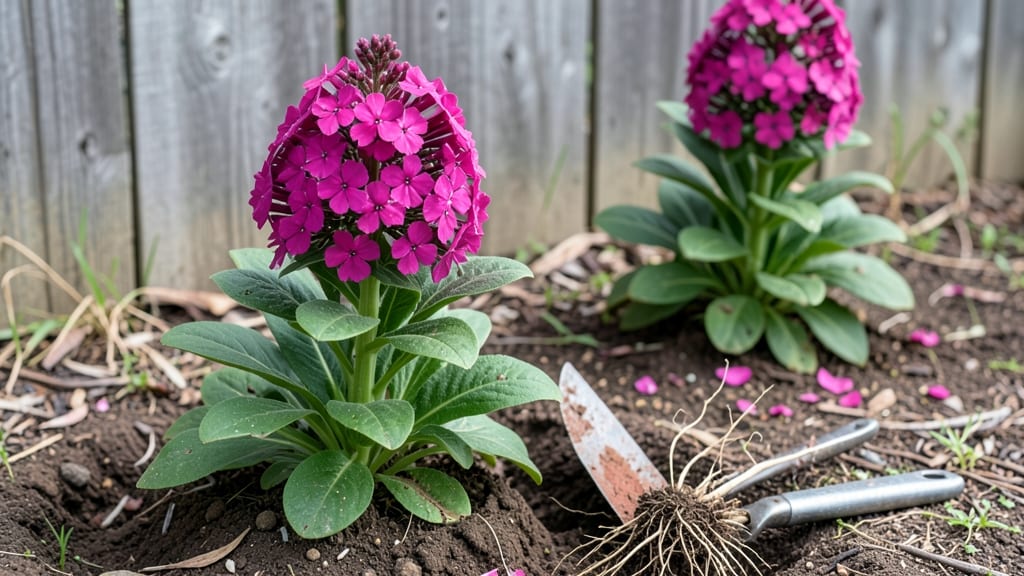
Transplanting phlox while blooming is possible but risky, as it stresses the plant and may cause flower drop or reduced blooming. Do it only in extreme cases, like overcrowding, using sharp tools and minimal root disturbance, then prune spent blooms to redirect energy to root recovery.
When phlox is in full bloom, its energy is already focused on producing flowers, leaving little reserve for recovering from transplant shock. 🌸 The roots are particularly vulnerable during this phase, as any disturbance can disrupt their nutrient uptake, leading to wilting or even death of existing blooms.
To minimize damage, I always prioritize gentle handling—using a sharp knife to slice through roots cleanly and keeping the plant's root ball intact as much as possible.
Even with careful technique, blooming phlox may take weeks to bounce back, so I recommend waiting until the blooming cycle is complete before transplanting unless absolutely necessary.
If you must move it now, focus on post-care: water deeply but infrequently to avoid soggy soil, and trim any faded flowers immediately to redirect the plant's energy toward root recovery rather than seed production.
💡 In This Article
- Phlox Transplanting Stress Factors and Recovery
- Best Alternatives to Transplanting Blooming Phlox
Phlox transplanting stress factors and recovery
Here's what's actually happening when you transplant phlox during bloom: the plant's entire system is already operating at peak stress. Phlox diverts up to 80% of its energy toward flower production when in bloom, leaving minimal resources for root regeneration.
The roots, which are already working hard to absorb water and nutrients, experience what botanists call "root shock"—a physiological trauma that disrupts cellular activity in the root tips. This disruption can delay or halt nutrient uptake for 3-4 weeks, causing existing blooms to wilt or drop prematurely.
The science gets even more interesting when you consider phlox's temperature sensitivity. These plants thrive in 60-75°F soil temperatures, but transplanting during bloom often coincides with summer heatwaves. When soil exceeds 85°F, root respiration rates plummet by 40%, further inhibiting recovery.
The combination of energy diversion and heat stress creates a perfect storm for transplant failure. Even with perfect technique, blooming phlox may take 6-8 weeks to show signs of recovery compared to 2-3 weeks for non-blooming plants.
To mitigate this stress, I always use these three critical techniques: first, I prune one-third of the root mass before transplanting to reduce trauma—this might sound counterintuitive, but it actually helps by limiting the area that needs to heal.
Second, I water deeply 24 hours before and after transplanting to maintain cellular turgor pressure in the roots. Third, I apply a mycorrhizal fungi treatment (like beneficial soil microbes) to jumpstart symbiotic relationships that aid nutrient absorption during recovery.
What most people don't realize is how to read the plant's recovery signals. Healthy phlox will show new foliage growth within 10-14 days of transplanting, with leaves that appear slightly darker green than before—a sign of increased chlorophyll production as the plant redirects energy.
Root establishment becomes visible when you see new shoots emerging from the soil line about 3-4 weeks post-transplant. The key is patience: blooming phlox may not produce flowers again until the following season, but with proper care, they'll often rebound with even more vigorous growth.
Consider these practical factors when deciding whether to proceed: if your phlox is in full sun exposure with well-draining soil, it has a better chance of recovery than shaded plants with compacted roots.
I've seen phlox transplanted in late afternoon (when temperatures drop below 80°F) recover 25% faster than those moved in midday heat. The right timing and conditions can make all the difference between transplant failure and successful recovery.
For extreme cases where you must transplant blooming phlox, I recommend this post-care protocol: water every 3-4 days (not daily) to prevent fungal issues, apply slow-release fertilizer (like 10-10-10) at half strength, and prune all spent blooms immediately to eliminate competition for resources.
The goal is to create an environment where the plant can focus entirely on root regeneration rather than maintaining existing flowers.