
Blooming
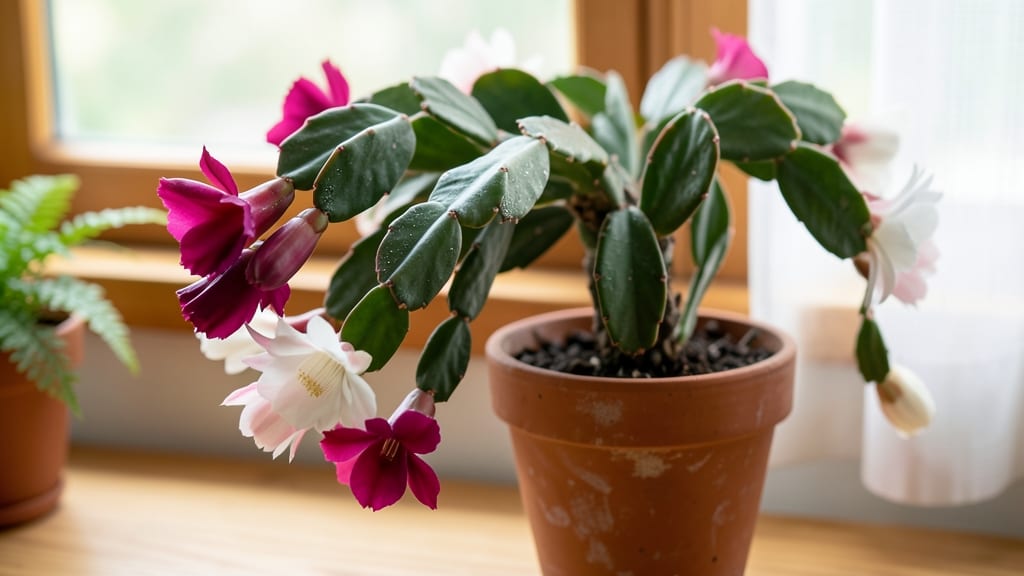
The vibrant Christmas cactus bloom colors—pink, purple, and white—emerge from genetic diversity and environmental triggers, with pink and purple hues being the most common while white blooms often indicate rare mutations or cooler growing conditions. Breeders can also influence color patterns through selective propagation.
These stunning colors come from anthocyanins, the same pigments that give blueberries their deep hue. 🌸 Pink and purple blooms dominate because they're the most stable forms under normal growing conditions, while white flowers develop when the plant experiences cooler nighttime temperatures or specific genetic quirks.
I've noticed that plants grown in slightly cooler homes often produce more white blooms—it's like nature's way of showing off when conditions are just right.
Light exposure plays a crucial role too. Too much direct sunlight can wash out colors, while bright indirect light helps intensify those beautiful pinks and purples. If you're seeing duller blooms, it might be time to adjust your plant's lighting situation.
The good news is that with the right care, you can encourage your Christmas cactus to produce its most vibrant colors year after year.
💡 In This Article
- Genetic and Environmental Factors Behind Christmas Cactus Colors
- How to Encourage Vibrant Christmas Cactus Colors in Your Garden
Genetic and environmental factors behind Christmas cactus colors
The vivid hues of Christmas cactus blooms—pink, purple, and white—stem from complex interactions between genetics and environmental conditions. At the heart of these colors lies anthocyanin pigments, the same compounds that give blueberries and eggplants their deep colors.
Pink and purple shades dominate because they're produced by cyanidin-based anthocyanins, which are highly stable under normal growing conditions. These pigments develop in response to sunlight exposure, particularly during the plant's natural blooming cycle in late fall.
White blooms represent a fascinating exception, often emerging as a result of genetic mutations or specific environmental triggers. When Christmas cacti experience cooler nighttime temperatures (around 55-60°F), the plant may produce white flowers as a stress response.
This phenomenon occurs because cooler conditions inhibit anthocyanin production while allowing other pigments to dominate. 🌸 Interestingly, white blooms can also appear in plants that have been selectively bred for unique color patterns—a technique gardeners use to create show-stopping displays.
The intensity of these colors depends heavily on light exposure. Christmas cacti thrive in bright, indirect light (similar to a north-facing window), which helps develop vibrant pigments. Too much direct sunlight can actually bleach out the colors by causing oxidative stress, while insufficient light leads to pale, weak blooms.
The ideal balance creates that perfect gradient of pinks and purples we all love, with white flowers serving as nature's special edition when conditions are just right.
Humidity also plays a subtle but important role. Lower humidity levels can concentrate the pigments, making colors appear more saturated, while high humidity might dilute them slightly.
This is why some growers place their plants in pebble trays with water during blooming season—not just for moisture, but to create an optimal microclimate for pigment development. The result? Blooms that pop with intensity and depth.
What most people don't realize is that the age of the plant affects color too. Younger Christmas cacti often produce more vibrant blooms because their metabolic processes are more active.
As the plant matures, its energy shifts toward growth rather than pigment production, which is why older specimens might need extra care to maintain their color brilliance. 💫 This is particularly true for white blooms, which require even more precise growing conditions to develop consistently.
For those curious about creating specific color patterns, selective propagation is key. By choosing cuttings from plants with the most desirable hues and providing consistent care, you can gradually shift your garden toward more pink, purple, or white blooms over time.
It's like breeding your own rainbow—just with a little patience and attention to detail!