
Blooming
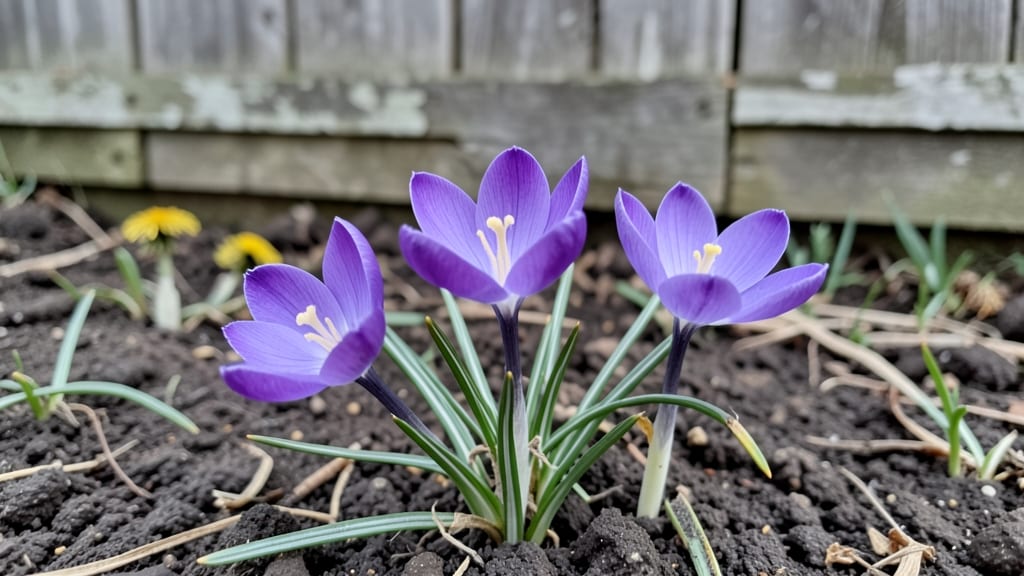
These early bloomers are nature’s way of signaling spring’s arrival, often breaking through snow or frost in regions like Zones 4-6.
The key to their punctual appearance lies in their cold requirement—most varieties need 12-16 weeks of chilling temperatures before blooming, which explains why milder climates may see them emerge as early as January. 🌱 For gardeners, this means planning ahead: plant bulbs in fall to ensure they get the necessary cold exposure, and choose varieties that align with your local frost dates for reliable color.
What’s fascinating is how crocuses strategically time their bloom to avoid competition—Dutch crocuses, for instance, often push through snow for early pollinators, while later species like Crocus sieberi wait until soil warms slightly.
This staggered timing creates a 3-4 week window of vibrant color, turning even the dullest winter days into a living calendar of spring’s progress.
💡 In This Article
- Factors Influencing Crocus Bloom Timing
- Best Crocus Varieties for Seasonal Color
Factors influencing Crocus bloom timing
Here's what's actually happening beneath the soil: crocus bulbs rely on a biological process called vernalization, where exposure to prolonged cold temperatures (typically 32-45°F for 12-16 weeks) triggers their spring bloom.
This cold requirement explains why crocuses in Zone 7 may bloom in January while those in Zone 4 wait until March—their internal clocks are synchronized to local winter patterns.
The bulbs measure accumulated chill hours through specialized proteins that respond to temperature shifts, ensuring they don't bloom prematurely in warm winters.
The interplay between cold exposure and daylight length creates a precise bloom window. Most crocuses need 10-12 hours of daylight to initiate flowering, which aligns perfectly with increasing daylight in late winter.
For example, Crocus tommasinianus (early bloomer) often emerges when daylength reaches 10-11 hours, while Crocus sieberi (late bloomer) waits until 12+ hours of daylight.
Soil temperature also matters—roots need to warm to 45-50°F before active growth begins, which is why you might see crocuses push through snow but not bloom until soil thaws slightly.
Hardiness zones dramatically shift bloom timing because they reflect both temperature extremes and winter duration.
In Zone 3, where winters last 180+ days, crocuses may bloom as late as April due to extended cold periods, while Zone 9 gardens might see January blooms because winters rarely drop below 20°F for long.
The 500-1,000 chill hours requirement for most varieties explains why gardeners in milder climates sometimes need to pre-chill bulbs or plant them in elevated, colder microclimates to ensure reliable blooming.
What most people don't realize is that crocus varieties have evolved specialized timing strategies to avoid competition. Early species like Crocus vernus bloom when bees first become active, while later varieties like Crocus speciosus time their appearance with warmer temperatures that attract different pollinators.
This staggered bloom sequence creates a 3-4 week color show that's visible even through snow cover. The science behind this involves photoperiodism—the plant's internal response to changing daylight—that works in concert with temperature cues to create this precise schedule.
For gardeners, understanding these factors means selecting varieties that match your local conditions. In Zone 5, for instance, you might plant Crocus chrysanthus (early) alongside Crocus flavus (late) to extend your bloom season.
The key is ensuring bulbs receive adequate cold exposure—planting in fall gives them time to establish roots before winter sets in. In warmer zones, you might need to use shade cloth or plant in higher elevations to provide the necessary chill hours. 🌱
One fascinating exception is Crocus tommasinianus, which often blooms in Zone 4-6 while snow still covers the ground. These plants have adapted to push through snowpack using specialized enzymes that break down ice crystals, creating tiny channels for growth.
This adaptation explains why they're often the first flowers to appear in many gardens, sometimes even before the ground thaws completely. The trade-off is that their blooms are shorter-lived than later species, lasting only 7-10 days compared to Crocus sieberi's 2-3 weeks.
The bottom line is that crocus bloom timing is a perfect example of how plants integrate multiple environmental signals—cold, light, and warmth—to create a reliable seasonal schedule.
By understanding these factors, you can create a garden that blooms like clockwork, with each variety making its appearance at precisely the right moment to extend your spring color show. This natural synchronization is what makes crocuses such reliable harbingers of spring's arrival. ✨