
Pests
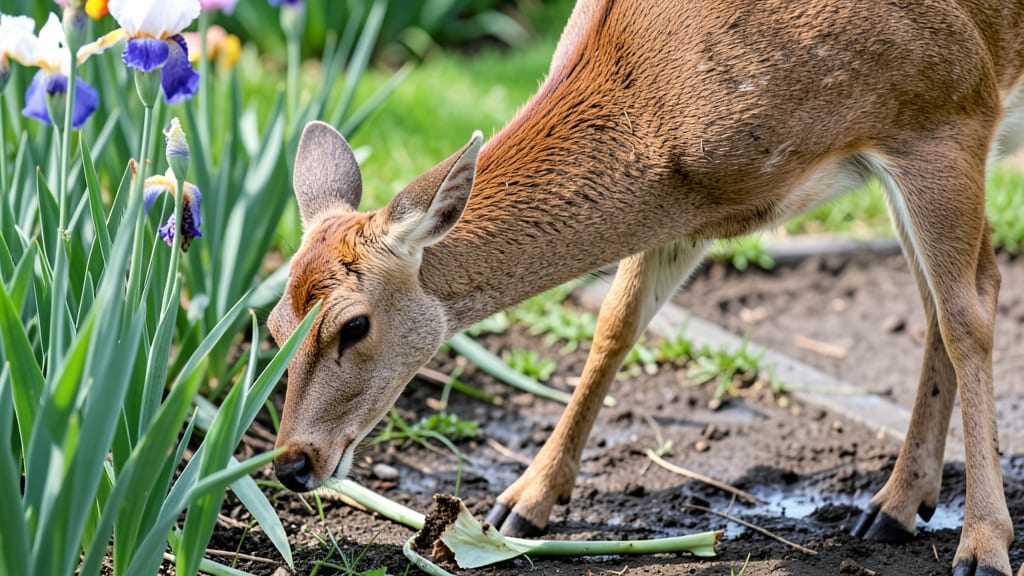
Deer do eat iris flowers and foliage, especially in late summer and fall when food is scarce. Their browsing can strip blooms and damage rhizomes, reducing plant vigor. Iris varieties like Siberian and bearded irises are particularly vulnerable.
Deer often zero in on iris gardens because the tender foliage and rhizomes offer an easy, nutrient-rich meal—especially when other food sources dwindle in late summer. 🌿 Unlike tougher perennials, irises lack strong chemical defenses, making them an irresistible snack.
My experience shows that deer will even return to the same patch repeatedly, so understanding their seasonal patterns is key to protecting your plants.
What’s surprising is how quickly deer can decimate a garden: a single deer can strip a mature iris bed in just a few hours. This isn’t just about lost blooms—damaged rhizomes struggle to recover, leading to weaker regrowth next season.
If you’ve noticed chewed leaves or missing flowers, it’s likely deer activity, not disease.
💡 In This Article
- Why Deer Target Iris Plants in Gardens
- Protecting Iris Flowers from Deer Damage
Why deer target iris plants in gardens
Deer prioritize iris plants because their tender foliage and rhizomes offer a perfect balance of nutrients and accessibility. During late summer and fall, when other vegetation becomes tougher or less palatable, deer rely on softer perennials like irises.
The young shoots contain higher nitrogen levels—up to 3.5%—which deer crave for energy, especially during mating season when their metabolic demands spike. 🌱 This nutritional boost explains why deer will return to the same garden patches repeatedly.
The texture of iris leaves also plays a role—unlike coarse grasses or spiky plants, iris foliage is broad and easy to consume. Deer use their 28-32-inch field of vision to spot these plants from a distance, and their keen sense of smell detects the subtle sweetness of iris blooms.
Siberian irises, with their 18-inch height and delicate petals, are particularly vulnerable because they lack the chemical defenses found in plants like daffodils or foxgloves.
What makes irises especially appealing is their rhizome system. When deer dig or nibble at the base, they expose these nutrient-rich underground stems, which contain stored carbohydrates and proteins.
A single deer can uproot 5-10% of a mature iris bed in one feeding session, leaving behind jagged, chewed edges on the foliage—a telltale sign of deer activity. This damage disrupts the plant's ability to photosynthesize efficiently, leading to stunted growth.
Deer also exhibit seasonal preferences—they target iris blooms most aggressively in September and October, when other food sources are scarce. The blooms themselves contain nectar and pollen, which deer can detect through scent trails.
Unlike some garden plants that develop bitter compounds when stressed, irises don't produce strong deterrents, making them a low-risk, high-reward meal for browsing deer. 🦌
Here’s the science behind their preference: Iris foliage has a low fiber-to-nutrient ratio compared to grasses, meaning deer expend less energy digesting it. The plant's high water content—around 85% in fresh leaves—also makes it easier to consume.
This combination of factors turns iris gardens into deer buffets during critical times of the year.
Interestingly, deer can distinguish between different iris varieties. Bearded irises, with their thicker leaves, are slightly less appealing than Siberian irises, which have thinner, more delicate blades. However, once deer discover a patch, they’ll often return nightly, especially under the cover of darkness when they feel safest.
This behavior explains why some gardeners report overnight devastation to their iris beds. 🌙