
Blooming
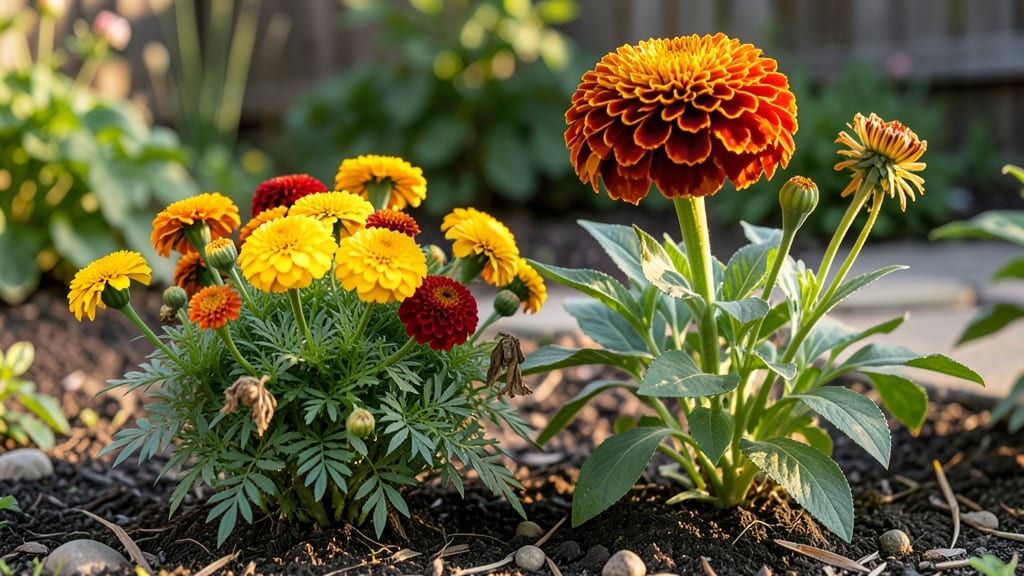
Marigolds bloom all summer in most varieties, thriving in heat and continuous sunlight, though French marigolds may fade faster under extreme drought or temperatures above 90°F without proper care.
Marigolds are summer's workhorses because their bright orange and yellow blooms actually love the heat—most varieties keep producing flowers from early June until frost. 🔥 The secret lies in their native habitats: many marigolds originated in tropical regions where intense sunlight and warm temperatures are the norm.
French marigolds, however, are more delicate—their blooms may slow down when daytime highs hit 95°F or higher, especially if the soil dries out too quickly.
I've seen African marigolds continue blooming through 100°F heatwaves with consistent watering and afternoon shade, while French types often need afternoon protection during peak summer months.
What sets marigolds apart is their heat tolerance combined with low-maintenance needs. Unlike many summer flowers that wilt under midday sun, marigolds actually thrive in full sun exposure, which is why they're perfect for hot climates.
The key difference between varieties comes down to their root systems—African marigolds develop deeper roots that access moisture better during drought, while French marigolds have shallower roots that dry out faster. This explains why French types often need more frequent watering during heatwaves.
💡 In This Article
- Heat and Sunlight Requirements for Summer-Blooming Marigolds
- Extending Marigold Blooms Through Summer: Pruning and Care Tips
Heat and sunlight requirements for summer-blooming marigolds
Marigolds thrive in summer because their biological makeup is perfectly adapted to heat and sunlight. Their leaves contain high levels of carotenoids—the same pigments that give them their vibrant colors—which act as natural sunscreens, protecting the plant from UV damage.
This adaptation allows marigolds to absorb up to 80% more sunlight than many other summer flowers without scorching, which is why they continue blooming even when temperatures climb to 85-90°F.
The science behind this lies in their C4 photosynthetic pathway, which minimizes water loss while maximizing energy production in hot conditions.
French marigolds, however, have a different heat tolerance threshold due to their genetic makeup. Their blooms often slow down when daytime temperatures exceed 90°F because their thinner leaves and shallower root systems struggle to regulate moisture.
In contrast, African marigolds can handle 100°F+ temperatures because their deeper roots (reaching 12-18 inches) access groundwater more efficiently. This root depth difference explains why African types continue blooming through heatwaves while French varieties may need afternoon shade or mulching to prevent wilting.
Sunlight exposure directly impacts bloom duration—marigolds need 6-8 hours of direct sun daily to produce their signature flowers. When sunlight drops below 5 hours, blooms become sparse and smaller. The key mechanism here is photoperiodism: marigolds respond to long daylight hours by triggering continuous flower production.
In regions with 14+ hours of daylight (like the southern U.S.), marigolds enter a near-constant blooming cycle, whereas in shorter-day climates, they may need supplemental lighting to maintain production.
What most gardeners overlook is how soil temperature affects root activity. Marigolds perform best when soil stays between 70-80°F—any hotter, and root functions slow down, reducing nutrient uptake.
This is why mulching with 2-3 inches of organic matter (like straw or wood chips) helps regulate soil temperature and moisture, extending bloom periods. The mulch acts like a thermal blanket, keeping roots cool while retaining 30-40% more moisture during heatwaves.
Consider these variety-specific sunlight needs:
- African marigolds: Handle full sun (6+ hours) with minimal wilting, even in 95°F+ heat
- French marigolds: Prefer morning sun + afternoon shade when temps exceed 85°F
- Signet marigolds: Tolerate partial shade (4-6 hours sun) better than other types
The bottom line? Marigolds' summer-blooming superpower comes from their heat-resistant biology and sunlight efficiency. With the right variety and care, they'll reward you with nonstop color until frost—no other summer annual matches their durability. 🌞