
Blooming
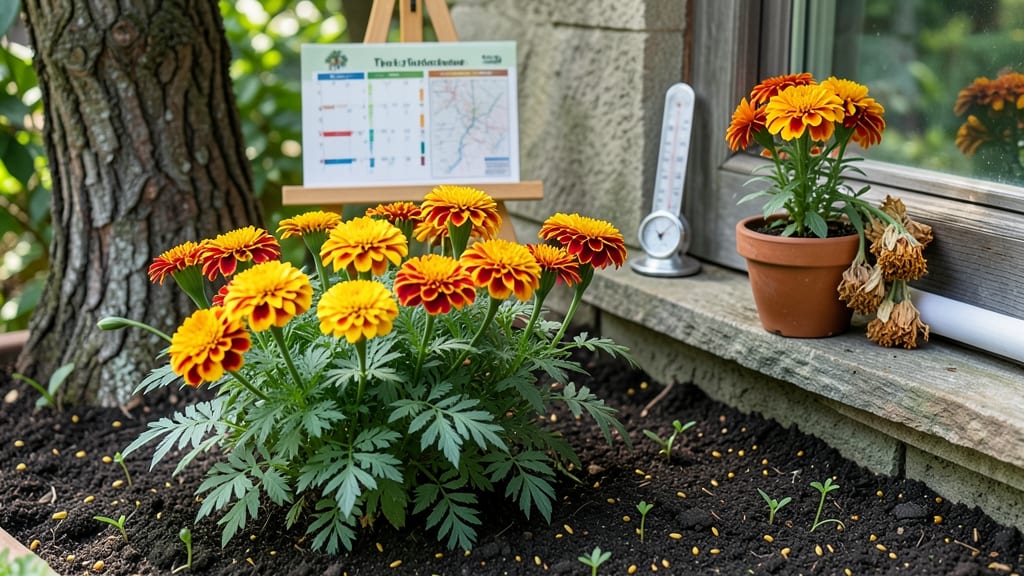
Marigolds don't bloom all year naturally, since their flowering depends on seasonal daylight changes and temperature shifts, though warm-climate varieties may show extended blooms with proper care.
Marigolds follow natural seasonal rhythms tied to sunlight exposure and temperature shifts.
In cooler climates, they typically bloom from late spring through fall, with growth slowing or stopping during winter months. 🌿 Tropical marigold varieties in warmer zones may produce flowers year-round, but even these benefit from seasonal adjustments in care.
The key difference lies in how each variety responds to daylight hours—most marigolds need at least 6-8 hours of sunlight daily to trigger consistent blooming, while some tropical types tolerate shorter daylight periods.
What's interesting is how pruning and soil health can influence blooming patterns. Regular deadheading (removing spent flowers) encourages new blooms, while balanced fertilization supports vigorous growth. In colder regions, overwintering strategies like mulching or container gardening can help preserve plants for earlier spring blooming.
The bottom line? While true year-round blooming is rare, smart gardening practices can significantly extend your marigold's flowering season.
💡 In This Article
- Seasonal Blooming Patterns of Marigolds by Climate Zone
- Year-Round Marigold Care Tips for Extended Blooms
Seasonal blooming patterns of marigolds by climate Zone
Marigolds respond to seasonal cues through a process called photoperiodism, where daylight length triggers flowering. In USDA Zones 3-6 (typical of northern climates), most marigolds behave as annuals, blooming vigorously from late May to October when days are long (14+ hours of daylight).
The key threshold occurs when daylight drops below 12 hours, signaling dormancy. This is why you'll see peak blooms during summer solstice—when sunlight peaks at 14-16 hours—before gradual decline as autumn approaches.
The temperature threshold for dormancy sits around 40°F, where growth slows dramatically. Frost-sensitive varieties like Tagetes erecta (African marigolds) may survive light frosts (28°F) but stop blooming entirely below 50°F.
Tropical marigolds (Tagetes patula) fare better in Zones 8-11, where they may bloom year-round if temperatures stay above 60°F. The difference comes down to their genetic adaptation—tropical varieties evolved with consistent warm temperatures and shorter seasonal variations.
Daylight exposure directly affects flower production through a hormone called florigen. When marigolds receive 6-8 hours of direct sunlight daily, they produce more florigen, leading to abundant blooms.
In cloudy northern winters, even tropical varieties may enter a semi-dormant state due to reduced light intensity. 🌞 This is why gardeners in Zone 7 often see marigolds bloom from April to November—a 7-month window—while those in Zone 10 might enjoy blooms for 9-10 months with proper care.
Frost plays a critical role in temperate climates. A hard freeze (25°F) can kill marigolds outright, but even light frost (32°F) damages leaves and stems, halting flower production. This explains why gardeners in Zone 5 typically treat marigolds as annuals—they replant each spring after winter kill.
The exception is French marigolds (Tagetes patula), which are slightly more cold-tolerant and may survive Zone 6 winters with mulch protection.
Soil temperature also matters—roots need 60°F+ to actively absorb nutrients for blooming. In cooler zones, spring-planted marigolds often bloom later because soil warms slowly. The 30-day rule applies: marigolds planted after the last frost (after May 15 in most northern regions) may miss peak summer blooming windows entirely.
This is why timing your planting to align with soil warming (60°F+) is crucial for maximizing bloom duration.
Consider these climate-based blooming windows:
- Zones 3-5: May-October (5-6 months, annual behavior)
- Zones 6-7: April-November (7 months, may overwinter with protection)
- Zones 8-9: March-December (9-10 months, partial dormancy in winter)
- Zones 10-11: Year-round (with consistent care, tropical varieties)