
Blooming
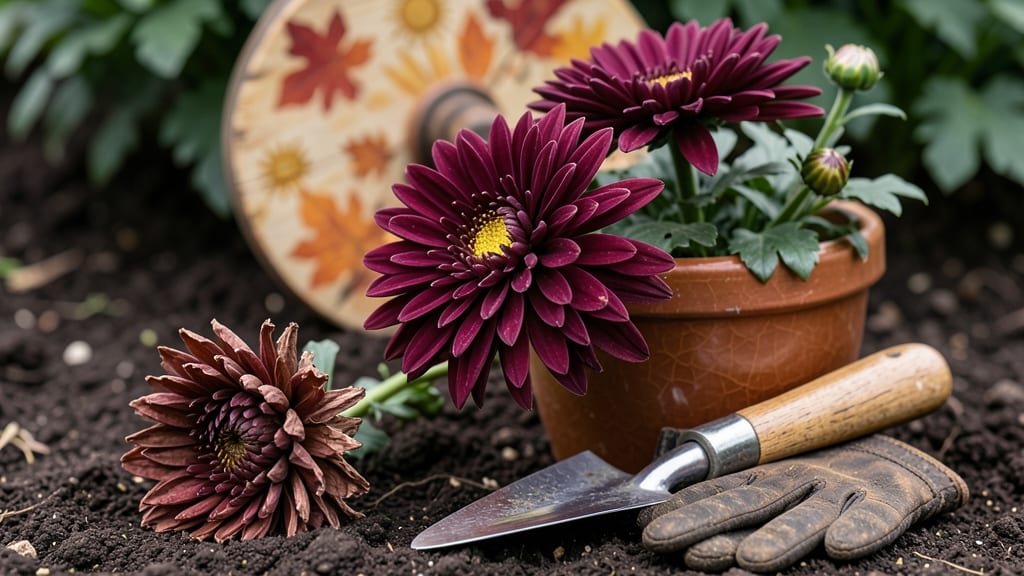
Mums (chrysanthemums) don’t always bloom just once per season—reblooming varieties can produce multiple flower flushes with the right care, while standard types usually bloom only once annually. Light exposure, pruning, and fertilizer timing all play key roles in extending their blooming season.
Not all chrysanthemums follow the same blooming schedule—it depends on their genetics and growing conditions. 🌸 Reblooming mums, like 'Jolinda' or 'Dynasity' series, are bred specifically to produce flowers in fall and sometimes even a second flush in early summer with proper care.
The key difference lies in their growth hormones: rebloomers respond to shorter daylight hours, while standard varieties bloom naturally in fall without needing extra encouragement.
I’ve found that providing consistent afternoon shade during summer helps prevent early dormancy, while regular deadheading (removing spent blooms) signals the plant to produce more flowers.
For those who want to coax extra blooms, timing matters most. Start with a balanced fertilizer in early spring, then switch to a low-nitrogen, high-phosphorus formula when buds begin forming. Prune back leggy growth in late winter to encourage bushier, more productive stems.
And don’t forget—mums need at least 6 hours of sunlight daily, but afternoon shade in hot climates prevents stress that can delay blooming.
💡 In This Article
- Why Some Mums Rebloom While Others Don’t
- How to Encourage Multiple Blooms in Mums
Why some mums rebloom while others don’t
The difference between single-bloom and reblooming chrysanthemums comes down to their genetic programming and how they respond to daylight. Standard mums are bred to follow nature's seasonal cues, blooming in fall when daylight shortens naturally.
These varieties produce a single flush of flowers because their growth hormones trigger dormancy after the first bloom cycle. 🌿 In contrast, reblooming mums have been selectively bred to produce multiple flower flushes—typically one in early summer and another in fall—by responding to artificial light management and careful pruning.
Light exposure is the primary environmental trigger for reblooming. Chrysanthemums are photoperiodic plants, meaning their flowering is controlled by day length.
Standard varieties need 12-14 hours of daylight to initiate blooming, while rebloomers can be coaxed into multiple cycles by providing 14-16 hours of light during their vegetative stage (spring/summer) and then reducing light to 10-12 hours to trigger flowering.
This light manipulation mimics the natural shortening days of fall, allowing rebloomers to produce flowers twice in one season when conditions are right.
The hormonal mechanism involves two key plant hormones: gibberellins and florigen. Gibberellins promote vegetative growth, while florigen triggers flowering. In standard mums, high gibberellin levels during summer prevent florigen production until daylight shortens.
Rebloomers, however, can be "reset" through pruning and fertilizer adjustments that temporarily reduce gibberellin dominance, allowing florigen to take over and produce new buds. This is why a hard pruning in late winter (cutting back by half) is crucial—it removes old growth that would otherwise dominate the plant's energy allocation.
Temperature sensitivity also plays a role. Mums require 60-65°F daytime temperatures for optimal growth, but extremes can disrupt blooming cycles. Heatwaves above 85°F stress the plants, causing them to go dormant prematurely, while temperatures below 50°F at night can delay bud formation.
Rebloomers are slightly more heat-tolerant than standard varieties, but both benefit from afternoon shade during summer's peak to maintain consistent blooming. The science shows that even a 10°F variation in nighttime temperatures can shift bloom timing by 2-3 weeks.
Another critical factor is the plant's energy reserves. Mums store carbohydrates in their roots during summer to fuel fall blooming. Rebloomers have been bred to replenish these reserves more efficiently through photosynthesis, allowing them to produce a second flush.
This is why consistent fertilization with low-nitrogen, high-phosphorus formulas (10-30-20 ratio) during summer is essential—phosphorus promotes root development and flower production, while too much nitrogen encourages leafy growth at the expense of blooms. I've seen rebloomers produce 30-50% more flowers with proper fertilization compared to unfertilized plants.
Consider these key differences between standard and reblooming varieties:
- Genetic Programming: Standard mums bloom once annually, while rebloomers have multiple bloom cycles encoded in their DNA
- Light Requirements: Rebloomers need 14-16 hours of light for vegetative growth, then 10-12 hours to trigger flowering
- Pruning Needs: Rebloomers require 2-3 pruning sessions per year, while standard varieties need only one
- Temperature Tolerance: Rebloomers handle 5-10°F higher temperatures than standard varieties without stress
What most gardeners don't realize is that even standard mums can sometimes produce a second flush under ideal conditions. This happens when summer temperatures remain mild (75°F average) and the plant receives consistent moisture.
The key is monitoring your mums' growth habits—if you notice new buds forming in late summer, you're seeing this natural backup system in action! 🌸