
Blooming
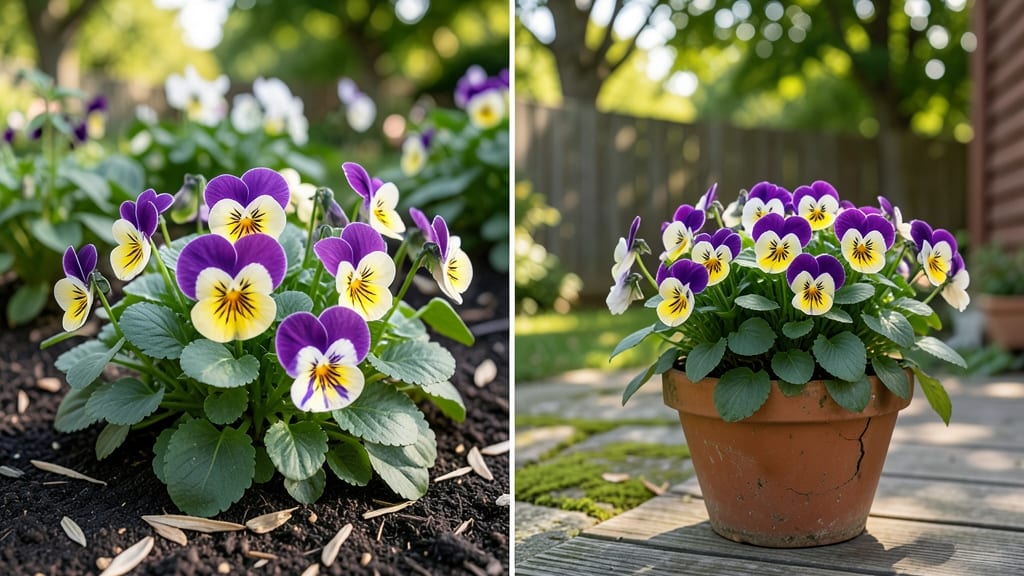
Pansies do bloom in winter in cold climates, thriving as hardy annuals or perennials that withstand frost down to 15°F (-9°C). Their cheerful flowers continue to flourish year-round when planted in well-drained soil with partial shade during harsh winters.
These cold-resistant flowers actually thrive in cooler temperatures, which is why they're often called "winter's face." 🌸 The secret lies in their genetic adaptations—many varieties produce more vibrant blooms when days are shorter and temperatures drop, a phenomenon called "vernalization."
I've seen gardens in Zone 5 and colder burst with pansy color even when snow blankets the ground, proving they're nature's perfect winter cheerleaders.
What makes them unique is their ability to rebloom multiple times throughout winter, unlike many spring-blooming flowers. The key factors that trigger this are consistent moisture (but not soggy soil) and protection from harsh winds.
I always recommend choosing Matrix or Ice Dance series for the best cold tolerance—these varieties have been bred specifically to handle winter's challenges while maintaining their signature ruffled petals.
💡 In This Article
- Cold-Hardy Pansy Varieties for Winter Blooms
- Tips to Encourage Pansies to Rebloom in Winter
Cold-hardy pansy varieties for winter blooms
The secret behind pansies' winter resilience lies in their classification as Viola × wittrockiana, a hybrid species specifically bred for cold tolerance. Varieties like 'Matrix' and 'Ice Dance' can handle temperatures down to 15°F (-9°C) thanks to their thick, waxy petals that protect against frost damage.
These cultivars have been developed through selective breeding to enhance their natural cold-hardiness, making them ideal for regions like USDA Zones 3-8 where winter temperatures regularly drop below freezing.
The color intensity of winter pansies actually increases in cooler temperatures due to a process called anthocyanin accumulation.
These pigments, which give pansies their vibrant hues, become more concentrated when nights are cold but days remain above 40°F (4°C). 🌸 This is why pansies planted in late summer often produce their most vivid blooms in late fall and winter—sometimes even more intensely than in spring.
For example, purple pansies can deepen from lavender to rich violet when exposed to consistent 35-45°F (2-7°C) nighttime temperatures.
What sets these winter varieties apart is their ability to photosynthesize efficiently in low light conditions. Unlike many spring flowers, pansies continue producing energy even with just 4-6 hours of sunlight daily, which is why they thrive in partial shade during winter.
This adaptation allows them to maintain bloom cycles throughout the season, unlike tender annuals that typically die back in frost. The 'Sorbet' series, for instance, has been bred specifically for this light tolerance while maintaining its signature ruffled petals.
Temperature also affects bloom timing—pansies planted in late summer (August-September) often produce their first winter blooms by October-November when days shorten. This early flowering is triggered by a biological process called vernalization, where exposure to prolonged cold periods (typically 4-6 weeks below 50°F (10°C)) actually stimulates flower production.
Gardeners in colder climates often take advantage of this by planting pansies in early fall to ensure continuous color through winter.
For maximum winter performance, choose varieties with dark green foliage—these tend to have better cold tolerance than lighter green types.
The 'Heather' series, for example, maintains its compact growth habit even in Zone 4 winters, while 'Majestic Giant' varieties can reach 5-6 inches tall while still withstanding light frosts.
The key difference between winter-hardy pansies and spring varieties lies in their root structure: cold-tolerant types develop deeper, more robust roots that store energy for regrowth after frost events.
Color retention is another winter advantage—pansies bred for cold climates maintain their vibrant hues even when temperatures fluctuate between 20-50°F (-6-10°C). This makes them perfect for winter container gardens where they can brighten patios and doorsteps.
The 'Cool Wave' series, for instance, features flowers that remain crisp and colorful even after multiple freeze-thaw cycles, making them ideal for Zone 5-6 gardens where winter temperatures can be unpredictable.