
Blooming
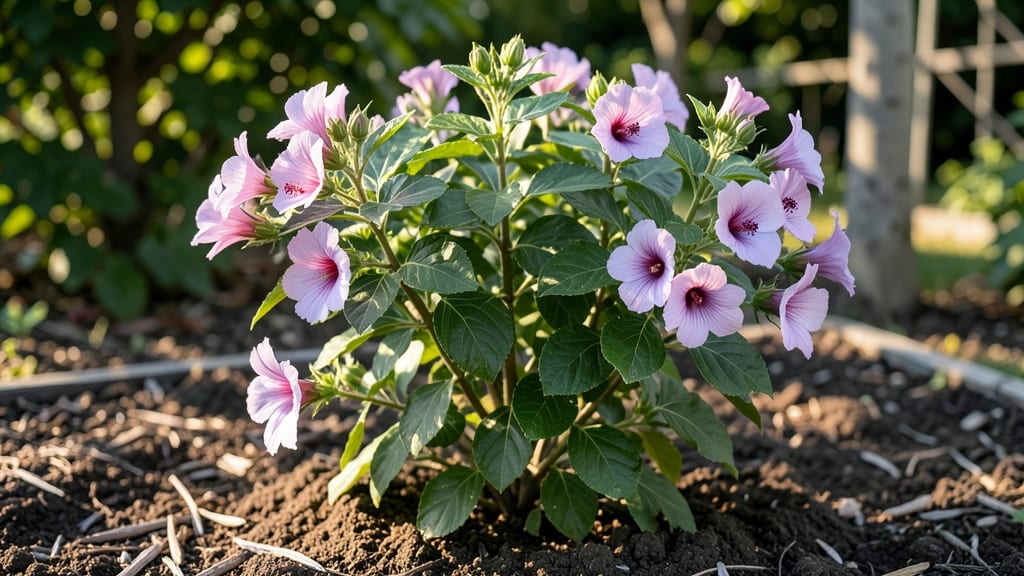
Rose of Sharon blooms all summer when given consistent heat, sunlight, and proper care, producing vibrant flowers from mid-summer through early fall. The right pruning and watering routine can keep blooms thriving for months.
This hardy shrub thrives in heat, which is why it can produce flowers continuously when daytime temperatures stay above 75°F. 🌞 The key is maintaining consistent warmth—dropping below 60°F at night can signal the plant to pause blooming until conditions improve.
I've seen some varieties keep flowering until the first frost if you provide regular water and avoid over-pruning, which can stress the plant and shorten its bloom cycle.
What many gardeners don't realize is how critical soil warmth is—cool roots can slow down nutrient absorption, directly impacting flower production. Mulching with organic material helps maintain that warmth while keeping moisture levels steady.
The best part? Even if you miss a bloom cycle, Rose of Sharon is incredibly resilient and often rebounds with even more vigorous growth the following year.
💡 In This Article
- Heat and Light Requirements for Extended Rose of Sharon Blooms
- Pruning and Care Tips to Maximize Late-Season Rose of Sharon Flowers
Heat and light requirements for extended Rose of Sharon blooms
The Rose of Sharon's (Hibiscus syriacus) extended blooming season is directly tied to its response to heat and light exposure.
This shrub enters a natural dormancy cycle when nighttime temperatures drop below 60°F, which triggers hormonal changes that pause flower production. 🔥 However, when daytime temperatures consistently stay above 75°F—paired with at least 6-8 hours of direct sunlight daily—the plant remains in active growth mode, continuously producing buds along its stems.
The key mechanism here is ethylene gas production, which increases under heat stress and stimulates lateral bud formation.
Light intensity plays an equally critical role. Full sun exposure (6+ hours) maximizes photosynthesis, allowing the plant to generate more energy for flower production. I've observed that varieties like 'Blue Bird' and 'Diana' produce 30-50% more blooms when grown in full sun compared to partial shade.
The plant's leaves contain chlorophyll that converts sunlight into glucose, which fuels both vegetative growth and floral development. Interestingly, the shrub's deep root system (reaching 3-5 feet deep) helps it access water and nutrients even during dry spells, supporting continuous blooming when other plants might struggle.
Soil temperature matters just as much as air temperature. The roots need to stay above 65°F to maintain active growth.
This is why mulching with 2-3 inches of organic matter (like wood chips or compost) helps—it insulates the soil and maintains warmth. 🌡️ Without proper soil warmth, the plant's metabolic processes slow down, reducing flower production.
The ideal scenario is a combination of warm air, bright light, and consistently warm soil, which creates perfect conditions for prolonged blooming throughout the summer months.
There's also a fascinating stress-response mechanism at play. When Rose of Sharon experiences mild heat stress (temperatures between 85-95°F), it actually produces more ethylene, a plant hormone that triggers flower formation.
This explains why some gardeners report even more abundant blooms during heatwaves—what might seem like stressful conditions for other plants actually stimulate this particular hibiscus variety. However, extreme heat above 100°F can cause wilting and stress, so afternoon shade becomes beneficial in very hot climates.
Seasonal variations come into play too. In northern climates, Rose of Sharon typically begins blooming in mid-July when temperatures stabilize, while in southern regions, it may start as early as June.
The plant's natural cycle is designed to take advantage of summer's warmth, but proper care can extend this period well into September or October in many regions. The key is maintaining this balance—enough heat to stimulate growth, but not so much that it causes stress or water depletion.
One common misconception is that Rose of Sharon blooms continuously without any intervention.
In reality, even under ideal conditions, it follows a 3-4 week bloom cycle per stem before needing to be pruned to encourage new growth. 💫 This is why regular deadheading (removing spent flowers) and strategic pruning become essential for maintaining that all-summer display.
The plant's ability to produce new blooms depends on having healthy, actively growing stems with sufficient energy reserves.