
Blooming
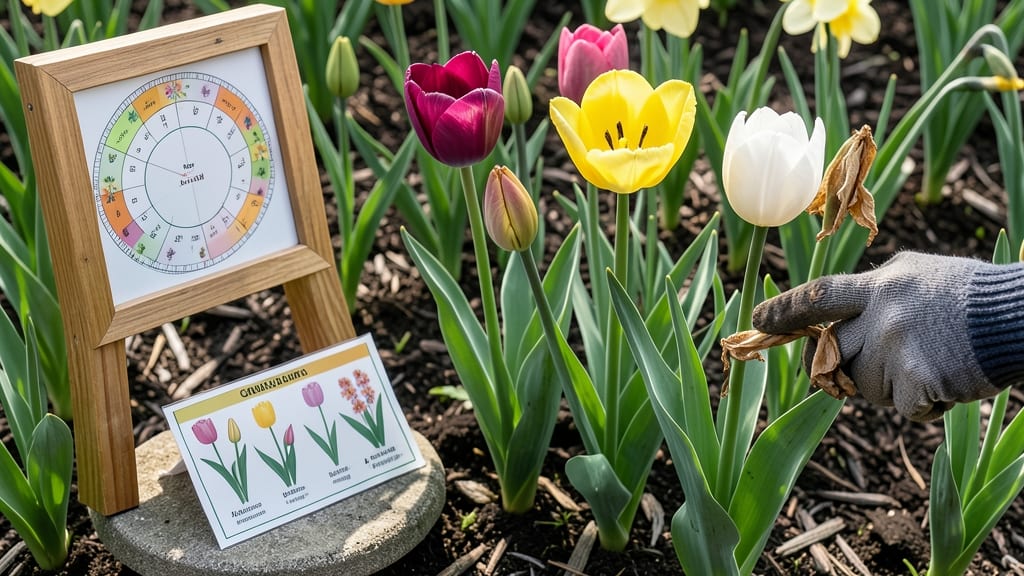
Tulips do not bloom all summer—they typically flower for 2–3 weeks in spring, then enter dormancy. Most varieties are cool-season plants and struggle in prolonged summer heat, though some late-blooming types may extend into early summer before fading.
Tulips are seasonal bloomers designed by nature to thrive in cooler temperatures, which is why their vibrant displays peak in spring. 🌸 The moment temperatures climb above 70°F, most varieties start wilting faster, and their energy shifts from flowering to bulb storage for next year.
Even late-blooming hybrids—like the Darwin tulips—rarely last beyond early summer unless you're in a high-altitude or coastal region with milder summers.
What's fascinating is how their lifecycle mirrors the changing seasons: they bloom when days lengthen in spring, then go dormant as heat builds, only to regrow foliage in fall for next year's flowers.
If you're dreaming of summer-long tulips, focus on creating the right growing conditions rather than expecting nature's timeline to change. Planting in well-draining soil with organic mulch helps regulate root temperatures, while regular watering (about 1 inch per week) prevents stress.
Some gardeners swear by companion planting with shade-tolerant perennials like hostas to protect tulips from afternoon sun—though even these strategies can't fully overcome summer's heat for most varieties.
💡 In This Article
- Tulip Blooming Seasons and Heat Sensitivity
- Extending Tulip Bloom Time with Gardening Strategies
Tulip blooming seasons and heat sensitivity
The tulip's seasonal blooming cycle is hardwired into its biology as a cool-season plant. These bulbs evolved in temperate climates where spring's 50–60°F temperatures trigger flowering, while summer's heat signals it's time to conserve energy.
The blooming process itself is energy-intensive—each flower requires significant resources to develop, and once tulips open, they're on a biological countdown to senescence (aging). 🌸 What's less obvious is how heat accelerates this process: temperatures above 75°F cause enzymes in the petals to break down faster, leading to wilting within days rather than weeks.
This heat sensitivity explains why tulips rarely bloom in summer, even in ideal conditions. The bulbs prioritize storing nutrients for next year's growth over producing flowers when days are long and temperatures climb.
For example, a Parrot tulip might bloom for 10–14 days in spring but wither completely by early summer, while a Darwin hybrid could extend to 3 weeks in cooler regions.
The key difference lies in their genetic heat tolerance—Darwin hybrids have thicker stems and larger bulbs that handle slightly warmer conditions, but they're still fundamentally spring bloomers.
What most gardeners overlook is how tulips' foliage continues growing after blooms fade. This isn't just random growth—it's the plant's way of replenishing the bulb's energy reserves through photosynthesis. Cutting back foliage too soon (within 6 weeks of flowering) starves the bulb, reducing next year's blooms.
This biological trade-off explains why summer tulips are nearly impossible: the plant must balance immediate flowering with long-term survival, and heat disrupts this delicate equilibrium.
Even in summer-friendly climates, tulips face another challenge: their natural dormancy period. After blooming, tulip bulbs enter a 6–8 week rest phase where they're completely inactive. This dormancy is triggered by heat and dryness, making it impossible for them to produce new flowers until the following spring.
Some tropical tulip relatives (like Tulipa urumiensis) do bloom in summer, but these are exceptions—most garden varieties simply can't handle the prolonged warmth.
Here's what actually happens at the cellular level: Heat stress causes tulip petals to lose moisture faster than they can absorb it, leading to wilting. The plant's natural response is to close stomata (pores) to conserve water, but this also cuts off nutrient flow to the flower.
Meanwhile, the bulb begins redirecting sugars from the blooms back to the roots, effectively "starving" the flowers to ensure the bulb survives. This biological prioritization is why even well-watered tulips struggle in summer heat.
For visual gardeners, think of tulips as spring's fleeting stars—they put on their best show when conditions are perfect, then gracefully exit stage left. Their summer absence isn't a failure of care, but a testament to their perfectly adapted lifecycle.
The few varieties that might peek into early summer are simply pushing the limits of what's possible within their biological constraints. 💫