
Blooming
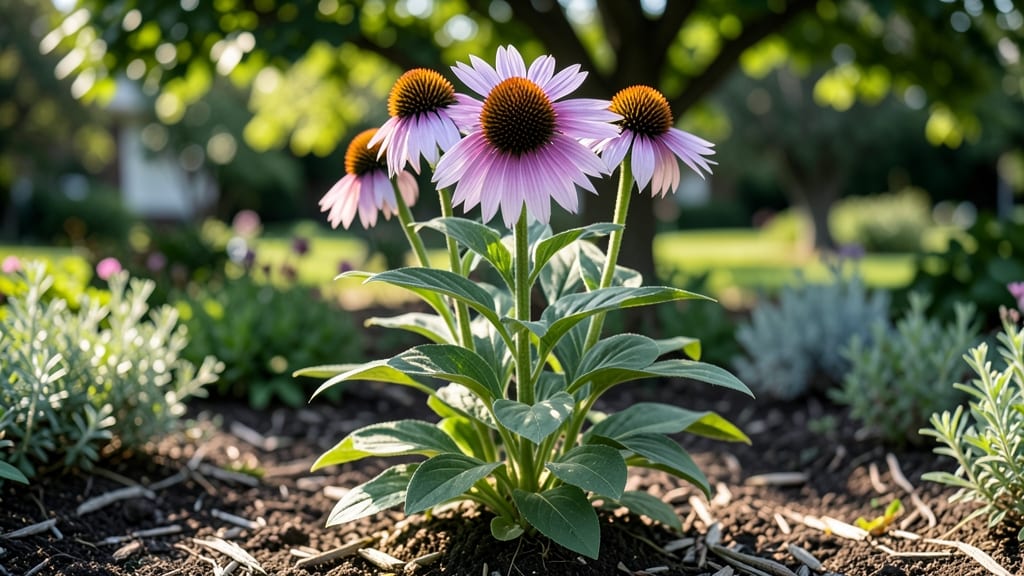
Perennials don't always bloom every year—they often need precise conditions like sunlight exposure, soil quality, and proper dormancy cycles to flower annually, with some species blooming every 2-3 years or sporadically based on their natural growth patterns. While peonies reliably produce flowers, others like hostas may skip blooming due to stress or immaturity.
Not all perennials follow the same blooming schedule—some, like black-eyed Susans, thrive with consistent annual flowers when given full sun and well-draining soil. 🌸 Others, such as bearded iris, bloom once in early summer but may produce sporadic foliage flowers later in the season.
The key lies in understanding each plant's specific needs: some require deadheading to encourage reblooming, while others need a period of rest to store energy for next year's flowers.
For example, daylilies can bloom multiple times in a season if you remove spent blooms, but lamb's ear focuses its energy on foliage growth rather than flowers. This variability is why gardeners must research their specific perennials—what works for one might fail for another.
Proper care can turn a one-time bloomer into a reliable annual performer.
💡 In This Article
- Why Some Perennials Skip Flowering: Environmental and Biological Factors
- How to Encourage Annual Blooms in Perennial Plants
Why some perennials skip flowering: environmental and biological factors
Perennial blooming cycles are governed by a complex interplay of environmental cues and internal biological clocks. The most critical factor is photosynthesis efficiency, which directly impacts a plant's ability to produce flowers.
For example, daylilies need at least 6-8 hours of direct sunlight daily to trigger flowering hormones, while hostas thrive in partial shade but may skip blooming if they receive too much sun, causing stress.
Temperature also plays a crucial role—many perennials require a period of vernalization (cold exposure) followed by warm spring temperatures to break dormancy and initiate flowering.
The soil's nutrient balance affects flowering too. Plants like peonies demand phosphorus-rich soil (a key component of ATP, the energy molecule for flower development), while lavender prefers well-draining, alkaline soil with minimal nitrogen—too much nitrogen promotes leafy growth at the expense of flowers.
Even mature plants may skip blooming if their roots are crowded or if they haven't established a strong enough root system, which can take 2-3 years for some species. 🌱
Dormancy cycles are another critical factor. Many perennials, such as coneflowers, store energy during their first growing season to fuel flowering in subsequent years. If they're disturbed (like being transplanted) during this critical period, they may skip blooming entirely.
Some species, like lupines, have a 2-year blooming cycle—they focus on foliage growth in their first year and only produce flowers in their second year, a pattern known as biennialism.
Understanding these cycles helps gardeners avoid frustration when a plant seems "lazy" but is actually following its natural timeline.
Biological age matters too. Young perennials often prioritize root and foliage growth over flowering, a survival strategy to establish themselves. For instance, a black-eyed Susan planted in spring may not bloom until its second summer, while an established plant can produce 50-100 flowers per stem.
Stress factors like drought, pests, or improper pruning can further delay or prevent flowering. Even well-established perennials may skip a year if they're under stress, though they'll typically rebound in subsequent seasons.
Consider the case of bearded iris, which bloom in early summer but may produce foliage-only flowers (small, inconspicuous blooms) later in the season if conditions are right. This phenomenon occurs because the plant's energy reserves are redirected after the primary bloom cycle.
Similarly, shasta daisies may bloom only once in their first year but can produce multiple flushes of flowers annually once mature. These variations highlight why gardeners must tailor their care to each perennial's unique life cycle rather than expecting uniform behavior.
What most gardeners overlook is the role of competition within the plant. Some perennials, like lamb's ear, allocate most of their energy to dense, silvery foliage rather than flowers, as their primary evolutionary advantage is drought tolerance and ground cover.
Others, like catmint, produce abundant flowers but may reduce blooming if they're over-fertilized with nitrogen. This internal resource allocation explains why some perennials seem "unreliable"—they're not lazy, they're following a biological strategy optimized for survival in their native habitat.
For a deeper dive, observe how temperature fluctuations trigger flowering in perennials like columbines. These plants often bloom in early spring when nighttime temperatures drop below 50°F but days warm up to 65-75°F**. This temperature contrast signals the plant to shift from vegetative growth to reproductive growth.
By understanding these triggers, gardeners can create microclimates or use row covers to extend blooming seasons, turning sporadic bloomers into reliable annual performers. 🌿