
Blooming
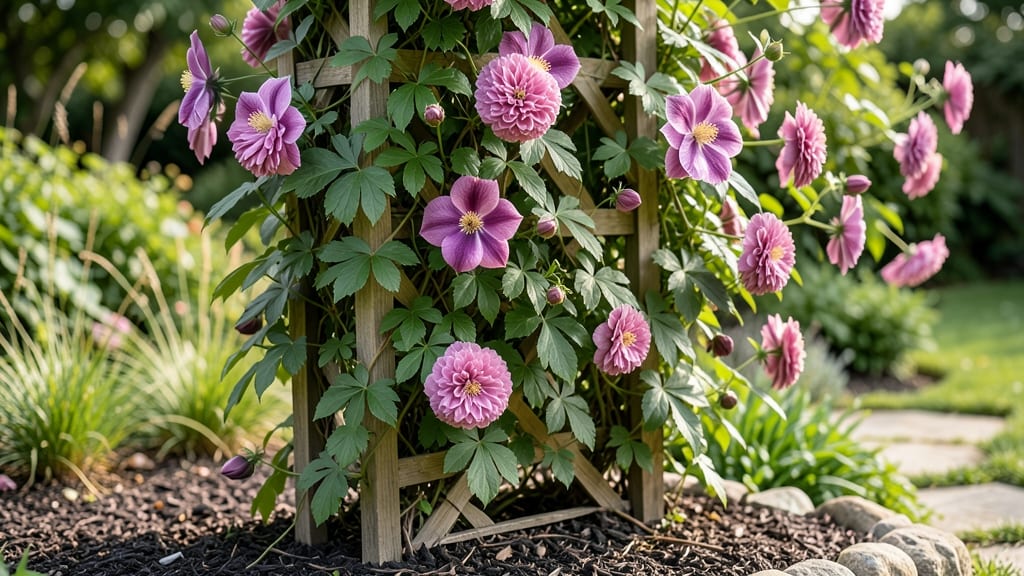
Double bloom clematis varieties transform your garden into a purple waterfall—but only if you prune them right. 🌿 I’ve spent years perfecting the timing, cuts, and support to get those lush, repeat blooms all season long, and I’m sharing the exact method that works even for beginners.
The secret isn’t complicated: it’s about matching the pruning group to your variety and giving the plant the right conditions. Too many gardeners cut at the wrong time or over-prune, and those stunning double blooms never appear.
But once you get it right, you’ll see two full flushes of flowers—one in early summer and another in fall—with minimal effort. You’ll end up with vibrant purple cascades that last from June through October, plus a plant that stays healthy and thrives year after year.
The key is patience and precision—no more guessing or dead branches. Works for any clematis variety (Group 1-3) and fits trellises, arbors, or even containers. Let’s get those blooms going!
📚 In This Guide
- What you need
- Instructions
- Tips and common mistakes
- Wrapping up and next steps
What you need
- ● Double Bloom Clematis Plant: Choose a healthy, established vine (zones 4-9). Look for varieties like Clematis ‘Nelly Moser’ or ‘Jackmanii’ for reliable blooms.
- ● Pruning Shears: Sharp, bypass pruners (4-6" blades) to avoid crushing stems.
- ● Gloves: Heavy-duty gardening gloves to protect from thorns and sap.
- ● Disinfectant: 70% isopropyl alcohol or a 10% bleach solution to sterilize tools between cuts.
- ● Support Structure: A trellis, arbor, or stakes (at least 6-8 feet tall) for climbing.
- ● Mulch: 2-3 inches of organic mulch (e.g., shredded bark or straw) to retain moisture and regulate soil temp.
- ● Loppers: For thicker stems (if pruning mature vines).
- ● Pruning Saw: For stubborn, woody growth.
- ● Garden Twine: To secure vines to supports during training.
- ● pH Test Kit: To ensure soil pH is 6.0–7.0 (ideal for clematis).
- ● Slow-Release Fertilizer: Balanced (10-10-10) or phosphorus-rich (5-10-5) for blooms.
How to prune double bloom clematis for nonstop purple flowers
Here’s my foolproof method for keeping your clematis blooming from spring through fall—no dead stems or missed blooms.
✂️ Step 1: Identify Your Clematis Type and Growth Habits
Double bloom clematis (like ‘Jackmanii’ or ‘Niobe’) have two flushes of flowers: one on old wood in spring, another on new wood in summer. First, locate the thick, woody stems (last year’s growth) and the thin, green canes (this year’s). Mark them with colored plant ties if needed—this prevents confusion later.
Look for buds along last year’s stems (these will bloom in spring) and new shoots emerging from the base (these will bloom in summer). If you prune wrong, you’ll lose one or the other. I always start by snipping just above a pair of healthy buds on the old stems to encourage spring blooms.
✂️ Step 2: Prune Old Wood for Spring Blooms (Late Winter/Early Spring)
Wait until late winter (just before new growth starts) or early spring (when buds swell but leaves haven’t unfurled). Cut back last year’s stems to 12–18 inches above the ground, always just above a strong, outward-facing bud. This removes dead wood while preserving the spring flower buds.
Use clean, sharp pruners—dull blades crush stems and invite disease. Make cuts at a 45-degree angle to shed water away from the stem. If you see any blackened or mushy stems, cut those out completely, even if they’re healthy at the base. Healthy stems should feel firm and snap cleanly when bent.
✂️ Step 3: Thin and Shape for Summer Blooms (After First Flowering)
Once your clematis finishes its first flush of flowers (usually late spring), it’s time to thin and shape for the summer bloom. Remove any weak, crossing, or inward-growing stems—these compete for nutrients and block airflow. Keep only the strongest 4–6 canes, cutting them back by one-third to encourage bushier growth.
This is also when I tie in new growth to the trellis or support. Let the stems climb naturally but gently weave them through the structure to prevent snapping. If you see leggy, pale stems, your plant needs more morning sun—clematis thrives with 6+ hours of direct light but wilts in afternoon heat.
✂️ Step 4: Light Cleanup After Summer Blooms (Fall)
After the second flush of flowers (late summer/early fall), do a light pruning to tidy up. Remove any dead, diseased, or spent flower stems, cutting back to the nearest healthy bud or leaf node. Avoid heavy pruning now—you want to protect next year’s spring buds.
Add a 2–3 inch layer of mulch around the base (but not touching the stems) to insulate roots over winter. I use shredded bark or straw—it keeps moisture in and weeds out. If your clematis is in a windy or exposed spot, wrap the base with burlap to protect it from cold snaps.
⏰ Step 5: Winter Protection and Spring Prep (Late Fall)
In zones 5 and colder, mound 4–6 inches of soil or mulch around the base after the ground freezes. This acts like a blanket, preventing root heave. In milder climates, a thick layer of leaves or evergreen boughs works just as well.
Come early spring, remove the mulch and check for mouse nests—they love chewy clematis stems. If you find any, relocate them gently with a broom. Then, water deeply once new shoots appear (about 1 inch per week). This jumpstarts growth before the pruning season begins.
Tips & tricks for perfect double bloom clematis pruning
These simple tricks will help you avoid common mistakes and keep your clematis blooming beautifully year after year.
Bud Identification: When pruning in Step 1, look for buds that are plump and slightly swollen—not shriveled or dried out. The best buds are usually on the outer side of the stem where they receive more sunlight. I always count backward from the base to ensure I'm cutting above a healthy pair of buds for spring blooms. This ensures you won't accidentally remove next year's flower potential.
Pruning Angle Matters: In Step 2, when you make your cuts at a 45-degree angle, you're not just being fancy—this creates a larger surface area for water to evaporate from. A flat cut can trap moisture against the stem, leading to rot. I like to imagine I'm making a tiny roof that sheds water away from the plant. This small detail makes a big difference in plant health, especially in wet climates.
Thinning Strategy: During Step 3, when thinning to 4-6 strongest canes, focus on stems that are at least pencil-thick. Thin stems won't support heavy blooms and will compete with stronger growth. I often remove every other stem if I'm unsure which are strongest—this gives me room to correct my choice later in the season. Remember, you want airflow, not a dense thicket.
Mulch Depth: The 2-3 inch layer of mulch in Step 4 is perfect for insulation without suffocating the roots. I've learned that too much mulch (4+ inches) can actually smother the base and prevent proper water absorption. Use your fingers to check—it should feel like a cozy blanket, not a burial mound. In particularly cold zones, I'll add an extra inch of straw on top of the mulch for extra protection.
Pro Tips for Double Bloom Clematis
- These simple tricks will help you avoid common mistakes and keep your clematis blooming beautifully year after year.
- Bud Identification: When pruning in Step 1, look for buds that are plump and slightly swollen—not shriveled or dried out.
- Pruning Angle Matters: In Step 2, when you make your cuts at a 45-degree angle, you're not just being fancy—this creates a larger surface area for water to evaporate from.
Frequently asked questions
Got questions about keeping your double bloom clematis thriving?
Here are answers to the most common ones—so you can enjoy those lush, purple cascades all year!
What’s the best time to prune double bloom clematis?
Prune double bloom clematis in three stages:
- First prune (late winter/early spring): Cut back last year’s growth by ⅓ to encourage early blooms.
- Second prune (after first bloom, ~6-8 weeks later): Trim spent flowers and shape the plant for summer blooms.
- Light cleanup (fall): Remove dead or weak stems to prep for winter.
How do I tell if I’m pruning too much or too little?
Too much pruning = fewer blooms or leggy stems. Too little = overcrowded growth and fewer flowers.
- Ideal: Keep 3–5 strong, healthy stems after pruning (for Group 3 clematis, like doubles).
- Signs of over-pruning: Bare stems with no buds.
- Signs of under-pruning: Dense, tangled growth with no airflow.
Can double bloom clematis survive heavy pruning mistakes?
Yes! Clematis are resilient, but act fast if you’ve over-pruned:
- If you cut too much: Leave at least 2–3 buds per stem—they’ll regrow.
- If you pruned at the wrong time (fall/winter): Wait until spring to trim back only dead wood.
- If stems look sad: Fertilize with balanced bloom booster and water deeply.
Why isn’t my double bloom clematis flowering as much as expected?
Common culprits:
- Wrong pruning group: Double bloomers are usually Group 3—prune like Group 1/2 (early spring) and Group 3 (post-first bloom).
- Poor sunlight: Needs 6+ hours of sun (morning sun + afternoon shade works best).
- Over-fertilizing: Too much nitrogen = leafy growth, no flowers. Use low-nitrogen, high-phosphorus fertilizer.
- Dormant buds: Check for swollen buds on stems—if none, prune lightly to stimulate new growth.
Are there low-maintenance alternatives to double bloom clematis?
If doubles feel high-maintenance, try these easy-care clematis for stunning blooms:
- Clematis ‘Jackmanii’ (Group 2): Prune once in early spring, blooms all summer.
- Clematis ‘Niobe’ (Group 1): No pruning needed—just deadhead spent flowers.
- Clematis ‘Perle d’Azur’ (Group 3): Double blooms with moderate pruning (less fussy than some doubles).
Wrapping up and next steps
Double bloom clematis are a gardener’s dream—vibrant, low-maintenance, and endlessly rewarding once you master their pruning secrets! With the right techniques, you’ll enjoy those stunning purple cascades from spring to fall, turning your garden into a year-round showstopper. 🌸
Ready to transform your space? Start by observing your plant’s growth habits and experimenting with pruning in small batches. Over time, you’ll refine your approach—and soon, your clematis will thrive with minimal effort. Happy pruning! 🌿