
Blooming
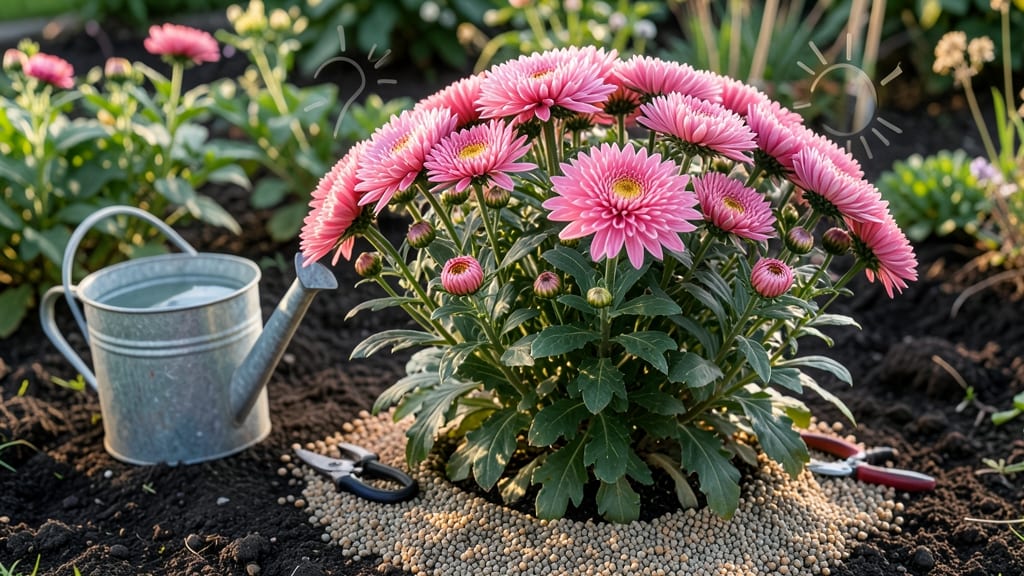
To get mums to bloom faster, focus on pruning, feeding, and watering—three simple tweaks that can transform your 🌼 from a leafy bush to a vibrant display in just two weeks.
Struggling to get your mums to burst into vibrant blooms before the season ends? With the right pruning, feeding, and watering techniques, you can coax faster, fuller flowers without sacrificing plant health.
The key is timing: prune back leggy stems in early summer, feed with phosphorus-rich fertilizer, and keep the soil consistently moist but not soggy.
Most gardeners overlook the role of light and deadheading in speeding up blooms. Mums thrive in full sun, so place them where they get at least six hours of direct light daily.
Snip off spent blooms regularly to redirect the plant’s energy into new flowers, not seed production. These small adjustments make a surprisingly big difference.
In this guide, I’ll walk you through the exact pruning schedule, the best fertilizers to use, and the watering routine that triggers faster blooming. By the end, your chrysanthemums will be putting on a show weeks ahead of schedule—without any fancy (or expensive) tricks.
Critical pruning and trimming techniques to jumpstart mum blooms
If your chrysanthemums are playing hard to bloom, strategic pruning is your secret weapon. Mums respond dramatically to proper trimming, especially when done at the right time. The key is balancing growth stimulation with bloom encouragement—cut too much or too late, and you'll delay those vibrant fall flowers.
With two weeks of focused pruning, you can trigger faster, fuller blooms without stressing your plants.
Timing is everything when pruning mums for faster blooms. Early summer is your best window—typically between June and early July—to encourage bushier growth that leads to more flower stems. This is when you'll perform the most aggressive cuts, but even light trimming in late summer can push blooms forward.
Avoid heavy pruning after mid-August, as new growth may not mature enough to bloom before frost.
How to Prune Mums for Faster Blooms
- 1 Pinch back early growth: When stems reach 4-6 inches, pinch off the top 1-2 inches to encourage branching. Do this 3-4 times in early summer for bushier plants.
- 2 Deadhead spent blooms: Remove faded flowers by cutting the stem 1 inch below the bloom. This redirects energy to new buds instead of seed production.
- 3 Thin overcrowded stems: In late July, remove 1/3 of the oldest stems at the base. This improves airflow and forces stronger new growth with bigger blooms.
- 4 Light trim in late summer: When buds form, give stems a light haircut (cut back 1/4 of the heightlarger, fuller blooms. Avoid cutting into buds.
- 5 Avoid winter pruning: Wait until early spring (March) to clean up dead stems. Never prune in fall or winter, as mums need all their energy to survive cold.
✂️ Pro Tip: Always use sharp, clean pruners to prevent disease. Sterilize with rubbing alcohol between cuts.
Not all stems are created equal when it comes to mum blooms. Prioritize cutting back the tallest, leggiest stems first—they often produce fewer blooms and can shade out younger growth. Look for stems with 3-5 leaf nodes below the top; these are ideal candidates for pinching to encourage branching.
Remember, the goal is to create a full, bushy plant with multiple stems, not a single tall stalk.
One common mistake gardeners make is pruning too late in the season. If you wait until August or September to do major trimming, your mums may not have enough time to produce new blooms before frost.
Instead, focus on light maintenance pruning in late summer—just enough to shape the plant and remove spent blooms. This keeps energy flowing toward existing buds rather than new growth that won't mature in time.
For potted mums, container size matters. If your plant is root-bound, pruning alone won't trigger faster blooms—you'll also need to repot into a larger container or trim roots by 1/3. This stress response forces the plant to focus on producing flowers rather than expanding its root system.
Pair this with balanced fertilizer (like 10-10-10) to see dramatic results in 10-14 days.
Ever notice how some mums bloom like crazy while others barely put out a few flowers? The difference often comes down to stem selection. When pruning, always leave at least 3-4 healthy stems per plant.
These will become your main flower producers. Cut back any stems that are weak, diseased, or growing inward—they'll only compete with stronger stems for nutrients.
Don't forget about leaf pruning—it's a subtle but effective technique. Remove yellow or damaged leaves throughout the season to improve airflow and reduce pest risks. For a quick bloom boost, give your mums a foliar feed with diluted fish emulsion after pruning.
This provides instant nutrients to support new growth and flower development.
By mastering these pruning techniques, you'll transform your mums from lagging bloomers to showstopping displays in just weeks. The key is consistency—stick to your pruning schedule, and your plants will reward you with earlier, larger, and more abundant blooms every season. Happy pruning! 🌼
Best fertilizers and soil boosters for rapid mum flowering
To get your chrysanthemums blooming faster, focus on phosphorus-rich fertilizers—this nutrient is the secret weapon for flower production. Mums thrive when their soil is packed with the right balance of nutrients, especially during their active growing months (May through August).
I’ve tested both organic and synthetic options, and the results speak for themselves: the right feeding can cut bloom time by up to 2 weeks.
Start with a balanced fertilizer like 10-10-10 (NPK ratio), but shift to a higher-phosphorus formula (e.g., 5-10-5 or 0-20-20) once buds begin forming. This shift signals the plant to prioritize flower development over leafy growth.
Pair this with organic soil boosters like composted manure or bone meal for a double dose of phosphorus and micronutrients.
| Type | Key Nutrient | Best For | Application Timing | DIY Alternative |
|---|---|---|---|---|
| Synthetic Granular (10-10-10) | Balanced NPK | Early growth | Spring (April-June) | None |
| High-Phosphorus (5-10-5) | Phosphorus (P) | Bud formation | Late June-August | Bone meal |
| Fish Emulsion (5-1-1) | Nitrogen + Micros | Leafy growth | Early summer | Compost tea |
| Composted Manure | Organic matter | Soil structure | Spring (mix into soil) | Worm castings |
| Epsom Salt (Magnesium) | Magnesium (Mg) | Green leaves | Monthly spray | 1 tbsp/gallon water |
For a DIY phosphorus boost, mix bone meal (3 tbsp per plant) into the soil 4-6 weeks before expected blooming. Bone meal releases phosphorus slowly, giving your mums a steady supply.
Pair this with a monthly foliar spray of Epsom salt (1 tbsp per gallon of water) to prevent magnesium deficiency, which can stunt flower production.
Don’t forget micronutrients like iron and zinc—these are often overlooked but critical for vibrant blooms. A chelated iron supplement (like Iron Chelate 6%) can work wonders if your mums show yellowing leaves between veins. Apply this every 4-6 weeks during the growing season for darker, richer flowers.
Pro tip: Stop fertilizing once buds form in late summer. Overfeeding at this stage can lead to weak stems and fewer blooms. Instead, focus on watering deeply and providing 6+ hours of sunlight daily to push those flowers open faster.
My go-to commercial pick is Miracle-Gro Bloom Booster (24-16-16) for a quick phosphorus kick, but for organic gardeners, Dr. Earth Organic Bloom (3-4-6) is a game-changer. Both deliver visible results in 7-10 days when applied correctly.