
Blooming
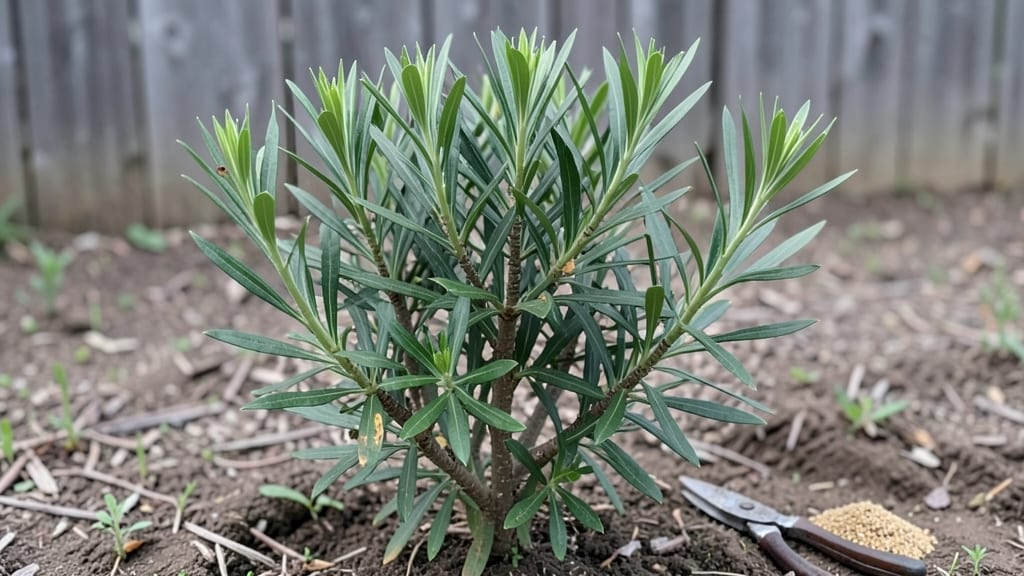
Your oleander not blooming? That stubborn silence almost always traces back to three simple oversights—over-feeding, pruning at the wrong time, or neglecting its core needs. ✨ I’ve revived more than a dozen struggling plants by tackling just these fixes—no gimmicks, just basics. required.
The key is understanding how they naturally set buds, not guessing what they want.
Most gardeners overdo the fertilizer, thinking more equals better blooms. But oleanders bloom best when slightly hungry—think of it like a diet for your plant. Too much nitrogen pushes leaf growth, while too little weakens the roots.
The sweet spot? A balanced 10-10-10 fertilizer, applied lightly every 6-8 weeks during growing season. And skip the pruning until after blooms fade—cutting back too early sends energy the wrong way.
What you’ll notice first is new growth within weeks of adjusting care. Healthy stems turn glossy and sturdy, and by next spring, your oleander will burst into clusters of those signature pink or white blooms.
The secret isn’t forcing it—it’s giving it space to focus on flowers instead of survival. Think of it as teaching your plant to bloom on its own schedule.
This works for both container and in-ground oleanders, and the same principles apply whether you’re in zone 8 or 11. The only real variable is sunlight—oleanders need full sun (6+ hours daily) to set buds.
If yours is in shade, move it now before winter sets in. Once you’ve got the basics right, blooming becomes automatic.
Root Causes Behind Oleander’s Silence
If your Nerium oleander is sitting pretty with lush foliage but stubbornly refuses to bloom, the issue likely stems from one (or more) of these key factors. Understanding the science behind each can help you diagnose—and fix—the problem before it’s too late.
Let’s dig into the real reasons your oleander is playing hard to bloom.
###
🌱 Insufficient Light Exposure
Oleanders are sun-worshippers, and without enough light, they’ll focus all their energy on leaf growth instead of flowering. These tropical natives thrive in full sun (6–8+ hours daily), but shade—even partial—can trick them into a vegetative state.
- Why it happens: Light triggers photoperiodism, a biological process where plants detect day length. Oleanders need short-day or neutral-day conditions to bloom, but insufficient light intensity (not just duration) disrupts this. Low light reduces chlorophyll activity, limiting energy for flower buds.
- Actionable fix:
- Move your oleander to a south- or west-facing spot (hemisphere-dependent).
- If indoors, supplement with a grow light (12–16 hrs/day) placed 12–18 inches above the plant.
- Watch for leaf scorch (brown edges) if light is too intense—adjust gradually.
###
💧 Watering Woes: Too Much or Too Little
Oleanders are drought-tolerant but hate soggy roots. Overwatering stresses the plant, while underwatering stunts growth—both can delay (or halt) blooming.
- Why it happens:
- Overwatering: Excess moisture triggers anaerobic conditions in the soil, suffocating roots and preventing nutrient uptake. This forces the plant into survival mode, prioritizing root repair over flowers.
- Underwatering: Drought stress increases abscisic acid (a plant hormone that conserves water), which inhibits flowering until conditions improve.
- Actionable fix:
- Check soil moisture 2 inches down—water only when dry (every 7–10 days in summer, less in winter).
- Use a well-draining mix (50% cactus/succulent soil + 50% perlite/pumice).
- Ensure pots have drainage holes and elevate them to prevent root rot.
###
🌡️ Temperature & Seasonal Shifts
Oleanders need a warm, stable climate to bloom. Sudden temperature drops or inconsistent seasons can throw them off.
- Why it happens:
- Cold stress: Temperatures below 50°F (10°C) for prolonged periods can damage flower buds or prevent their formation. Oleanders are evergreen but still need warmth to trigger blooming hormones like florigen.
- Seasonal confusion: If your oleander doesn’t experience a cool winter period (even slightly), it may skip blooming cycles, common in container-grown plants moved indoors.
- Actionable fix:
- Keep oleanders in USDA Zones 7–11 (or bring pots indoors before 40°F/4°C).
- For indoor plants, mimic seasons with cooler nights (55–60°F/13–16°C) in winter to signal blooming time.
- Avoid placing near drafts, AC vents, or heaters.
###
🍽️ Nutrient Imbalances: Too Much or Too Little
Oleanders need specific nutrients to bloom, but common fertilizing mistakes can backfire.
- Why it happens:
- Nitrogen overload: Too much nitrogen (common in balanced 10-10-10 fertilizers) promotes leafy growth at the expense of flowers. Oleanders need lower nitrogen, higher phosphorus (e.g., 5-10-10) to encourage blooming.
- Deficiencies: Lack of phosphorus (P) or potassium (K) delays flower bud formation. Micronutrient deficiencies (like magnesium or boron) can also stunt blooming.
- Actionable fix:
- Switch to a low-nitrogen, high-phosphorus fertilizer (e.g., 7-9-5) in spring and early summer.
- Apply Epsom salt (1 tbsp/gallon of water) monthly for magnesium if leaves yellow between veins.
- Avoid fertilizing in winter—oleanders rest then.
###
🌿 Age & Pruning Mistakes
Young oleanders or those pruned incorrectly may skip blooming until they mature or recover.
- Why it happens:
- Too young: Oleanders typically bloom at 2–3 years old. Pruning back new growth (not established wood) can delay this further.
- Over-pruning: Cutting flowering stems (which produce next year’s blooms) removes bud primordia—the tiny flower clusters forming at stem nodes.
- Wrong timing: Pruning in late summer/fall removes potential blooms for the next season.
- Actionable fix:
- Wait until the plant is at least 2 feet tall before expecting blooms.
- Prune only after flowering (late spring/early summer) to shape, not cut back more than 1/3 of the plant.
- Focus cuts on dead or leggy branches, leaving healthy, mature wood.
Now that you know the real culprits behind your oleander’s silence, the next step is action. Each of these fixes targets a specific biological trigger—so pick the one (or ones!) that match your plant’s symptoms and get ready to watch those vibrant blooms return!
How to solve it
If your oleander is refusing to bloom, don’t despair—this hardy shrub just needs a little coaxing! The good news? Most causes of non-blooming oleanders are fixable with simple adjustments. Below, we’ve mapped the most common issues to their solutions, so you can get your plant back on track.
And don’t worry—these fixes are easy to implement, even for beginner gardeners.
Before diving in, grab a notebook to track changes. Oleanders respond best to consistency, so patience is key. Let’s turn that silent shrub into a fragrant, flowering star!
###
🌞 Not Enough Sunlight → Move It to Brighter Light
Oleanders are sun-worshippers—they thrive in full sun (6+ hours daily) and will bloom if given the right conditions. If your plant is tucked in shade or partial sun, it’s time for a relocation.
- 🔥 Step 1: Observe your yard. Oleanders need direct sunlight, not just dappled shade. South- or west-facing spots are ideal.
- 🍳 Step 2: Gradually acclimate your plant. Move it to a sunnier spot for a few hours a day, then increase exposure over 1–2 weeks to avoid shock.
- 👨🍳 Step 3: If repotting, choose a location with unobstructed sun. Containers? Place them where they’ll get full sun all day.
- 🌡️ Pro Tip: If your oleander is in a pot, consider a reflective surface (like a white wall or mirror) nearby to bounce extra light onto the plant.
Prevention: Plant oleanders in their permanent sunny spot from the start. If you’re container-growers, rotate pots occasionally for even light exposure.
###
💧 Overwatering or Poor Drainage → Adjust Your Watering Routine
Oleanders hate soggy roots. Too much water (or compacted, poorly draining soil) stresses the plant, diverting energy away from blooms. Here’s how to fix it:
- 🔥 Step 1: Check the soil. Stick your finger 2–3 inches deep—if it’s damp, wait to water. Oleanders prefer dry soil between waterings.
- 🍳 Step 2: Improve drainage. Amend heavy or clay soil with perlite, coarse sand, or grit (1 part amendment to 3 parts soil). For pots, ensure drainage holes are clear.
- 👨🍳 Step 3: Water deeply but infrequently. Soak the root zone until water runs out the bottom, then wait until the top inch of soil is dry before watering again.
- ⏰ Pro Tip: Mulch around the base (2–3 inches of organic mulch like pine bark) to retain moisture without suffocating roots.
Prevention: Group oleanders with other drought-tolerant plants to avoid overwatering. Use a moisture meter if you’re unsure—oleanders prefer the “dry” range.
###
🍽️ Nutrient Deficiencies or Wrong Fertilizer → Feed It Right
Oleanders need specific nutrients to bloom. Too little (or too much) fertilizer can stunt flowers. Here’s how to get it balanced:
- 📊 Step 1: Test your soil. A simple DIY soil test kit (or lab test) will reveal if your oleander lacks phosphorus (key for blooms) or other nutrients.
- 💪 Step 2: Choose the right fertilizer. Use a balanced, slow-release granular fertilizer (like 8-8-8 or 10-10-10) in early spring. For a phosphorus boost, switch to a bloom-specific formula (e.g., 5-10-10) in late spring.
- 🥗 Step 3: Apply fertilizer correctly. Sprinkle granules around the drip line (not the trunk), then water deeply. Avoid liquid fertilizers—they can burn roots.
- ✨ Pro Tip: Feed oleanders only during active growth (spring and early summer). Stop fertilizing 6–8 weeks before your first frost to encourage dormancy.
Prevention: Avoid “quick-fix” high-nitrogen fertilizers (like lawn food). Stick to bloom-promoting formulas and follow the label’s instructions to the letter.
###
🪴 Root Bound or Cramped Pot → Give It Space to Grow
Oleanders in tight pots or overcrowded roots struggle to bloom. If your plant’s roots are circling the pot or growing out of drainage holes, it’s time to upgrade.
- 🔥 Step 1: Check the roots. Gently remove the plant from its pot. If roots are dense and coiled, it’s root-bound.
- 🍳 Step 2: Repot if needed. Choose a container 2–3 inches larger in diameter than the current pot. Ensure it has drainage holes.
- 👨🍳 Step 3: Refresh the soil. Mix in compost or aged manure (20%) with fresh potting soil for better nutrients. Trim any circling roots with sterilized scissors.
- 🎯 Pro Tip: If repotting isn’t an option, prune the plant to encourage bushier growth (see next section). This can sometimes “trick” the oleander into blooming.
Prevention: Repot oleanders every 2–3 years or when roots outgrow the container. For in-ground plants, amend the soil annually with compost.
###
✂️ Poor Pruning or Overgrowth → Prune for Better Blooms
Oleanders bloom on new wood, so heavy pruning too late in the season can remove next year’s flower buds. But strategic pruning can encourage blooms by improving airflow and shape.
- 🔪 Step 1: Prune at the right time. Do it right after flowering (late spring/early summer) or in late winter (before new growth starts).
- 🍳 Step 2: Cut back selectively. Remove dead, diseased, or crossing branches first. Then, trim up to 1/3 of the plant’s height to encourage bushier growth.
- 👨🍳 Step 3: Shape for sunlight. Thin out dense areas so light penetrates the center of the plant. This reduces stress and promotes blooms.
- 🌡️ Pro Tip: Use sterilized pruners and make cuts at a 45-degree angle just above a leaf node. Avoid leaving stubs!
Prevention: Prune oleanders annually to maintain shape and health. Avoid “shearing” (like hedging)—it can lead to leggy growth and fewer blooms.
Frequently asked questions
Why does my oleander have lush leaves but no blooms?
Your plant might be getting too much nitrogen, which encourages leaf growth over flowers. Oleanders need a balanced 5-10-10 fertilizer (higher phosphorus) to encourage blooming. Also check if it’s receiving 6+ hours of direct sunlight daily—shade triggers vegetative growth instead of flowers.
How do I know if my oleander is root-bound?
Gently remove the plant from its pot and check for roots circling the bottom or growing out of drainage holes. If roots are tightly packed, it’s root-bound. Repot into a container 2-3 inches larger with fresh, well-draining soil to give it room to grow and bloom.
Can I force my oleander to bloom faster?
Oleanders bloom on their own schedule, but you can help by ensuring proper care: full sun, well-draining soil, and pruning after flowering (not before). Avoid fertilizing in winter, as this disrupts their natural blooming cycle. Patience is key—healthy oleanders typically bloom within 2-3 years.
What should I do if my oleander was pruned too late?
If you pruned after summer, you may have removed next year’s flower buds. Focus on light pruning in late winter to shape the plant without cutting back too much. Next spring, apply a phosphorus-rich fertilizer to encourage new blooms. Avoid heavy pruning until after flowering season.
Is it normal for my oleander to skip blooming in its first year?
Oleanders typically take 2-3 years to mature and produce flowers. Young plants prioritize root and leaf growth. Focus on giving it full sun, proper watering, and balanced fertilizer—it will bloom when ready.