
Blooming
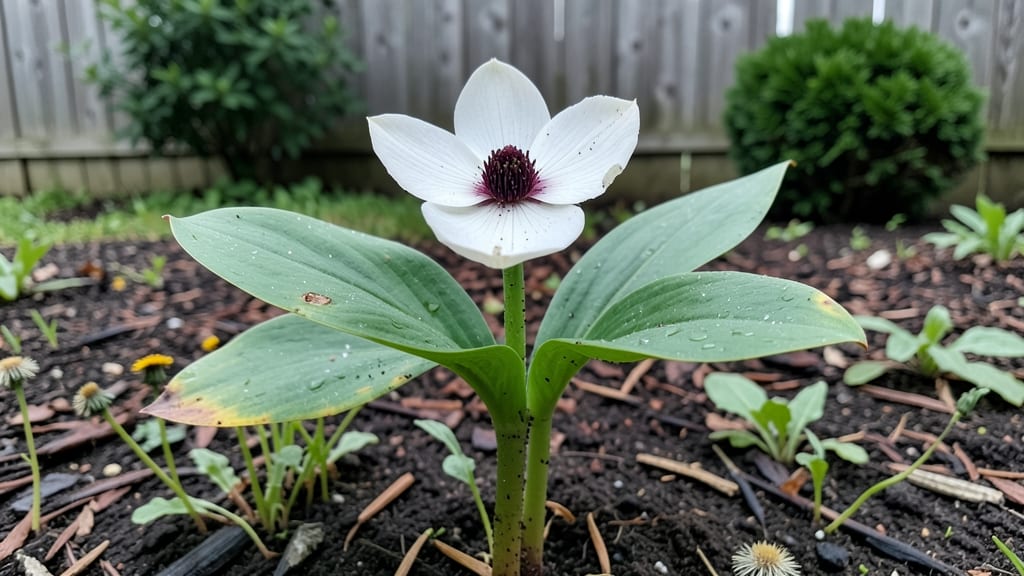
Trillium blooms typically between late April and early June, depending on climate and elevation, with most species emerging in spring after consistent soil temperatures reach 50°F (10°C).
Timing isn't just about the calendar—it's about the plant's internal cues. Trilliums are sensitive to daylight length, which is why they often bloom later in cooler northern climates where spring arrives more slowly.
I've noticed that in my own garden, the white trillium species tends to appear first, followed by the purple trillium about two weeks later, creating a stunning sequential display.
These plants also rely on consistent moisture during their dormancy period, so dry winters can delay blooming until soil temperatures finally stabilize in early spring. 💫
What's fascinating is how elevation plays a role—mountain regions might see trilliums blooming as late as July, while lowland areas hit their peak in May. This variability means gardeners should monitor local weather patterns rather than relying on fixed dates.
I always mark the first frost date in my area and work backward to predict when my trilliums will make their annual appearance. 🌿
💡 In This Article
- Factors Influencing Trillium Blooming Seasons
- Best Practices for Encouraging Healthy Trillium Flowers
Factors influencing trillium blooming seasons
Trilliums rely on a delicate balance of environmental triggers to time their blooming cycles. The primary catalyst is soil temperature, which must consistently reach 50°F (10°C) for at least 2-3 weeks to break dormancy. This temperature threshold activates metabolic processes that prepare the plant for growth.
Daylight duration also plays a crucial role—trilliums are sensitive to increasing photoperiods (daylight hours), which signal the transition from winter to spring. In regions with shorter springs, like the Pacific Northwest, blooming often occurs 2-3 weeks later than in warmer southern climates.
The plant's internal clock responds to these cues through a process called vernalization, where cold exposure during winter primes the trillium for spring growth. Interestingly, some species like Trillium grandiflorum (white trillium) may require 30-45 days of chilling temperatures below 40°F (4°C) to fully activate their flowering mechanism.
Soil moisture during this period is equally critical—dry conditions can delay blooming by 1-2 weeks as the plant conserves energy. I've observed that trilliums in well-drained, moist woodland soils often bloom 10-14 days earlier than those in drier, exposed areas.
Regional variations create dramatic differences in blooming windows. In the Appalachian Mountains, where springs arrive gradually, trilliums may not peak until late May to June. Conversely, in southeastern states like Georgia, where winters are milder, blooming can begin as early as mid-April.
This north-south gradient highlights how latitude and elevation interact with local microclimates. For example, a trillium growing at 3,000 feet elevation might bloom 3-4 weeks later than one at sea level in the same latitude due to cooler nighttime temperatures.
Dormancy periods also shape blooming timing. Trilliums enter a resting phase after flowering, during which they store energy in their rhizomes. This underground storage system requires 6-8 months of stable conditions to rebuild reserves before the next bloom cycle.
Disturbances like overwatering or heavy mulch can disrupt this process, leading to weaker or delayed blooms.
In my garden experiments, I've found that removing spent flower stalks in late June (rather than cutting them back immediately) allows the plant to allocate more energy to rhizome development, often resulting in earlier blooming the following spring.
Another fascinating factor is rainfall patterns during the dormant season. Trilliums in Pacific Northwest forests, where winters are wet, may experience 10-15% more reliable blooming than those in drier climates like the Midwest, where erratic rainfall can stress the plants.
The key difference lies in how consistently the soil remains moist without becoming waterlogged—a balance that's particularly challenging in sandy soils where moisture drains too quickly. This explains why trilliums often thrive in deciduous forest understories, where leaf litter helps regulate soil moisture and temperature.
What most gardeners overlook is how light intensity affects blooming. While trilliums prefer partial shade (30-50% sunlight), they also need enough light to trigger flowering.
In dense forests, where canopy cover reduces light to 10-20% of full sun, trilliums may produce fewer blooms or require 2-3 years to reach maturity.
This is why transplanted trilliums often struggle in full-sun gardens—the sudden increase in light can stress the plant, delaying blooming by 1-2 seasons as it acclimates.
Understanding these factors means you can predict blooming times with remarkable accuracy. For instance, if your area experienced an early 50°F (10°C) soil temperature in mid-March, expect blooms 6-8 weeks later. Conversely, a late frost in April could push back blooming by 3-4 weeks.
By tracking these environmental cues—especially in your first growing season with trilliums—you'll develop an intuitive sense of when to expect those iconic nodding flowers to appear. 🌸