
Blooming
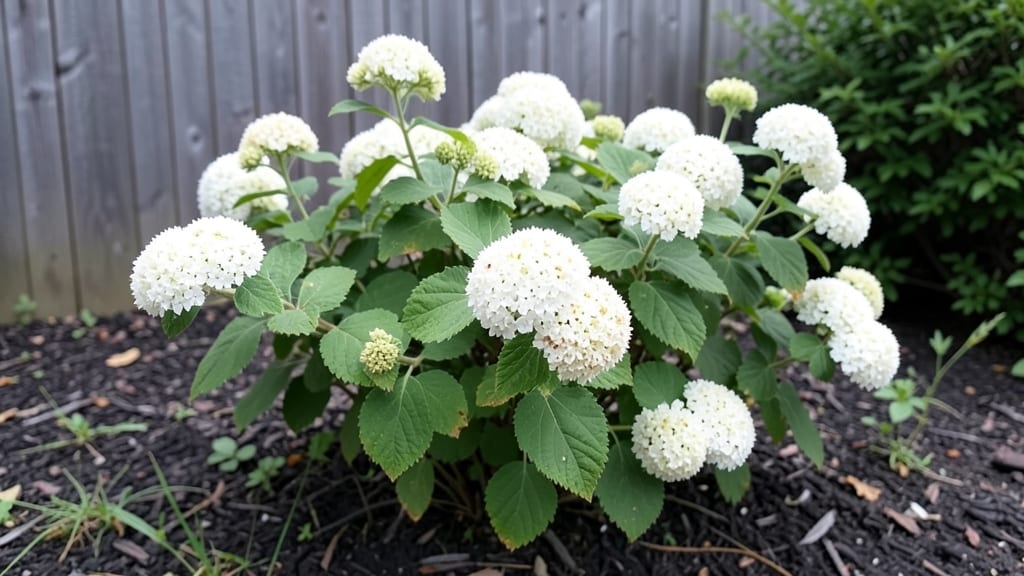
Snowball trees bloom in late spring to early summer, typically between April and June, with timing varying by USDA zones—warmer climates (zones 7-9) see flowers earlier, while colder zones (3-6) may bloom weeks later. Their iconic white clusters shift to soft pink or cream as they age.
These striking shrubs thrive on seasonal cues, needing 600-1,000 hours of winter chill to trigger their spectacular display. In my experience, Viburnum opulus (European snowball) often blooms first in zones 5-7, while Viburnum bodnantense (Dawn viburnum) may wait until late May in colder regions.
The color shift from white to blush isn't just aesthetic—it signals the flowers' readiness for pollinators, making them a garden magnet when timed right. 💫
For gardeners eager to coax earlier blooms, I recommend pruning in late winter to remove old wood while maintaining a balanced shape. Slightly acidic soil (pH 5.5-6.5) and consistent moisture during dormancy can also encourage more vigorous flowering.
Just avoid overwatering once buds form—too much dampness can dilute their vibrant potential. The payoff? A show that lasts 3-4 weeks with proper care. ✨
💡 In This Article
- How Climate Zones Affect Snowball Tree Blooming Seasons
- Tips to Encourage Earlier or More Vibrant Snowball Tree Flowers
How climate zones affect snowball tree blooming seasons
Here's what's actually happening with snowball trees: their bloom cycles are tightly linked to winter chilling hours and spring temperature thresholds. Most varieties need 600-1,000 hours below 45°F during dormancy to trigger flower buds.
This chilling requirement explains why Viburnum opulus (common snowball) blooms reliably in zones 3-6, where winters consistently provide these conditions. In contrast, Viburnum bodnantense (Dawn viburnum) often needs slightly longer chilling—closer to 1,000-1,200 hours—which is why it may bloom later in colder regions. 🔥
The transition from winter dormancy to spring growth activates when daytime temperatures consistently reach 50-55°F for 5-7 days. This warm-up period signals the plant to break dormancy, but the exact bloom timing depends on how quickly soil temperatures rise above 45°F.
In zone 9 (like Southern California), where winters rarely drop below 35°F, snowball trees may bloom as early as February-March—sometimes even overlapping with winter. Meanwhile, in zone 5 (Midwest), where winters average 20°F, blooms typically don't appear until mid-May.
What most people don't realize is how soil temperature affects root activity. The roots need to warm to 55°F before they can efficiently transport nutrients to the buds. This is why snowball trees in colder zones often bloom later than their southern counterparts—even if they receive similar chilling hours.
The science behind this involves a hormone called abscisic acid, which breaks down during warm soil conditions, allowing growth hormones to take over. In warmer zones, this process starts earlier, accelerating the entire bloom cycle. ✨
Consider these key factors when predicting bloom timing for your region:
- Zone 3-4 (e.g., Minnesota): Blooms late May to early June due to shorter growing seasons and later soil warming
- Zone 5-6 (e.g., Chicago): Blooms mid-May to late May, benefiting from reliable winter chilling
- Zone 7-8 (e.g., Virginia): Blooms April to early May, often overlapping with spring ephemerals
- Zone 9 (e.g., Los Angeles): Blooms February-March, sometimes with a second flush in fall
The color shift from pure white to soft pink isn't just decorative—it's a biological signal. As temperatures rise above 60°F, the flowers produce more anthocyanin pigments, which protect them from UV damage while attracting pollinators like bees and butterflies.
This shift typically occurs 7-10 days after initial bloom, making the transition more pronounced in warmer zones where temperatures climb faster. In colder climates, the shift may happen more gradually over 2-3 weeks. 🌟
One fascinating exception is Viburnum plicatum 'Tomosa', which often blooms 2-3 weeks earlier than other varieties in the same zone. This is because its buds form on second-year wood, giving them a head start on growth.
Gardeners in colder zones can take advantage of this by planting 'Tomosa' alongside slower varieties to extend the bloom season. The key takeaway? Your snowball tree's timing is a perfect balance of winter chilling, spring warmth, and genetic quirks—all working together to create that iconic spring display. 💫