
Blooming
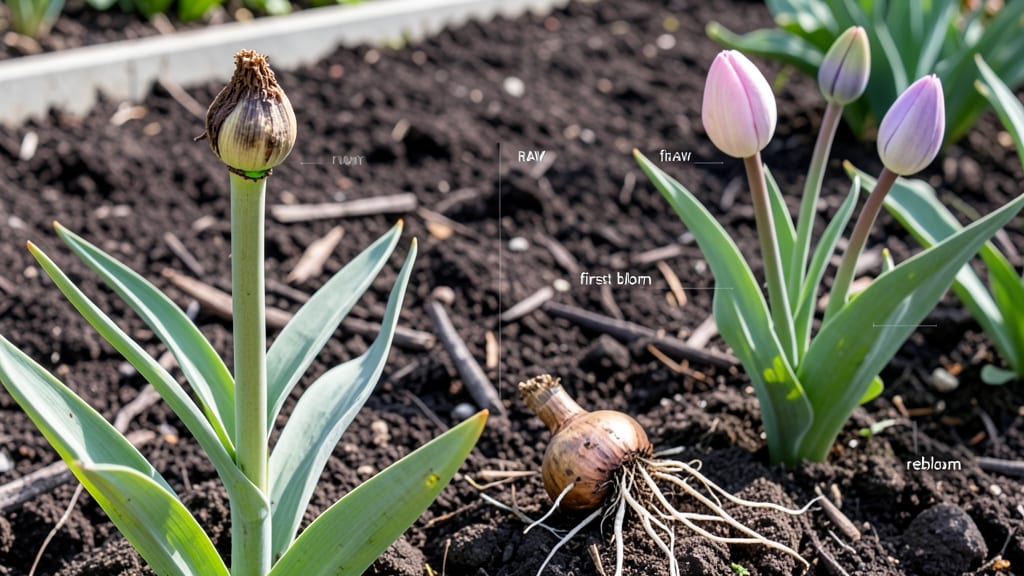
Can tulips bloom twice in one season? Tulips typically bloom once per season, but certain varieties like Darwin Hybrid tulips can rebloom with proper care—pruning spent blooms, fertilizing, and ensuring full sunlight. Most tulips require a dormant period to rebloom the following year.
While most tulips follow nature's rule of one bloom per season, some varieties like Darwin Hybrids can produce a second flush of flowers with the right conditions. 🌸 The key lies in their energy reserves—after the first bloom, these tulips store nutrients in their bulbs to fuel a second round, provided they get consistent care.
I've seen this happen most reliably when gardeners remove spent blooms promptly (but leave the foliage), apply balanced fertilizer, and avoid overwatering during dormancy.
Even then, reblooming isn't guaranteed—it depends on the specific variety, soil quality, and even your local climate. For example, Parrot tulips sometimes surprise gardeners with second blooms, while species tulips almost never do.
The trade-off? Reblooming varieties often produce smaller second flowers, as the plant divides its energy between bulb maintenance and new growth.
💡 In This Article
- Why Most Tulips Bloom Only Once Per Year
- How to Encourage Reblooming in Tulips
Why most tulips bloom only once per year
Tulips evolved to conserve energy by blooming just once annually, a survival strategy tied to their bulb's energy reserves. After the first bloom, the plant prioritizes replenishing its bulb—storing nutrients like starches and sugars for next year's growth.
This process requires 6-8 weeks of foliage growth post-bloom, during which the leaves photosynthesize to rebuild the bulb's strength. Without this recovery period, the plant lacks the energy to produce a second flower, which demands 30-50% of the bulb's stored energy.
The biological clock also plays a role: tulips are sensitive to daylight changes. Most varieties need 12-14 hours of daylight to trigger blooming, and their internal mechanisms reset after the first flush.
Species tulips, like the wild Tulipa tarda, are particularly strict—these ancient varieties almost never rebloom because their genetic programming favors a single, dramatic display to attract pollinators before entering dormancy. 🌱 Even in ideal conditions, their bulbs allocate nearly all resources to bulb maintenance rather than flowering twice.
Temperature further complicates reblooming. Tulips require a cold dormancy period (4-6 weeks below 45°F) to reset their blooming cycle. Without this chill, the plant remains in a state of confusion—its energy systems are primed for spring but can't initiate a second bloom without the proper seasonal cues.
This is why gardeners in warm climates rarely see reblooming, even with perfect care.
There's also a trade-off in flower size. When a tulip does attempt a second bloom, it often produces smaller, less vibrant flowers because the bulb must divide its energy between maintaining its own health and supporting new growth.
For example, a Darwin Hybrid tulip might yield a first bloom with 5-7 petals but only 3-4 petals in its second flush, as the plant prioritizes bulb survival over floral extravagance.
One fascinating exception is the Tulipa clusiana, a species tulip that sometimes produces a second bloom—but only if the first flower is removed before it fully opens.
This variety's unique biology allows it to redirect energy when deprived of the first bloom's energy drain, though even then, the second bloom is typically 30-50% smaller than the first. 🌸
The bottom line? Nature designed tulips to bloom once for efficiency. Reblooming is an exception that requires both the right genetics and precise gardening intervention—something we'll explore in the next section.