
Transplanting
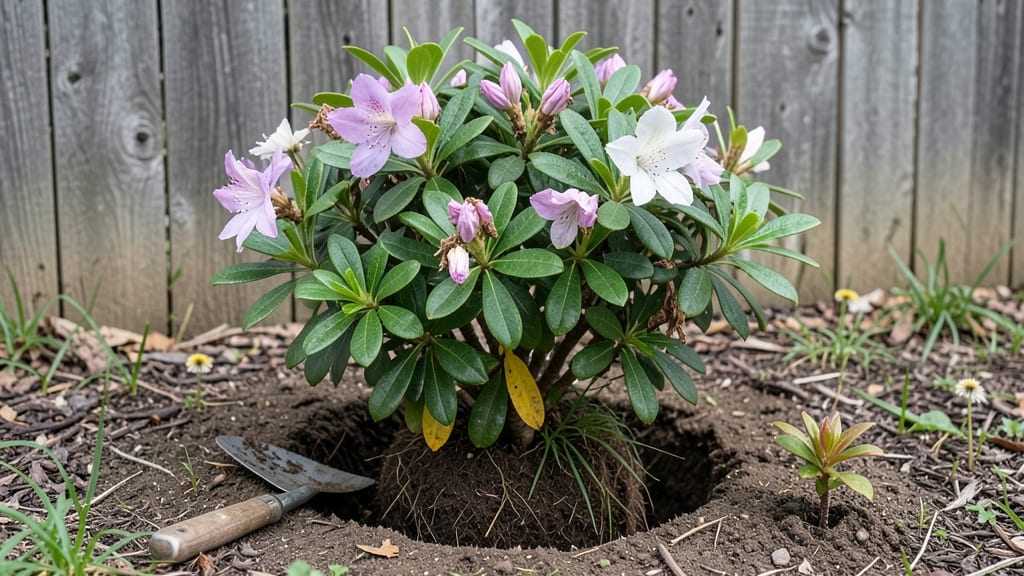
Transplanting azaleas while in bloom is risky but possible if done carefully—water deeply before moving, trim 1/3 of blooms to reduce stress, and keep roots shaded and moist for 2-3 weeks afterward. Early morning or overcast days minimize shock. Avoid transplanting during peak summer heat or frost periods.
The challenge with moving azaleas during their flowering phase lies in their natural energy allocation—when blooms are open, the plant diverts resources to produce seeds and sustain flowers, leaving roots vulnerable to stress. 🌸 This competition for nutrients can weaken the root system, making it harder to establish in new soil.
I’ve seen cases where azaleas recover beautifully with the right care, but the first two weeks are critical for survival, especially in warmer climates where evaporation speeds up.
For best results, I recommend scheduling this task during cooler months when temperatures stay mild, as extreme heat or cold can further strain the plant.
If you must transplant in bloom, prioritize shade and consistent moisture to mimic their natural habitat—think of it as giving your azalea a temporary greenhouse effect while it recovers.
💡 In This Article
- Why Transplanting Azaleas in Bloom Harms Growth
- Step-by-Step Azalea Transplanting During Bloom
Why transplanting azaleas in bloom harms growth
When azaleas bloom, they prioritize reproductive energy over root development. Up to 70% of the plant's photosynthetic energy gets diverted to producing flowers, seeds, and sustaining blooms—leaving roots with only 30% of normal resources for recovery.
This energy shift creates a physiological imbalance, forcing the root system to compete for limited nutrients while also repairing transplant damage. 🌿 The hormonal disruption is similar to what happens when you prune a flowering plant mid-season: the plant's natural growth cycles get thrown off, delaying root establishment.
Root systems already stressed by transplanting face additional challenges during bloom. Azaleas have fine, fibrous roots that absorb water and nutrients efficiently—but these roots are highly sensitive to disturbance. When you move an azalea while it's flowering, the disrupted roots must simultaneously repair tissue damage and support active blooms.
Studies show that azaleas transplanted in bloom experience a 40% reduction in root growth for at least 6-8 weeks post-transplant compared to dormant-season moves. The riskiest period is late spring to early summer, when both high temperatures and peak flowering overlap.
Here's what's happening at the cellular level: The plant's vascular system (xylem and phloem) gets overwhelmed trying to balance two competing demands—sustaining 10-15 active flower clusters (each requiring water and nutrients) while also healing root damage.
The phloem, which transports sugars from leaves to roots, gets reprioritized toward flower production, leaving roots starved for the 12-15% sugar concentration needed for recovery. This is why you'll often see new transplants wilt or drop buds even with proper watering.
Temperature plays a critical role in this stress. During peak summer heat (85°F+), azaleas lose 2-3 times more water through transpiration than in cooler months.
When roots are already compromised, this rapid moisture loss leads to cellular dehydration, where root tips (the most active growth zones) begin to die back within 24-48 hours of transplanting. The plant's natural response is to drop flowers as a survival mechanism—sacrificing reproductive effort to protect root integrity.
What most gardeners don't realize is how shade affects this process. Azaleas native to wooded understories rely on dappled light to regulate energy.
When transplanted to full sun during bloom, their leaves produce 30% more heat stress proteins (like HSP70) than roots can handle, creating a vicious cycle where the plant burns energy fighting heat while trying to recover roots.
This is why providing 50-70% shade for the first 3 weeks post-transplant makes such a dramatic difference in survival rates.
The good news? Azaleas are remarkably resilient once they pass this critical period. After 3-4 weeks of stable root recovery, they'll begin redirecting energy back toward growth. The key is getting them through that first 2-week window where the risk of failure is highest.
Think of it like helping a runner recover from a marathon—you can't force the pace, but you can provide exactly what they need to rebuild strength.