
Blooming
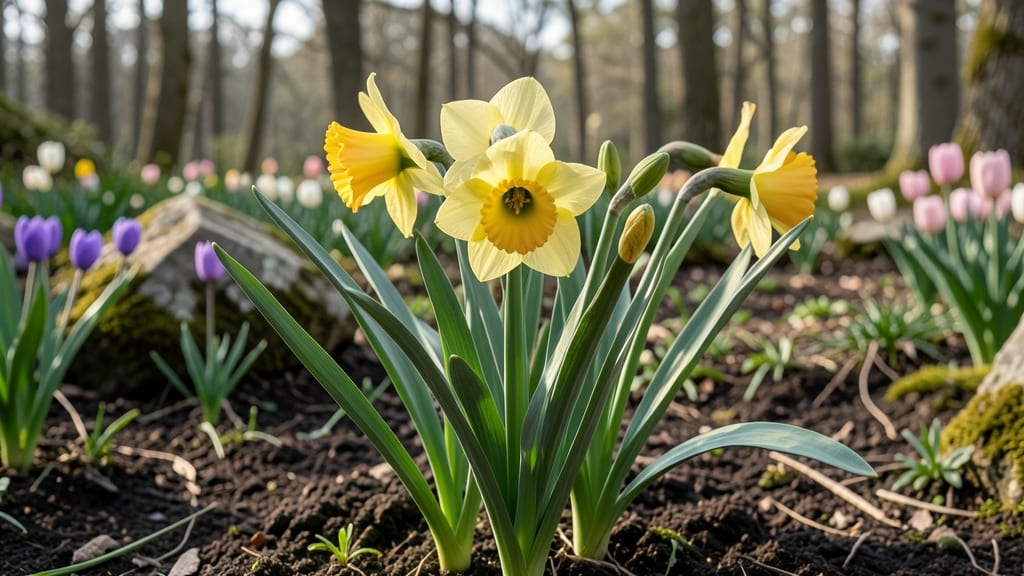
Daffodils do not bloom all summer; most varieties flower in early spring, typically between February and April, though some late-blooming types may extend into early summer. Their bloom period lasts 2-3 weeks per season, depending on climate and variety.
Daffodils are spring's signature bloomers, not summer's. 🌸 Their flowering cycle is tightly linked to daylight length and temperature shifts—most varieties trigger bloom when days lengthen after winter dormancy. Late-blooming types like 'Ice Follies' might push into early June, but even these won't last through summer's heat.
The 2-3 week bloom window reflects their natural lifecycle: after flowering, energy shifts to bulb storage for next year's growth.
What gardeners often overlook is how climate zones and planting depth can nudge bloom timing by 2-4 weeks. For example, shallow-planted bulbs in cooler zones may bloom earlier than deep-planted ones in warmer areas.
This explains why some yards see daffodils in March while others wait until May—it's not just variety differences but also microclimate factors at play.
💡 In This Article
- Daffodil Bloom Timing: Seasonal Cycles Explained
- Extending Daffodil Bloom Seasons with Gardening Strategies
Daffodil bloom timing: seasonal cycles explained
Daffodils bloom in response to two key biological triggers: photoperiodism (daylight length) and vernalization (cold exposure). Most varieties need 6-8 weeks of temperatures below 50°F to break dormancy, while others require 10-12 weeks for full bloom readiness.
Once exposed to increasing daylight (typically 12+ hours), their flower buds begin developing rapidly—a process called "forcing" that explains why spring's lengthening days trigger blooming. 🌱
The USDA climate zones dramatically shift bloom windows: Zone 3-4 daffodils often bloom in late March to April, while Zone 9-10 varieties may wait until February or even January in mild winters.
For example, 'Tête-à-Tête' (a mini daffodil) typically blooms 2-3 weeks earlier than 'Ice Follies', which can extend into early June. This variance occurs because later bloomers need slightly longer cold exposure or warmer soil temperatures to initiate flowering.
Temperature plays a critical role too. Daffodils prefer 50-65°F during bloom—heat above 80°F accelerates wilting, while frost below 28°F can damage buds. This is why late-summer blooms are nearly impossible: the plant's energy shifts to bulb storage after flowering, and summer heat disrupts the delicate balance needed for new growth.
The 2-3 week bloom window reflects this natural lifecycle, not a failure to thrive.
What most gardeners miss is how soil temperature affects bloom timing. Warmer soils (from south-facing beds or mulched areas) can trigger earlier blooming by 1-2 weeks compared to cooler north-facing spots.
This is why some yards see daffodils in March while others wait until May—it's not just variety differences but also microclimate factors at play. For instance, 'Jonquil' varieties often bloom 10-14 days later in cooler climates than in warmer ones.
Here's what happens after blooming: Once flowers fade, the plant allocates energy to foliage growth (which lasts 6-8 weeks post-bloom) to store nutrients in the bulb for next year. This is why cutting back foliage too soon starves the bulb—it needs those 60+ days of photosynthesis to rebuild reserves.
The cycle then repeats when winter chilling resets the process. 🌿
Fun fact: Some late-season daffodils like 'Paperwhite' (a forced variety) can bloom indoors in winter when exposed to ethylene gas from apples or citrus fruits. This proves daffodils aren't limited by summer heat but by their natural annual growth cycle, which evolutionarily optimized for spring's mild conditions—not summer's intensity.