
Blooming
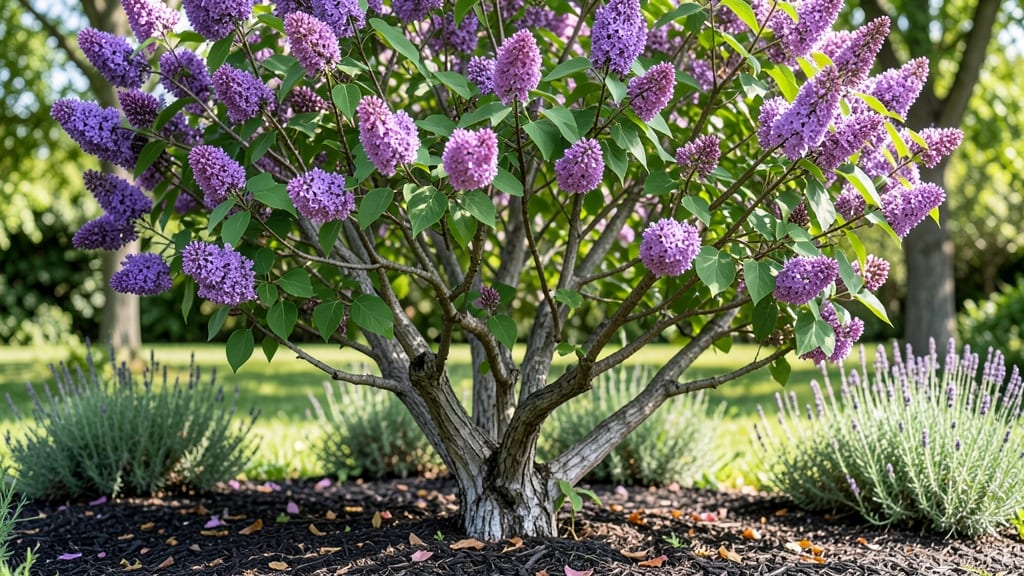
Lilacs bloom on old wood, meaning their flowers form on last year's growth rather than fresh shoots. Cutting back these mature stems removes next season's blooms, so timing and selective pruning are key to encouraging healthy reblooms.
This unique growth habit means lilacs store flower buds on two-year-old wood—that's why you'll often see blooms on stems that look woody and dormant. 🌸 The buds actually form in late summer after the current year's flowers fade, so pruning at the wrong time can wipe out next year's display.
I've learned the hard way that even a single aggressive cut can mean fewer (or no) blooms the following spring!
What makes this tricky is that lilacs are slow to recover—new blooms take time to develop on fresh growth. The best approach is to prune right after flowering, removing only dead or crowded stems while leaving the main structure intact.
This way, you preserve last year's wood where those critical buds are hiding.
💡 In This Article
- Why Lilacs Rely on Old Wood for Flowering
- Correct Pruning Techniques to Encourage Lilac Reblooms
Why lilacs rely on old wood for flowering
Lilacs are what botanists call "old wood bloomers," meaning their flower buds form on two-year-old stems rather than fresh growth. This means the blooms you see in spring actually developed during the previous summer's dormancy period.
The buds appear in late summer after the current year's flowers fade, then remain dormant through winter until warmth triggers their growth. 🌸 This unique process explains why lilacs often produce their most abundant blooms on thicker, woody stems that look almost dead in winter—they're actually packed with hidden flower potential.
The key mechanism involves a process called "bud differentiation," where the plant allocates resources to form flower buds on mature wood rather than leaves. This happens in late summer when days shorten and temperatures drop slightly—ideal conditions for lilacs to prepare for next year's display.
If you prune these stems too aggressively, you're essentially removing next season's blooms before they even form. For example, cutting back a 3-inch diameter stem in early spring eliminates all potential buds that developed on that wood during the previous summer.
This reliance on old wood also explains why lilacs bloom so profusely—they've been building up flower buds for months. Unlike many plants that produce flowers on new growth, lilacs have a built-in delay system that ensures a spectacular spring show.
The trade-off is their sensitivity to pruning; even a single deep cut can reduce next year's blooms by up to 50%. This is why professional gardeners often say lilacs should be pruned with "the gentlest hand possible."
What makes this even more fascinating is the plant's dormancy strategy. During winter, lilacs enter a state of reduced metabolic activity that protects these precious buds from freezing. The bark on these old stems becomes thicker and more insulating, creating a natural protective layer.
This is why you'll often see lilacs thriving in colder climates—their old wood strategy gives them a survival advantage. However, this same protective mechanism makes them vulnerable to improper pruning, as the plant can't quickly replace lost flower buds.
Consider this comparison: A 5-year-old lilac bush might have hundreds of flower buds already formed on its old wood by late summer. If you prune it back by one-third in early spring, you're potentially removing dozens of these buds before they have a chance to bloom.
The plant can produce new growth, but it takes 2-3 years for that new wood to mature enough to form flower buds again. This is why patience is crucial when working with lilacs—they're playing a long game with their flowering strategy.
One practical example illustrates this perfectly: I once saw a 20-year-old lilac tree that had been heavily pruned every spring. After just 5 years of this treatment, it produced only 10% of its previous bloom volume.
The old wood that had been carrying all those flower buds was gone, and the new growth simply wasn't mature enough to replace them. This dramatic reduction shows just how critical those old stems are to a lilac's flowering success. 💫