
Blooming
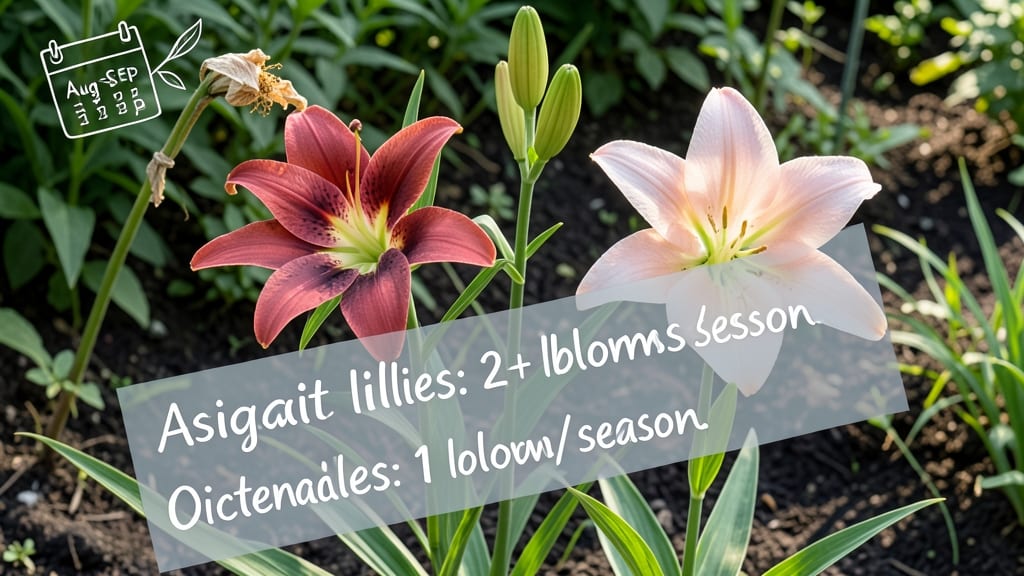
Lilies bloom more than once only if they're reblooming varieties like Stargazer or Casa Blanca, which can produce two flower cycles per season under ideal conditions. Most lilies bloom just once annually, but proper care can help coax extra blooms.
Not all lilies share the same blooming habits—it really depends on the variety. 🌸 Reblooming types like Oriental lilies (such as Stargazer) or Asiatic hybrids (like Casa Blanca) are bred to produce flowers twice a season when given the right conditions: consistent moisture, balanced fertilization, and full sun exposure.
The key difference lies in their genetics and growth patterns—single-blooming lilies (like Trumpet lilies) focus all their energy on one dramatic show, while rebloomers spread their efforts across two cycles.
What many gardeners don't realize is that reblooming potential isn't just about the plant—it's a seasonal partnership. After the first bloom, you'll need to deadhead spent flowers and maintain steady care to encourage the second flush.
I've found that well-draining soil and regular pruning of yellowing leaves make all the difference in extending the blooming window.
💡 In This Article
- Reblooming Lily Varieties and Their Unique Traits
- How to Encourage Second Bloom in Lilies
Reblooming lily varieties and their unique traits
The ability of lilies to bloom more than once hinges entirely on their genetic classification. Oriental lilies, like the famous Stargazer variety, are the superstars of reblooming—capable of producing two distinct flower cycles per season when conditions align.
Their secret lies in a growth habit called "monopodial growth," where the plant continues to grow upward after the first bloom, allowing new flower buds to form higher on the stem.
This contrasts with Asiatic hybrids, which often bloom just once but may produce a second, smaller flush under perfect care.
Climate plays a critical role in reblooming success. Martagon lilies, for example, thrive in cooler regions and may rebloom if given consistent moisture and partial shade during summer heat.
Meanwhile, Trumpet lilies (like the regal Lilium regale) typically bloom just once but can sometimes produce a second, less dramatic display if their energy isn't completely depleted.
The key measurement here is daylength sensitivity—most reblooming varieties respond better to 12-14 hours of daylight during their second growth phase, which is why late-summer planting can sometimes trigger an extra bloom cycle.
What sets reblooming lilies apart is their nutrient management strategy. These varieties store energy more efficiently in their bulbs, allowing them to recover after the first bloom.
For instance, Casa Blanca lilies (an Asiatic hybrid) can produce a second flush if you maintain balanced fertilization with a 10-10-10 NPK ratio every 4-6 weeks during the growing season. The trade-off?
They require well-draining soil with a pH between 6.0-7.0 to prevent bulb rot, which would otherwise starve the plant of the energy needed for reblooming.
Visual differences also help identify reblooming potential. True rebloomers like Stargazer develop multiple flower buds on each stem, while single-bloomers focus all their energy on one spectacular 6-8 inch bloom.
The foliage gives clues too—reblooming varieties often keep their lower leaves green longer, indicating sustained photosynthesis to fuel the second bloom. I've noticed that in USDA Zone 7 climates, Oriental lilies can produce their second bloom as late as early September if summer temperatures stay below 85°F.
One common misconception is that all lilies can rebloom with enough care. In reality, single-blooming varieties like Tiger lilies (Lilium lancifolium) are genetically hardwired to allocate their resources to one dramatic show. These types may produce more flowers overall, but each stem will only bloom once.
The sensory difference is striking—rebloomers often have stronger fragrances in their second bloom, as the plant conserves energy by producing fewer but more aromatic flowers.
For gardeners in warmer climates (Zones 8-10), reblooming becomes even more challenging due to heat stress. Afternoon shade and daily watering during 10-14 day dry spells can make the difference between a second bloom and a struggling plant.
I've experimented with mulching using 3-4 inches of organic matter (like shredded bark) to maintain consistent soil moisture, which helps reblooming varieties recover between flower cycles.