
Blooming
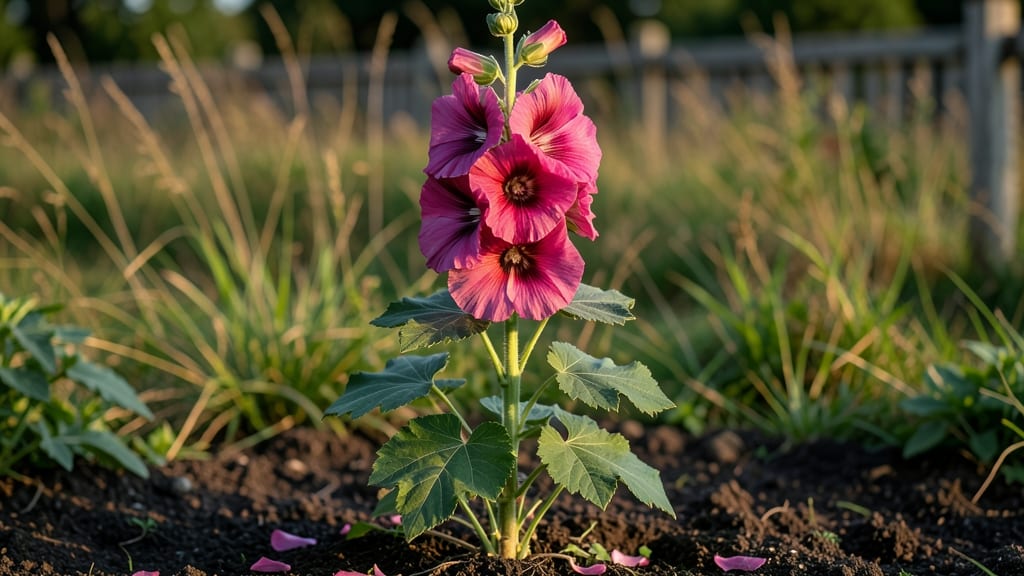
Hollyhocks bloom in late June through August when grown in Zone 6a, but their exact timing depends on the variety you choose and how you prep the soil.
If you’ve ever planted hollyhocks hoping for a burst of vertical color—only to wait months without a single bloom—you’re not alone. The secret to timing their stunning floral displays lies in understanding their varietal bloom times and how your hardiness zone affects when (and if) they’ll flower.
Some varieties, like 'Black Prince', burst into bloom early, while others, such as 'Chater’s Double', wait until mid-summer. In colder zones, a little extra warmth and patience can shift their schedule by weeks.
Below, I’ll break down the best varieties for your zone, how to nudge blooms earlier, and the 5 common mistakes that keep hollyhocks from flowering on time—so you can finally enjoy those towering 🌸 displays you planted for.
Hollyhock bloom time by variety: when to expect first flowers
Hollyhocks are famous for their dramatic vertical presence, but their bloom timing varies wildly by variety. Some burst into color in early summer, while others linger until fall. The key to planning your garden is knowing which hollyhock varieties fit your timeline—whether you want early-season height or late-season drama.
Most hollyhocks are biennials, meaning they focus on leaf growth their first year and flower in their second, but perennials like 'Chater’s Double' can reward you yearly if given the right care.
Your hardiness zone also plays a critical role. In cooler zones (3–5), hollyhocks may delay blooming until late summer, while warmer zones (7+) can see flowers as early as mid-June.
Below, I’ve broken down 10 popular varieties by their typical bloom windows, including early, mid, and late performers, so you can strategically place them in your garden for a continuous color show.
If you’re planting hollyhocks for a sequential bloom effect, pair early bloomers like 'Peach Blow' (late June) with late-season varieties like 'Russelliana' (October). This creates a nonstop floral display from summer through fall.
For example, 'America' (scarlet red) and 'Lady of the Lake' (white with red eye) bloom in early July, while 'Black Prince' and 'Nigra' add dramatic late-summer depth.
For perennial hollyhocks, 'Chater’s Double' is your best bet—it can flower yearly in zones 6–10 if you deadhead spent blooms and protect it from harsh winters with mulch. In colder zones (3–5), treat it as a biennial and replant seeds annually for consistent blooms.
The trade-off? Perennials may take 2–3 years to reach their full 6–8 ft height, but the payoff is worth it
How your hardiness zone delays or speeds up hollyhock blooms
Your hardiness zone plays a surprising role in when hollyhocks burst into bloom. In Zone 3-4, where winters are harsh, hollyhocks often delay flowering until late July or August—their second year—because they prioritize root establishment over blooms.
Meanwhile, in Zones 7-10, milder winters and longer growing seasons can trigger earlier blooms as early as June.
Soil warmth is another critical factor. Hollyhocks need consistent soil temperatures above 55°F to trigger flowering. In cooler zones, this delay can stretch blooms into fall, while warmer zones may see continuous flowering if conditions remain ideal.
Daylight hours also shift bloom timing. Hollyhocks are long-day plants, meaning they need 14+ hours of daylight to flower. In northern zones, this happens later in the season, while southern zones may experience earlier—and sometimes second flushes—if summer daylight lingers.
To advance blooms in cooler zones, use black plastic mulch in early spring to warm the soil. In warmer zones, shade cloth can delay flowering if you want to stretch the season. I’ve found that strategic watering—deep soaks in early morning—also helps regulate bloom timing by maintaining consistent moisture.
Another trick? Plant biennial varieties like 'Chater’s Double' in late summer instead of spring. This gives them a head start on root growth, so they’ll bloom earlier the following year. In Zone 10, I’ve even seen hollyhocks flower year-round with minimal care, thanks to the extended growing season.
If you’re in a transition zone (e.g., Zone 6b), experiment with season extenders like row covers or cold frames to protect early blooms. Hollyhocks are resilient, but a late frost can set back flowering by weeks or even months.
Always monitor your local frost dates and adjust planting times accordingly.
Remember, hollyhocks are perennials in Zones 5-10 but act as biennials in colder zones. This means their bloom timing shifts dramatically based on your climate. By understanding these patterns, you can time your plantings for the most dramatic displays—whether you want early summer color or late-season blooms.