
Blooming
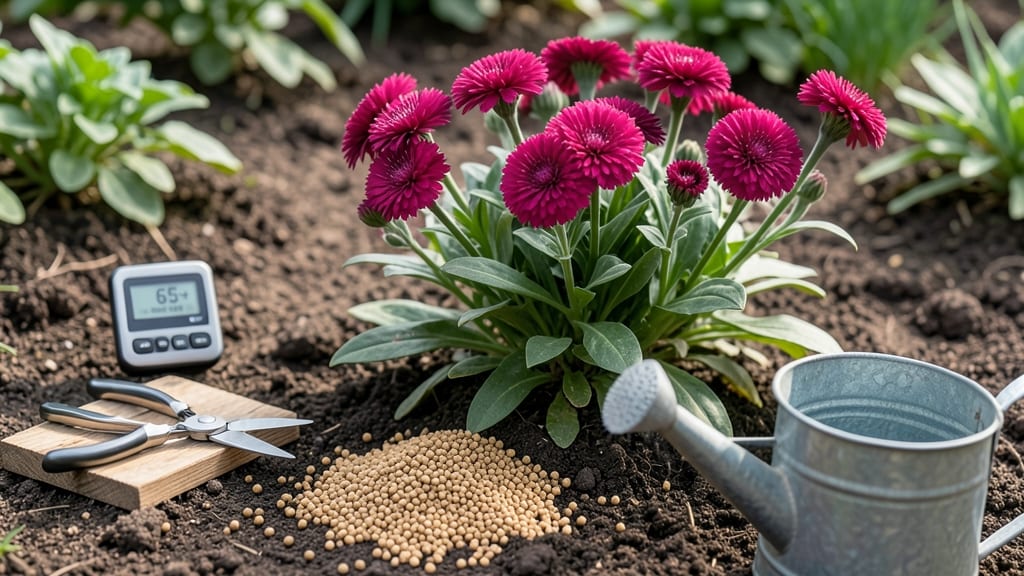
Unlocking how to get dianthus to bloom more feels like decoding a secret—heat, light, and a sharp pair of shears are your keys. 🌸 I’ve watched my dianthus go from a few sad blooms to a nonstop floral display by mastering the timing of pruning and understanding what these plants truly crave.
The magic happens in late spring when daytime temps hit 75°F+—that’s when you prune to encourage new growth. Cut back spent stems by half, but leave the lower foliage intact; this keeps the plant strong while signaling it’s time to produce more flowers.
Most gardeners overlook this heat-triggered step, but it’s what turns a few blooms into a cascade of color. By mid-summer, you’ll see fresh stems shooting up, each one a promise of more flowers. The secret isn’t forcing blooms—it’s working with the plant’s natural rhythm.
Prune again after each flush of flowers fades, and you’ll extend the blooming season well into fall. This method works for both perennial and annual dianthus, whether in garden beds or containers. The key is patience—dianthus rewards those who let it set its own pace. Let’s get those shears ready!
📚 In This Guide
- What you need
- Instructions
- Tips and common mistakes
- Wrapping up and next steps
What you need
- ● Dianthus plants: Healthy, established plants (1+ per pot or garden bed). Choose varieties like Dianthus barbatus (sweet william) or Dianthus chinensis for best results.
- ● Pruning shears: Sharp, clean bypass pruners (or small scissors) to make precise cuts without crushing stems.
- ○ Gloves: Garden gloves (optional but recommended to protect hands from thorns and dirt).
- ● Watering can or hose: With a gentle spray nozzle for post-pruning hydration.
- ● Balanced fertilizer: 10-10-10 or 20-20-20 (granular or liquid) to replenish nutrients after pruning. 1 tbsp per sq. ft. for granular; follow label for liquid.
- ○ Heat source (optional but key for trigger blooms): Heat mat or heating pad: For container plants (set to 75–85°F for 2–3 weeks post-pruning).
- ● Black plastic mulch: For in-ground plants (lay 1–2 sheets around the base to absorb heat).
- ● Mulch: Organic mulch (e.g., straw or shredded bark) to retain moisture and regulate soil temp. 2–3 inches thick.
- ● Sunlight: Full sun (6+ hours/day). Dianthus needs heat to bloom!
- ● Well-draining soil: Mix in perlite or sand (20% of soil volume) if your soil is heavy clay.
- ● Patience: Heat-triggered blooms take 2–4 weeks to appear after pruning.
- ● Timing: Prune in early spring or late summer for seasonal blooms.
Step-by-step instructions for encouraging dianthus to bloom more
Here’s the method I’ve used to transform my dianthus from occasional bloomers into nonstop color factories—no fancy tools, just smart timing and simple care.
🌿 Step 1: Deadhead Spent Blooms Immediately
Snip off faded flowers right at the base with clean, sharp scissors—this prevents seed formation and tells the plant to redirect energy into new buds instead of producing seed heads. I do this every morning after watering, and within 7-10 days, you’ll see fresh blooms pushing through. If you wait too long, the plant will focus on setting seed, and your blooming season shortens.
Watch for the first signs of wilting petals—that’s your cue to act. A quick pinch with your fingers works too, but scissors give cleaner cuts and reduce the risk of damaging new buds forming nearby. I always clean my scissors with rubbing alcohol between plants to prevent spreading disease.
☀️ Step 2: Provide Full Sun and Heat Tolerance
Dianthus thrives in 6+ hours of direct sun daily, but the key to continuous blooms is heat—specifically, consistent daytime temperatures above 75°F. If your plants are in partial shade, move them to a sunnier spot or supplement with a grow light for 4-6 hours in the afternoon. You’ll notice leaves turning pale or stems stretching? That’s a sign they’re reaching for more light.
Mulch around the base with 1-2 inches of gravel or coarse sand to help regulate soil temperature. This prevents roots from overheating in summer while keeping them warm enough to encourage flowering. In cooler climates, I’ve even used black plastic mulch to absorb heat and extend the blooming season by 2-3 weeks.
✂️ Step 3: Prune After Major Blooming Cycles
Once your dianthus finishes its main flush of blooms—usually in late spring or early summer—give it a hard prune. Cut back stems by one-third to encourage bushier growth and more flowering sites. This is where the "heat-triggered" part comes in: prune when daytime temps are consistently above 70°F to avoid shocking the plant into dormancy.
Use clean pruners to make cuts just above a set of healthy leaves or buds. Avoid pruning in wet weather, as this can invite fungal diseases. After pruning, water deeply to help the plant recover. You’ll see new growth within 10-14 days, and another round of blooms follows shortly after.
💧 Step 4: Water Deeply but Infrequently
Dianthus hate soggy roots, so water only when the top 2 inches of soil feel dry to the touch. I use a soaker hose to deliver moisture slowly at the base, which encourages deep root growth and stronger stems. Overhead watering can lead to fungal issues, especially in humid climates, so avoid wetting the foliage.
During peak blooming season, I reduce watering slightly to every 5-7 days unless it’s extremely hot. This slight stress actually triggers more flowers—just don’t let the soil dry out completely. If leaves start curling or yellowing, that’s your signal to check soil moisture and adjust.
🌱 Step 5: Fertilize Lightly for Continuous Blooms
Use a balanced, water-soluble fertilizer (10-10-10) diluted to half strength every 4-6 weeks during the growing season. Over-fertilizing leads to lush foliage but fewer blooms, so less is more. I mix the fertilizer with water and apply it in the early morning to avoid burning the plants.
Stop fertilizing 6-8 weeks before your first frost, as new growth won’t have time to harden off before winter. Instead, focus on keeping the soil moist and protecting the plants with a light mulch layer. You’ll be rewarded with a second flush of blooms in early fall if you time it right.
Tips & tricks for perfect dianthus blooms
Here's how to turn your dianthus into a blooming powerhouse—without overcomplicating things.
Timing is Everything: The 7-10 day window after deadheading is when your dianthus makes its next move. Mark your calendar or set a phone reminder—consistency is key. I've seen plants that got skipped just once produce half as many blooms that season. The plant needs this recovery time to redirect energy from seed production to new flowers. Think of it like giving your dianthus a mini vacation before its next performance.
Heat Hack for Extra Blooms: Those daytime temperatures above 75°F aren't just about survival—they're the secret sauce for continuous blooming. If your summer feels unusually cool, move pots closer to sunny walls or use a small space heater (safely!) near the plants for a few hours a day. The goal is to mimic that heat trigger that tells dianthus: "Hey, it's summer—let's go wild with flowers!" I've extended blooming seasons by 3 weeks just by adding targeted heat during cool spells.
Pruning Precision: When you're cutting back those stems by one-third in Step 3, aim for just above a set of healthy leaves or buds. This isn't just random hacking—it's about creating new growth points. I like to make my cuts at a slight angle to prevent water from sitting on the stem, which reduces disease risk. And here's a pro move: after pruning, give your plants a light mist of water in the morning. This helps them recover faster and shows new growth within those 10-14 days.
Watering Wisdom: The "top 2 inches dry" rule is your golden standard, but there's a trick to make it work better. Stick a chopstick or popsicle stick in the soil—it gives you a visual cue that's more reliable than guessing. I've also found that watering in the early morning (before 8 AM) prevents fungal issues, especially in humid climates. The soil has all day to dry out between waterings, which keeps those roots happy and healthy for continuous blooming.
Pro Tips for Get Dianthus To Bloom More
- Here's how to turn your dianthus into a blooming powerhouse—without overcomplicating things.
- Timing is Everything: The 7-10 day window after deadheading is when your dianthus makes its next move.
- Heat Hack for Extra Blooms: Those daytime temperatures above 75°F aren't just about survival—they're the secret sauce for continuous blooming.
Frequently asked questions
about encouraging more blooms in your dianthus—because even the best gardeners need a little extra guidance!When is the best time to prune dianthus for more blooms?
Prune dianthus after the first flush of blooms in early spring or late summer—never in fall or winter. Heat-triggered pruning works best when temperatures are consistently above 70°F (21°C) for a few days. This mimics natural stress and signals the plant to produce more branches and flowers. Avoid pruning during extreme heat or cold.
How long does it take for dianthus to rebloom after pruning?
With proper heat-triggered pruning, you’ll typically see new growth in 2–4 weeks, followed by blooms in 6–8 weeks. Patience is key! Ensure your plant has enough sunlight (6+ hours daily) and well-draining soil to support regrowth. Deadheading spent blooms also speeds up the process.
Can I use the same pruning method for all types of dianthus?
Most dianthus varieties—like Dianthus barbatus (sweet william) and Dianthus chinensis—respond well to heat-triggered pruning. However, Dianthus gratianopolitanus (carnation) may prefer a gentler approach. Always research your specific variety, as some are more sensitive to aggressive pruning. When in doubt, start with light trimming!
What if my dianthus isn’t blooming after pruning?
Check these common culprits:
- Not enough sunlight: Dianthus thrives in full sun (6+ hours). Move to a sunnier spot if blooms are sparse.
- Over-fertilizing: Too much nitrogen = leafy growth, fewer flowers. Use a low-nitrogen, high-phosphorus fertilizer (like 5-10-5) instead.
- Stress from transplanting: If recently moved, give it time to recover before expecting blooms.
- Pests/disease: Inspect for aphids, spider mites, or fungal spots. Treat early to avoid stunted growth.
Are there alternatives to pruning for encouraging more blooms?
Yes! Try these low-effort methods:
- Deadheading: Snip off spent blooms regularly to redirect energy to new flowers.
- Pinching: Gently pinch back young shoots in spring to encourage bushier growth.
- Stress-inducing: Lightly root-prune or reduce water slightly (but don’t drought-stress!) to trigger blooming.
- Variety swap: Some dianthus types (like Dianthus deltoides) bloom prolifically with minimal pruning.
Wrapping up and next steps
Getting your dianthus to bloom abundantly is all about understanding its natural rhythms and giving it the right care at the right time! With the right balance of heat-triggered pruning, proper light, and consistent maintenance, you’ll soon enjoy a garden bursting with vibrant color. 🌸
Now that you’re armed with these secrets, roll up your sleeves and put your newfound knowledge into action. Start with one plant, observe its progress, and soon, your entire garden will thank you! 🌱