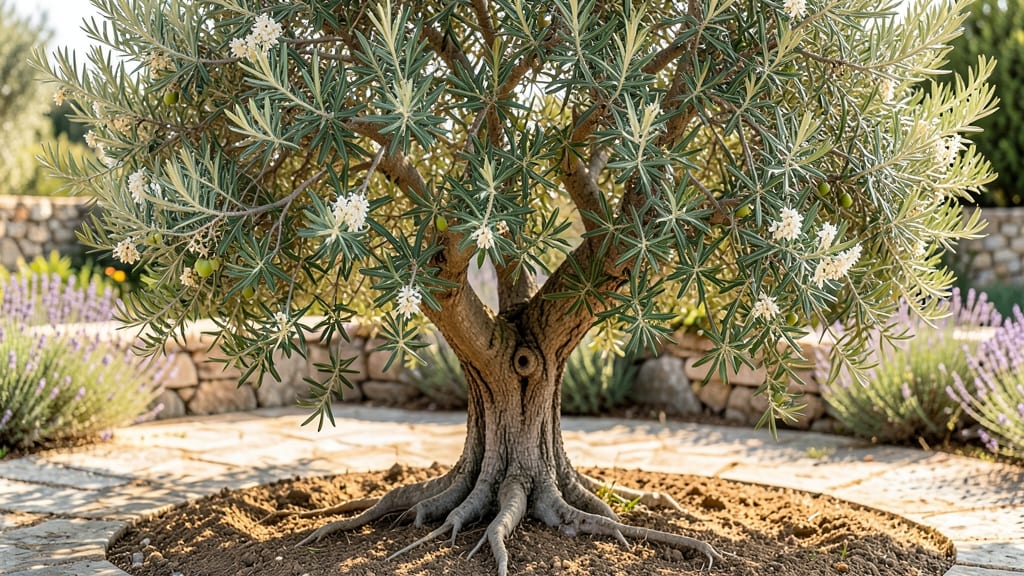
The olive tree bloom stages 🫒 reveal the secret to a bountiful harvest—and if you’ve ever wondered why your tree flowers but never fruits, the answer lies in these precise transitions.
Watching an olive tree bloom is like witnessing nature’s slow-motion masterpiece—each stage reveals the tree’s health, productivity, and future harvest potential. But without knowing the exact timeline, you might miss critical signs that determine whether your tree will yield abundant olives or struggle to fruit.
From the first tiny buds in early spring to the vibrant white flower clusters that signal pollination, understanding these stages helps you time pruning, watering, and even pest control for maximum success. A missed window can mean fewer olives—or none at all.
In this guide, I’ll walk you through the month-by-month bloom cycle, including how climate, variety, and care decisions impact each phase. By the end, you’ll know exactly what to watch for—and how to give your olive tree the best shot at a fruitful season.
Month-by-month olive tree bloom stages: what to expect by season
Olive trees transform from dormant winter branches to vibrant bloomers in a carefully timed dance with seasonal cues and climate conditions. Understanding these month-by-month stages helps you anticipate flowering, identify potential issues, and optimize care for varieties like Arbequina, Frantoio, and Manzanillo.
Each stage—from bud formation to fruit set—reveals whether your tree is healthy enough to produce a bountiful harvest.
In Zone 9b (the Mediterranean climate zone where olive trees thrive), blooming typically begins in late winter (February) and peaks in early spring (March-April).
However, cooler climates (Zones 8-10) may delay blooming by 2-4 weeks, while warmer microclimates can trigger earlier flowering. Temperature fluctuations during dormancy also play a critical role—olive trees need chill hours (300-600 hours below 45°F) to break dormancy and initiate buds.
Visual cues are your best friends during this process. Start by scanning your tree for tiny green buds along the branches in late winter. These buds will swell into flower clusters (called inflorescences) by early spring, resembling tiny white or pale green pom-poms. The timing of these stages varies by variety—Arbequina blooms rapidly in 6 weeks, while Manzanillo takes 8 weeks to complete flowering.
Month
Stage
Visual Cues
Key Actions
Climate Impact
January-February
Dormancy
Leafless branches, no buds visible
Prune dead wood; reduce watering
Cold snaps delay bud formation
Late February
Bud Swelling
Small green buds appear
Monitor for pests; increase light
Warm spells speed up swelling
March
Flowering Begins
White/pale green clusters emerge
Hand-pollinate if needed; water deeply
Humidity aids pollination
April
Peak Bloom
Abundant white flowers cover branches
Avoid heavy pruning; fertilize lightly
Frost risks can damage flowers
May-June
Fruit Set
Tiny olives form; flowers drop
Thin fruit if overcrowded; monitor pests
How olive tree varieties differ in bloom stages and fruit development
Not all olive trees bloom on the same schedule, and these differences can dramatically impact your harvest timing and fruit quality. Some varieties like Arbequina burst into bloom in just 6 weeks, while others like Mission take a more leisurely 8-week process.
Understanding these variations helps you predict when to expect fruit set and plan accordingly.
Early bloomers like Arbequina and Kalamata often produce smaller but more abundant fruit, while late bloomers like Mission and Frantoio yield fewer but larger olives.
The choice of variety can also affect how drought-tolerant your tree is during critical bloom periods, with some varieties thriving in dry conditions while others need consistent moisture.
Variety
Bloom Duration
Fruit Set Rate
Harvest Window
Olive Size
Arbequina
6 weeks
High (80-90%)
Late September - October
Small (0.5-1 inch)
Mission
8 weeks
Moderate (60-75%)
October - November
Large (1-1.5 inches)
Frantoio
7 weeks
Moderate-High (70-85%)
September - October
Medium (0.75-1.25 inches)
Kalamata
6-7 weeks
High (80-90%)
November - December
Large (1-1.5 inches)
Manzanillo
7-8 weeks
Moderate (65-75%)
October - November
Medium-Large (0.75-1.25 inches)
The Arbequina variety stands out for its rapid bloom cycle, which means it can produce fruit earlier in the season. This makes it ideal for gardeners in cooler climates who want to maximize their harvest window.
However, its smaller olives may require more trees to yield a significant amount of fruit for processing.
On the other hand, Mission olives take longer to bloom but produce larger fruit that’s prized for table use. Their staggered bloom process also means they’re less vulnerable to late frost damage, which can devastate early bloomers.
If you’re growing olives for culinary purposes, Mission might be the better choice despite its slower bloom rate.
For gardeners in Zone 9b or warmer, choosing a variety with a longer bloom stage like Frantoio can help spread out your harvest and reduce the risk of fruit drop due to sudden temperature changes.
Always monitor your tree’s bloom progress and adjust watering schedules to support fruit development during these critical stages.
Remember, the fruit set rate isn’t just about quantity—it’s also about quality. Varieties with higher fruit set rates like Arbequina and Kalamata often produce olives with more consistent flavor profiles, making them better suited for cold-press oil production or table olives if properly cured.