
Blooming
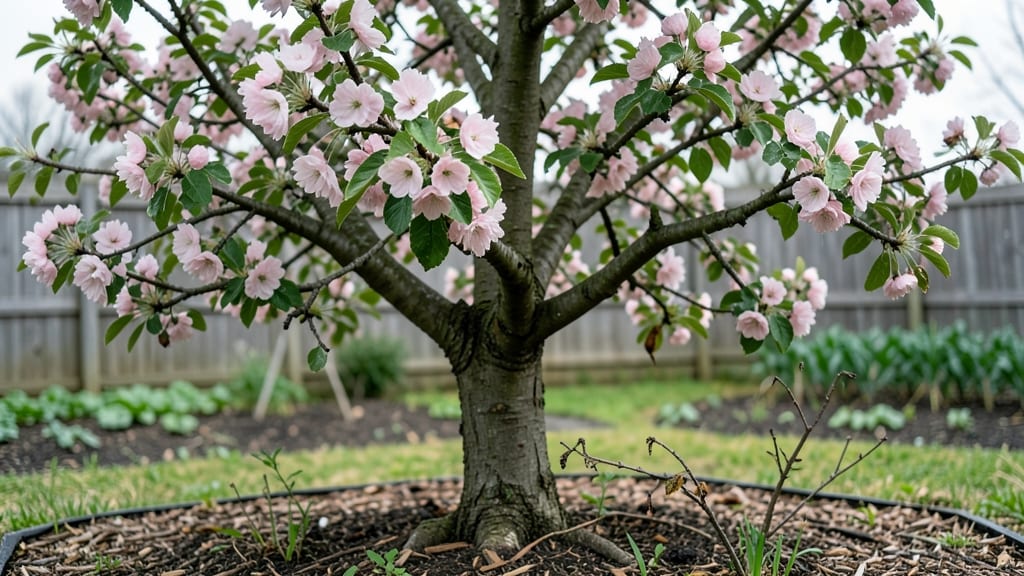
Honeycrisp apple trees bloom in early to mid-spring, typically between late April and early May in most U.S. growing zones, with flower clusters appearing over 7-10 days. Timing depends on frost risk and regional climate variations.
Timing isn't just about the calendar—it's about chilling hours and warmth triggers. Honeycrisp trees need 300-600 hours below 45°F to wake up from dormancy, which is why northern climates often see blooms 2-3 weeks earlier than southern zones.
Once buds swell, a single warm day can push them into pink bud stage within days, making frost alerts critical for orchard managers. 🌸
What's fascinating is how temperature swings can disrupt pollination—if nighttime dips below 28°F after buds open, petals blacken and fruit set fails entirely. That's why commercial growers monitor USDA frost maps and use row covers as a last-resort shield when blooms peak.
Even a 10-minute frost at the wrong stage can wipe out an entire season's crop. 🌡️
💡 In This Article
- Honeycrisp Apple Tree Bloom Stages Explained
- Protecting Honeycrisp Blooms from Frost Damage
Honeycrisp apple tree bloom stages explained
The Honeycrisp apple tree's bloom cycle unfolds through three distinct stages, each triggered by precise temperature thresholds. First comes bud swell, where dormant buds expand as daytime temperatures rise above 50°F after satisfying their 300-600 chilling hour requirement.
This phase lasts about 7-10 days and is your first visual warning that blooming is imminent. The buds swell noticeably, resembling tiny green peas, and the tree's branches take on a slightly fuzzy appearance as tiny flower clusters form beneath the protective scales.
Next arrives the pink bud stage, where petals begin unfolding in a delicate pink hue that's unmistakable against the tree's dark green foliage. This phase typically lasts 3-5 days and is when the tree becomes most vulnerable to frost damage.
Here's where temperature becomes critical: if nighttime dips below 28°F during this window, the delicate flower tissue freezes and turns black within hours. The petals may also drop prematurely, leaving no opportunity for pollination.
At this stage, you'll notice a sweet, almost honey-like aroma filling the air—this scent attracts pollinators like bees, which are essential for fruit development.
The final stage is full bloom, when the white flowers fully open in spectacular clusters that can cover the entire tree. This phase lasts about 5-7 days and represents the optimal pollination window.
The flowers emit a stronger fragrance, and you'll see bees actively working the blossoms. What's fascinating is how temperature influences this timing: in USDA Zone 5, full bloom might occur around late May, while in Zone 8, it could be as early as mid-April.
The key factor is how quickly the tree transitions from dormancy to active growth after satisfying its chilling requirements.
Here's what's actually happening biologically: The tree's hormonal system shifts from dormancy to flowering when daytime temperatures consistently reach 60°F while nighttime stays above 40°F. This warmth triggers the production of florigen, a flowering hormone that travels from leaves to buds.
Meanwhile, the tree's vascular system ramps up sap flow, delivering nutrients to the developing flowers. The result is that bloom timing can vary by up to 3 weeks between northern and southern growing regions, even within the same state.
For home growers, identifying these stages is crucial for frost protection. At pink bud, you'll see clusters of pink-tipped buds along the branches, while full bloom presents as dense white flower clusters covering the tree.
Pay special attention to the 50% bloom stage—when half the tree's flowers are open—this is when frost risk is highest. The visual cues are your best early warning system for timing protective measures like frost cloths or irrigation.
What most people don't realize is how microclimates can create local variations. A south-facing slope might bloom 5-7 days earlier than a north-facing valley, even within the same orchard. This is why commercial growers use degree-day models that track cumulative warmth rather than relying solely on calendar dates.
The science shows that each 1°F increase above the 45°F threshold can accelerate bloom timing by 1-2 days.