
Pruning
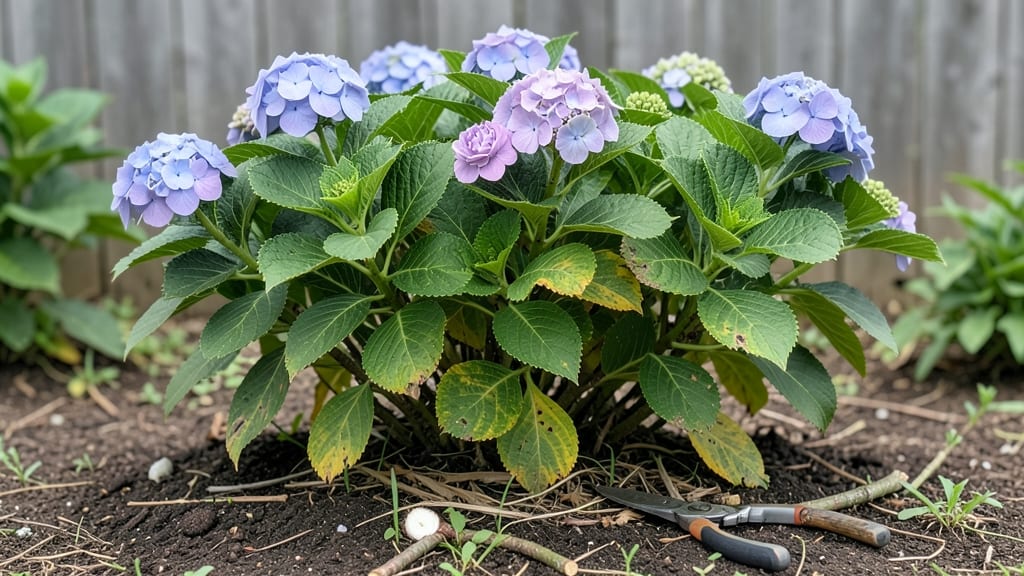
Trimming hydrangea blooms depends on the variety: prune late-blooming types (like 'Endless Summer') in early spring before new growth appears, while early-blooming varieties (such as 'Annabelle') should be trimmed right after flowering. Avoid pruning in fall or winter to prevent damage from cold.
Timing matters because hydrangeas rely on their previous year's growth for blooms—cutting at the wrong time can mean sacrificing next season's flowers. 🌿 For instance, 'Nikko Blue' hydrangeas produce buds on last year's stems, so aggressive pruning risks leaving them bare.
Meanwhile, varieties like 'Limelight' grow flowers on fresh wood, making them more forgiving for annual shaping. Always check your plant's label or growth habit before reaching for the shears.
Another key factor is climate—cold snaps can stress newly pruned plants, which is why I always wait until after the last frost in my Zone 6 garden.
If you're unsure about your variety, take a photo of your blooms and compare them to online guides; the difference between old-wood and new-wood types can be subtle but critical for long-term plant health.
💡 In This Article
- Hydrangea Pruning by Bloom Type: Old vs New Wood
- Seasonal Hydrangea Pruning Calendar for Gardeners
Hydrangea pruning by bloom type: old vs new wood
Here's what's actually happening inside your hydrangea: Mophead varieties (like 'Nikko Blue') produce flower buds on the previous year's stems—what botanists call "old wood." These buds form in late summer and remain dormant through winter, only opening in spring. Cutting these stems removes next year's blooms entirely.
The plant's energy goes into growing new stems, but without stored buds, you'll see fewer flowers. Meanwhile, panicle types (such as 'Limelight') and lacecap varieties grow flowers on current season's growth—"new wood"—so they can handle annual pruning without sacrificing blooms.
The key difference lies in their growth cycles. Old-wood hydrangeas need minimal pruning—just removing dead stems or shaping in early spring before buds swell. New-wood types actually benefit from annual rejuvenation cuts in late winter or early spring, as this stimulates bushier growth.
For example, 'Limelight' can take a hard prune every year, while 'Nikko Blue' might only tolerate light thinning every 2-3 years. The flower production cycle is like a two-year contract: old-wood types need you to honor last year's commitments before making new ones.
What most people don't realize is how pruning affects plant health beyond just flowers. Aggressive cuts on old-wood types can leave them vulnerable to sunscald (where exposed stems get damaged by spring sun) and disease (open wounds attract pests).
The plant's energy shifts from flower production to wound repair, creating a vicious cycle. I've seen 'Annabelle' hydrangeas recover beautifully after post-bloom pruning, but their 'Nikko Blue' cousins in the same garden would languish if treated the same way. The solution?
Always match your pruning approach to the hydrangea's biological clock.
Consider these key factors when choosing your approach:
- Mophead varieties: Buds form on old wood (e.g., 'Nikko Blue', 'Blue Mermaid') - prune only to remove dead stems
- Panicle varieties: Buds form on new wood (e.g., 'Limelight', 'Little Lime') - can handle annual pruning
- Lacecap varieties: Mixed growth (old wood for center blooms, new wood for outer blooms) - light pruning only
The science behind this involves auxin hormones—plant growth regulators that control bud formation. In old-wood types, auxins signal buds to form on last year's stems during summer, while new-wood types have evolved to form buds along current season's growth.
This biological specialization explains why some hydrangeas thrive with regular pruning while others need delicate handling. The visual difference is striking: old-wood types often have thicker, woody stems with buds clustered at the tips, while new-wood varieties show slender stems with buds forming along their length.
Here's a practical tip: If your hydrangea blooms on old wood but you've accidentally pruned it too hard, don't panic. The plant will still produce flowers—just fewer of them. Over time, you'll see new growth emerge from the base, and you can gradually shape it back.
The key is patience: it may take 2-3 years for a severely pruned old-wood hydrangea to recover its full bloom potential. This is why I always recommend labeling your plants and keeping a garden journal to track their growth habits.