
Blooming
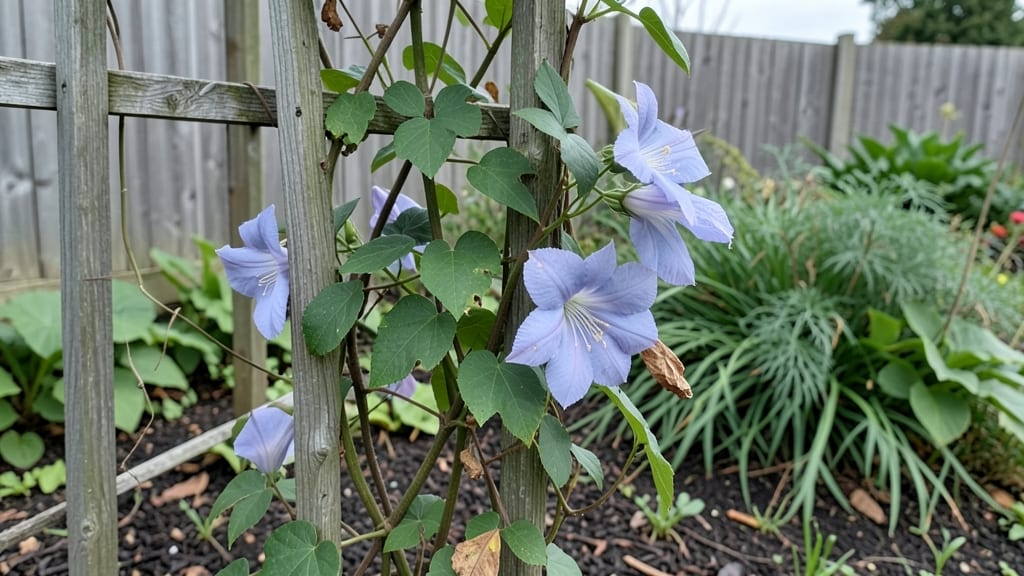
Clematis blooming season typically spans late spring to summer, with most varieties flowering between May and July, though early bloomers like 'Jackmanii' may start as early as April. Pruning groups and climate zones shift timing—Group 1 blooms once in spring, while Group 3 reblooms in summer with proper care.
Timing isn’t just about the calendar—it’s about understanding your clematis’s personality. Group 1 varieties, like 'Niobe,' burst into bloom early and only once, while Group 3 types, such as 'Henryi,' reward patience with a second show in late summer if you prune correctly.
Your local climate plays a starring role too: coastal areas might see blooms stretch into August, while inland regions could finish by June. 🌸
What’s fascinating is how winter chill triggers their spring awakening. Plants in warmer zones may need a cold snap to break dormancy, while those in colder areas might bloom later.
This is why some gardeners use shade cloth or mulch to fine-tune conditions—small adjustments can turn a one-time show into a month-long spectacle.
💡 In This Article
- Clematis Flowering Groups and Their Timing
- Proven Techniques to Prolong Clematis Blooms
Clematis flowering groups and their timing
Clematis plants are divided into three distinct pruning groups, each with its own bloom cycle and growth habits. Group 1 varieties—like 'Niobe' and 'Perle d'Azur'—bloom on previous year's growth, typically producing a single flush of flowers in late spring to early summer (May-June).
These early bloomers rely on winter dormancy to set buds, and any pruning after their bloom period risks removing next year's flowers.
Group 2 types, such as 'Jackmanii,' bloom on current year's growth but only once, usually in mid-to-late summer (June-August), making them ideal for gardeners who prefer a single, dramatic display.
The most exciting group is Group 3, which includes varieties like 'Henryi' and 'Nelly Moser.' These repeat bloomers produce flowers on current year's growth and can deliver two bloom cycles per season—one in early summer and another in late summer or early fall.
The key trigger? Proper pruning in late winter or early spring (before new growth appears) to encourage fresh stems. In warmer climates (USDA Zones 7-10), these varieties might even extend blooms into September or October if given consistent moisture and shade from afternoon sun.
Climate plays a surprising role in bloom timing. In cooler regions (Zones 3-6), Group 1 clematis often bloom earlier due to winter chill requirements, while warmer zones may see delayed or staggered blooms.
For example, 'Jackmanii' in Zone 5 might peak in June, but in Zone 9, it could stretch from May to August. This is why gardeners in mild-winter areas sometimes use cold treatment (like refrigerating dormant plants for 6-8 weeks) to mimic winter conditions and trigger blooming.
Here's what's actually happening at the cellular level: Clematis buds form during the previous growing season, but their development is regulated by photoperiod (day length) and temperature.
Group 1 buds require 6-8 weeks of winter chill (below 45°F) to break dormancy, while Group 3 varieties are more flexible and can adapt to warmer winters.
The science gets even more interesting—some studies show that ethylene gas (a plant hormone) plays a role in bud dormancy, which is why stress (like drought or extreme heat) can disrupt blooming patterns.
For gardeners, understanding these groups means planning pruning and support structures with precision. Group 1 plants need minimal pruning (just removing dead wood), while Group 3 varieties thrive with hard pruning (cutting back to strong buds in late winter).
The timing of these cuts determines whether you'll get that second bloom. In my own garden, I've found that Group 3 clematis left unpruned often produce fewer late-season flowers, proving that aggressive pruning pays off for repeat bloomers.
One common misconception is that all clematis bloom at the same time. In reality, the overlap between groups creates a staggered display that can extend your garden's color palette from April to October.
By mixing Group 1, 2, and 3 varieties, you can achieve continuous blooms—something I've seen firsthand in cottage gardens where 'Niobe' (Group 1) gives way to 'Jackmanii' (Group 2), then 'Henryi' (Group 3) takes over in fall. The secret?
Planting with their bloom times in mind and providing the right support (like obelisks or trellises) to showcase their vertical growth.