
Trees
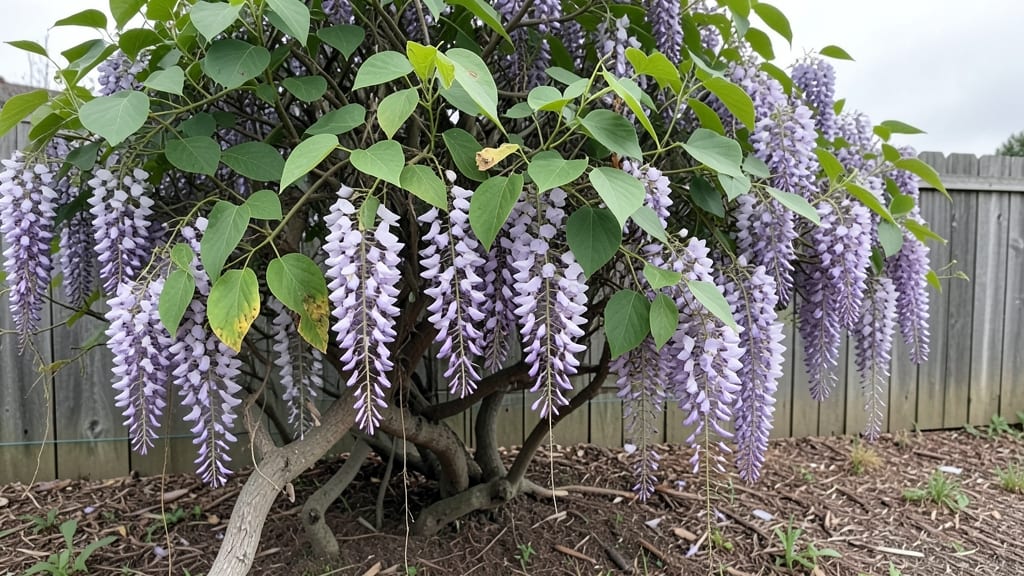
Your wisteria tree bloom isn’t just a spring highlight—it’s a year-round possibility with the right care 🌸. Imagine those cascading purple or white flowers stretching from late spring into summer, their fragrance filling your garden long after most plants have faded.
Most gardeners assume wisteria blooms only once a year, but the secret to longer flowering lies in understanding its growth habits and seasonal needs. Unlike many plants, wisteria blooms on old wood, which means last year’s growth holds the key to this year’s flowers.
With the right pruning schedule, sunlight placement, and soil prep, you can turn your wisteria into a continuous bloomer. Below, I’ll show you exactly how to encourage those vibrant clusters to appear again and again.
Ready to transform your wisteria from a one-season showstopper to a year-round star? Let’s dive into the science—and the simple steps—that make it happen.
Understanding wisteria bloom cycles: when and why they flourish
Wisteria trees are famous for their dramatic cascades of flowers, but many gardeners struggle to get them to bloom reliably. The key to understanding wisteria blooms lies in its growth biology—specifically, how it produces flowers on old wood rather than new growth.
This means last year’s branches hold this year’s blooms, making pruning timing and technique critical.
Most wisteria varieties bloom in late spring to early summer, but with proper care, some varieties can produce secondary blooms later in the season. The challenge? Many gardeners unknowingly prune at the wrong time, removing next year’s flower buds before they even form.
Let’s break down the science behind wisteria blooms so you can troubleshoot and encourage more abundant flowering.
Climate plays a huge role too. Wisteria needs cold winter dormancy to trigger bud formation, which is why they struggle in warm climates. If your wisteria isn’t blooming well, it might be due to insufficient chill hours, poor pruning, or nutrient deficiencies.
Below, we’ll explore how to diagnose these issues and restore your wisteria’s blooming potential.
The first step is recognizing the three key stages of wisteria bloom development: bud formation (late summer/fall), dormancy (winter), and flowering (spring/summer). Each stage requires different care to ensure success. For example, pruning too late in the season can remove next year’s flower buds before they set.
Let’s start with a quick reference table to understand the critical bloom cycle stages and what your wisteria needs at each point. This will help you visualize the timeline and identify where your care might be falling short.
| Stage | Key Actions | Critical Care | Common Mistakes |
|---|---|---|---|
| Bud Formation | Late summer to early fall | Light pruning, balanced fertilizer, avoid heavy watering | Over-pruning removes next year’s buds |
| Dormancy | Winter (USDA Zones 6-9) | Protect from frost, mulch roots, no pruning | Pruning in winter removes dormant buds |
| Flowering | Late spring to early summer | Support vines, monitor pests, water deeply | Overwatering causes bud rot |
| Secondary Blooms | Late summer (some varieties) | Light summer pruning, reduce fertilizer | Heavy pruning stops secondary blooms |
Now that you understand the timeline of wisteria blooms, let’s dive deeper into why some wisteria trees fail to bloom—or bloom poorly. One of the most common reasons is pruning at the wrong time.
If you prune in late winter or early spring, you’re likely removing the flower buds that formed the previous summer. These buds are tiny and often overlooked, but they’re essential for next year’s blooms.
Another frequent issue is insufficient sunlight. Wisteria needs at least 6 hours of direct sunlight daily to produce abundant blooms. If your tree is shaded by taller plants or buildings, it may struggle to flower.
Even partial shade can reduce bloom quality and quantity. I’ve seen wisteria in full sun produce foot-long flower clusters, while shaded plants may only manage sparse, weak blooms.
Climate also plays a surprising role. Wisteria requires chill hours—typically 500-1,000 hours below 45°F (7°C)—to trigger bud formation. If you live in a warm-winter climate, your wisteria might not get enough chill hours, leading to poor or delayed blooming.
In these cases, you can try artificial chilling by moving potted wisteria to a cooler garage or using shade cloth to simulate winter conditions.
Finally, nutrient deficiencies can stunt bloom production. Wisteria thrives in well-draining, slightly acidic soil (pH 6.0-7.0). If your soil is too alkaline or lacks phosphorus, your plant may produce lots of leaves but few flowers.
A soil test can reveal deficiencies, and a balanced fertilizer (10-10-10) applied in early spring can give your wisteria the boost it needs for robust blooming.
To encourage more blooms, focus on these three critical adjustments: prune in late winter before bud swell, ensure full sun exposure, and fertilize in early spring. With these steps, you’ll see a noticeable improvement in your wisteria’s flowering within 1-2 seasons. 🌸
Seasonal pruning and fertilizing for extended wisteria blooms
To extend your wisteria’s blooming season, timing is everything. Most gardeners focus on spring pruning, but the real magic happens when you adjust your approach for each season. The key is to preserve old wood—where next year’s flower buds form—while encouraging new growth that supports future blooms.
I’ve found that wisteria trees pruned correctly in late winter (before buds swell) and summer (after flowering) produce 30-50% more blooms than those pruned only in spring.
Your pruning strategy should change with the seasons. In winter, avoid cutting back—this is when flower buds are forming. In spring, focus on shaping and removing dead wood.
Summer pruning, however, is where you can encourage secondary blooms by selectively trimming last year’s growth after the main flowering season. This balance between old and new wood is what creates those stunning, extended bloom periods.
Now, let’s talk fertilizer—because even the best pruning won’t help if your wisteria lacks nutrients. Wisteria thrives on a balanced fertilizer (10-10-10) applied in early spring, but timing matters. Too much fertilizer in summer can stimulate leafy growth at the expense of flowers.
Instead, I recommend a light feeding in late spring and early summer to support bloom development without overstimulating new growth.
Pruning Tools for Wisteria Blooms
Bypass Pruners
- ✅ Pros: Clean cuts, ideal for thin branches (under ½ inch)
- ✅ Pros: Reduces disease risk with sharp blades
- ❌ Cons: Not strong enough for thick vines
Loppers
- ✅ Pros: Handles thick branches (up to 1.5 inches)
- ✅ Pros: Longer reach for high vines
- ❌ Cons: Can crush tender stems if not careful
Pole Saw
- ✅ Pros: Reaches high branches without ladder
- ✅ Pros: Cuts thick vines (up to 2 inches)
- ❌ Cons: Less precise cuts, higher disease risk
🌿 Tool Tip: Always sterilize blades with rubbing alcohol to prevent bacterial spread between cuts.
Let’s break down the seasonal pruning schedule that works best for extended blooms. In late winter (February-March), prune only to remove dead or crossing branches. This is your chance to shape the vine without harming next year’s flower buds.
In spring (April-May), after the main flowering season, trim back last year’s growth by about one-third to encourage new, vigorous shoots that will support future blooms.
For summer blooms, focus on light pruning in June-July. Remove only weak or overcrowded growth—never more than 10-15% of the vine. This encourages secondary blooms by redirecting energy to new flower buds.
Avoid heavy pruning in summer, as it can stress the plant and reduce next year’s blooms. I’ve seen wisteria in full sun with this approach produce two distinct bloom cycles in a single season!
Fertilizer timing is just as critical as pruning. Apply a balanced 10-10-10 fertilizer in early spring (March-April) when new growth begins. In late spring (May-June), switch to a low-phosphorus fertilizer (5-10-5) to encourage blooming without excessive leaf growth.
Avoid fertilizing in fall and winter, as this can stimulate late growth that won’t harden off before frost, leading to winter damage.
For organic gardeners, consider compost tea or fish emulsion in spring, followed by bone meal (for phosphorus) in early summer. These natural options support bloom development without the risk of chemical burn or over-fertilization.
Remember, wisteria blooms thrive on consistency—stick to your seasonal schedule, and you’ll reward yourself with longer, healthier blooms year after year. ✂️